Choosing the right carbon steel angle grade is essential for structural strength, weldability, and cost control. This guide explains the main carbon steel angle grades used in construction and fabrication, helping buyers, engineers, and project planners compare standards, material properties, and common applications before making a sourcing decision.
What does carbon steel angle grade really mean in structural work?
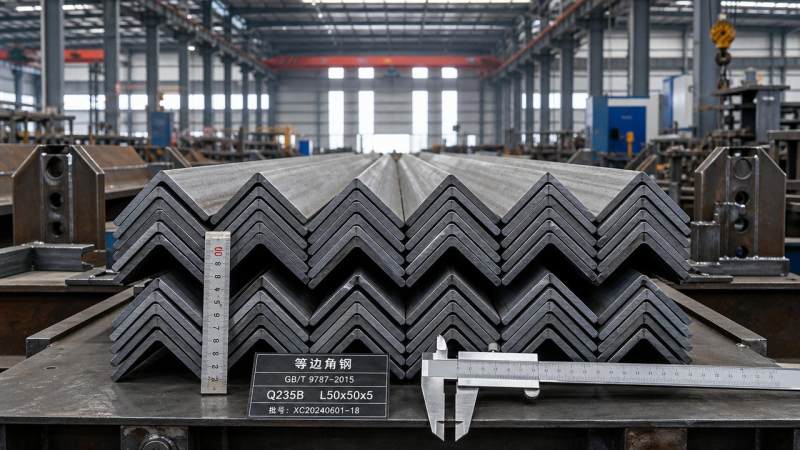
In practical terms, a carbon steel angle grade defines the chemical composition, mechanical properties, and quality level of an angle section used for load-bearing or support functions. It affects how the steel performs during cutting, welding, drilling, galvanizing, and long-term service.
For information-stage buyers, the challenge is not simply finding angle steel dimensions. The bigger question is whether the selected grade matches project codes, fabrication methods, climate conditions, and budget expectations.
A carbon steel angle may look simple, but grade selection influences several key outcomes:
- Load capacity under static or dynamic structural stress.
- Weldability during shop fabrication or site assembly.
- Suitability for coating, hot-dip galvanizing, or painting.
- Availability under ASTM, EN, JIS, or GB standard systems.
- Procurement cost, lead time, and substitution flexibility.
This is why many global buyers prefer to work with suppliers that understand both manufacturing and export compliance. Hongteng Fengda supports structural steel sourcing with standard and OEM options, helping project teams align material grade, profile size, documentation, and delivery planning.
Which carbon steel angle grades are commonly used?
The most common carbon steel angle grades vary by region and project specification. In North American projects, ASTM grades are widely referenced. In Europe, EN grades are common. In Asia and many export projects, JIS and GB grades often appear in RFQs.
The table below gives a practical comparison of frequently discussed structural grades for carbon steel angle procurement.
Although these grades can appear similar on paper, they should not be treated as interchangeable without checking project requirements. Equivalent strength ranges do not always mean identical chemistry, test conditions, or certification format.
Why A36, S235, SS400, and Q235B are often compared
These grades are commonly used for general-purpose structural steel and are frequently requested for frames, supports, equipment bases, and steel fabrication. Buyers often compare them because they occupy similar market positions in different standard systems.
However, the correct decision depends on destination market acceptance, engineer approval, and material traceability. For export projects, matching the required standard on drawings is usually more important than finding a rough local equivalent.
How should buyers compare strength, weldability, and fabrication performance?
When evaluating carbon steel angle for structural work, buyers should compare more than price per ton. Fabrication cost, rejected material risk, and installation efficiency can change the real project cost significantly.
The table below highlights the practical decision factors that matter most during material review.
For fabricated angle sections, weldability often becomes a deciding factor. A grade with slightly higher strength may not create savings if it increases fabrication controls, slows welding speed, or complicates coating after welding.
A practical rule for information-stage sourcing
If the project is ordinary building support work, general structural grades are usually sufficient. If the project targets lower steel weight, higher loading, or stricter engineering control, higher-strength grades should be reviewed with the fabricator and design team together.
Which applications need different carbon steel angle grade decisions?
Not all angle steel is used the same way. A warehouse support bracket, transmission structure, equipment frame, and modular building component can have very different priorities.
- Building frames and secondary supports often focus on standard compliance, predictable weldability, and easy availability.
- Industrial platforms and equipment bases may require stronger grades when concentrated loads or vibration are present.
- Transmission and utility structures often require consistency in mechanical properties and careful dimensional control across batches.
- OEM fabricated parts may prioritize tolerance control, hole positioning, cutting precision, and export packaging as much as base material grade.
In mixed building envelope projects, buyers may also source roofing or cladding materials from the same supply chain. For example, agricultural buildings, warehouses, public facilities, and residential utility structures sometimes combine angle sections with coated sheet products such as Color Coated Galvanized Steel Sheet PPGI for roof and wall systems.
That product category is typically selected for its corrosion resistance, heat resistance, lower weight, and visual finish. Available options may include PE, SMP, HDP, and PVDF systems, with thickness commonly ranging from 0.2 mm to 1.2 mm and widths from 600 mm to 1250 mm, depending on application requirements.
What standards and documents should you request before buying carbon steel angle?
Many sourcing problems do not come from the carbon steel angle itself. They come from incomplete inquiry details, weak document review, or confusion between local equivalents and required project standards.
Before placing an order, buyers should request and verify the following:
- Required standard system, such as ASTM, EN, JIS, or GB, exactly as shown on drawings or specifications.
- Grade designation and whether substitutions are permitted by the engineer or end user.
- Section dimensions, tolerances, length range, and whether equal or unequal angles are needed.
- Surface condition requirements, including black steel, primed, painted, or hot-dip galvanized supply.
- Mill test certificate requirements, traceability level, and any third-party inspection request.
- Packing, marking, and shipment conditions for port handling and destination unloading.
Suppliers with export experience can help reduce mismatches early. Hongteng Fengda supports buyers across multiple regions by aligning product specification with common international standards and by coordinating documentation for smoother procurement review.
How can you balance cost and performance without overbuying?
One of the most common mistakes in carbon steel angle sourcing is paying for a higher grade that does not create measurable project value. Another is choosing the cheapest available option without considering fabrication losses or compliance risk.
The table below helps information-stage buyers judge when an upgrade is justified and when a standard grade may be enough.
The right buying strategy is often to optimize total installed cost rather than simply minimize purchase price. That means looking at material grade, cutting yield, weld speed, coating compatibility, freight efficiency, and site labor together.
What mistakes do buyers often make when sourcing carbon steel angle?
Assuming all “equivalent” grades are automatically acceptable
Equivalent comparison is useful for early screening, but final acceptance depends on project documents and the destination market. Equivalent does not always mean interchangeable in engineering review.
Focusing on strength alone
Higher strength is not always better for every job. If the carbon steel angle must be cut, punched, welded, or galvanized, chemistry and fabrication behavior may matter just as much as yield strength.
Ignoring tolerance and straightness
Even if grade and chemistry are correct, poor dimensional control can slow assembly and increase field rework. This is especially important for modular and pre-engineered structures.
Sending incomplete RFQs
A vague inquiry often leads to delayed quotations or unsuitable offers. Include standard, grade, section size, surface treatment, delivery location, quantity, and documentation needs from the start.
FAQ about carbon steel angle grades
How do I choose between a general structural grade and a higher-strength grade?
Start with the design load and code requirement. If ordinary supports and frames meet performance needs with a standard grade, a higher grade may not save money. If weight reduction or higher stress capacity matters, a stronger grade may reduce section size or tonnage.
Is carbon steel angle suitable for outdoor structures?
Yes, but outdoor use usually requires proper surface protection. Depending on environment, that may include primer, paint system, or hot-dip galvanizing. Coastal, humid, or industrial atmospheres need stricter corrosion planning than dry inland conditions.
What should be included in a carbon steel angle inquiry?
At minimum, include standard, grade, equal or unequal type, leg dimensions, thickness, length, quantity, surface finish, destination port, and whether mill test certificates or third-party inspection are required. This helps suppliers give comparable quotations quickly.
Can one supplier support both standard sections and custom fabricated steel parts?
Yes, and that can reduce coordination risk. For many buyers, it is useful when a structural steel manufacturer can supply angle steel, channel steel, beams, cold formed profiles, and custom components under one sourcing plan, especially for export packing and lead-time control.
Why choose us for structural steel grade selection and sourcing support?
For buyers researching carbon steel angle, the most valuable supplier is not just one that quotes quickly. It is one that helps confirm standards, reduce substitution risk, and match the right grade to the real application.
Hongteng Fengda manufactures and exports structural steel products from China, with experience supporting global construction, industrial, and manufacturing projects. Our scope includes angle steel, channel steel, steel beams, cold formed steel profiles, and customized structural steel components under common international standards such as ASTM, EN, JIS, and GB.
You can contact us for practical procurement support, including:
- Grade and standard confirmation for your drawings or RFQ.
- Comparison between common carbon steel angle grades for your target market.
- Section size selection based on application and fabrication method.
- Lead time planning, export packing, and shipment discussion.
- Customization review for cut-to-length, fabricated, or OEM structural parts.
- Mill test certificate expectations, inspection coordination, and quotation support.
If you are still comparing carbon steel angle options, send your required standard, dimensions, quantity, and destination. We can help you review grade suitability, documentation needs, and delivery options before you commit to a final sourcing decision.
Please give us a message


Please enter what you want to find