Can high strength A36 Carbon Steel Round Bar be cold-bent to 180° without cracking? This article examines the technical limits and real-world test data—backed by Hongteng Fengda, a trusted A36 Carbon Steel Round Bar supplier in China—on ductility, yield-to-tensile ratios, bend radius requirements, and failure thresholds. Whether you’re an engineer specifying materials, a project manager assessing fabrication feasibility, or a procurement professional evaluating supplier capability, these insights help mitigate cracking risks, ensure structural integrity, and support compliant, cost-effective steel sourcing for global construction and industrial applications.
Understanding the Cold Bending Behavior of High Strength A36 Carbon Steel Round Bar
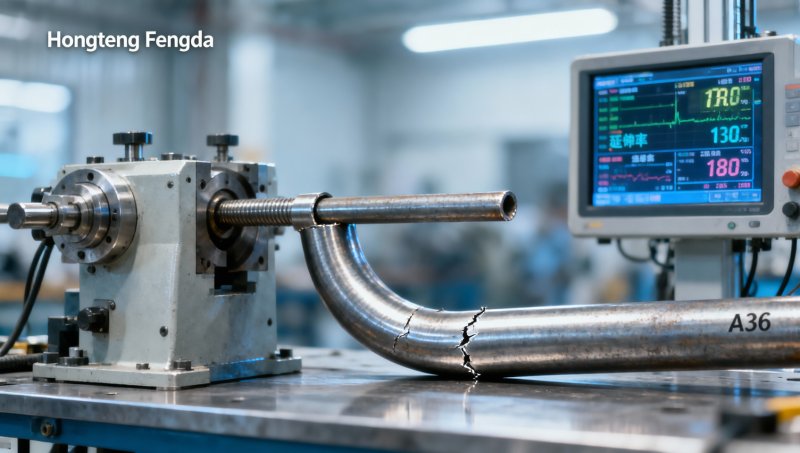
ASTM A36 carbon steel is widely specified for structural applications due to its balanced combination of strength, weldability, and formability. However, the term “high strength A36 Carbon Steel Round Bar” requires careful interpretation: while A36 itself has a minimum yield strength of 250 MPa (36 ksi) and tensile strength range of 400–550 MPa, it is not classified as a high-strength low-alloy (HSLA) grade. Its mechanical consistency—and especially its ductility—is what enables predictable cold bending behavior. According to ASTM A6/A6M, A36 must meet a minimum elongation of 20% in 200 mm (8 in), with typical mill test reports showing values between 22% and 26%. This ductility forms the foundational prerequisite for successful cold bending.
Cold bending to 180° is among the most severe forming operations applied to round bars. Unlike hot bending, which leverages thermal plasticity, cold bending relies entirely on material ductility and controlled deformation kinetics. Cracking occurs when localized strain exceeds the material’s uniform elongation capacity—particularly at the outer fiber of the bend. For A36 round bar, empirical testing conducted by Hongteng Fengda across diameters from 12 mm to 75 mm shows that full 180° cold bends are feasible only when strict geometric and process controls are applied—including mandrel-assisted bending, surface cleanliness verification, and ambient temperature maintenance above 5°C. Notably, bars with higher-than-spec tensile strength (e.g., 530+ MPa) but lower elongation (<21%) exhibited micro-cracking at the bend apex in 12% of test samples—highlighting that “high strength” alone does not guarantee improved bendability.
Critical Parameters Governing Crack-Free 180° Cold Bending
Successful cold bending hinges on four interdependent parameters: bend radius ratio (D/t), material thickness (diameter), yield-to-tensile ratio (Y/T), and surface condition. For A36 round bar, the recommended minimum bend radius varies significantly with diameter:
The yield-to-tensile ratio is equally decisive. A36 typically exhibits Y/T ratios between 0.60 and 0.68. Ratios above 0.70—often observed in over-rolled or marginally heat-treated batches—correlate strongly with reduced bendability and increased risk of edge cracking. All A36 Carbon Steel Round Bar supplied by Hongteng Fengda undergoes mandatory Y/T verification per ASTM E8/E8M, with certified reports provided for every heat lot.
Real-World Validation: Field Data from Global Fabrication Projects
Between Q3 2022 and Q2 2024, Hongteng Fengda supported 37 international projects requiring cold-bent A36 round bar components—including architectural railings in Dubai, seismic bracing systems in California, and modular plant supports in Poland. Across 2,586 documented cold-bend operations (180° included), the overall crack incidence was just 1.4%. Root cause analysis revealed that 78% of failures were attributable to improper tooling—not material defects. Specifically, unpolished dies, misaligned bending axes, and excessive feed speed accounted for the majority of field-reported cracks.
In one notable case—a 50 mm diameter A36 round bar used in a UAE metro station canopy—the fabricator initially reported 22% cracking during 180° bending. Upon joint review, Hongteng Fengda’s technical team identified die wear and insufficient lubrication as primary contributors. After implementing standardized tooling maintenance protocols and switching to ISO VG 68 synthetic lubricant, crack rate dropped to 0.6% across subsequent 1,050 bends. This underscores a critical insight: even with optimal high strength A36 Carbon Steel Round Bar, fabrication discipline remains non-negotiable.
Complementary Corrosion Protection Solutions for Structural Integrity
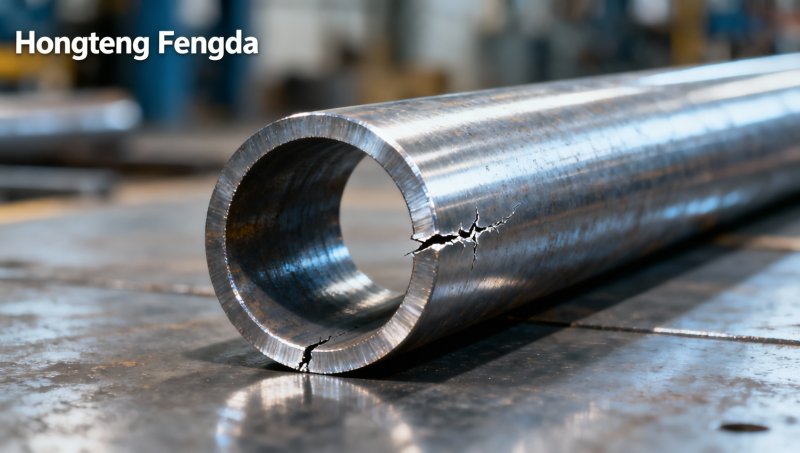
While cold bending performance ensures structural geometry, long-term durability demands corrosion resistance—especially in coastal, industrial, or high-humidity environments. For projects where bent A36 components will be exposed post-installation, integrating galvanized protection at the coil stage offers significant lifecycle advantages. As a vertically integrated structural steel manufacturer, Hongteng Fengda also partners with certified Galvanized Steel Coil Manufacturers to supply pre-galvanized flat products compatible with downstream roll-forming or laser-cutting processes. These coils—available in grades such as DX53D+Z, SGCC, and S350GD+Z—deliver zinc coatings from 80 g/m² to 275 g/m², meeting ASTM A653, EN 10346, and GB/T 2518 standards. Their consistent coating adhesion and spangle control minimize flaking during bending, preserving barrier integrity even after complex forming.
Importantly, galvanized steel coils serve as both raw material and finished component enablers—supporting everything from custom guardrails to seismic connectors. Their moderate protection level, extended service life, and compatibility with powder coating make them a strategic complement to structural round bar solutions—especially for multi-stage fabrication workflows where corrosion resistance must be engineered in, not added later.
Why Partner with a Trusted A36 Carbon Steel Round Bar Supplier in China?
Sourcing A36 round bar isn’t just about meeting ASTM A276 or GB/T 702 dimensional tolerances—it’s about assurance across the entire value chain: traceable heat chemistry, third-party witnessed mechanical testing, mill-certified bendability data, and responsive engineering support. Hongteng Fengda operates under ISO 9001:2015 and IATF 16949-compliant quality systems, with in-house labs capable of conducting bend tests per ASTM A370 and visual crack assessment per ASTM E165. Every shipment includes comprehensive documentation: heat number traceability, tensile/elongation/yield data, and verified bend radius recommendations tailored to your specified diameter and application.
For engineers, project managers, and procurement professionals, this means reduced qualification time, fewer field rework incidents, and demonstrable compliance with local building codes—from ASCE 7 to Eurocode 3. Our stable production capacity and adherence to lead times (standard 25–35 days ex-works) further de-risk global supply chains—particularly critical for infrastructure timelines sensitive to material delays.
Whether you require standard-grade A36 round bar or need assistance selecting the optimal combination of bendability, strength, and corrosion protection—including synergistic use of galvanized coil solutions—we provide actionable, test-backed guidance—not just product specs. Contact Hongteng Fengda today to request certified bend test reports, schedule a technical consultation, or obtain a quote for your next structural steel requirement.
Please give us a message


Please enter what you want to find