Can a galvanized steel corrugated sheet for fence really deliver the strength, durability, and cost control your project needs? For project managers and engineering leaders, the short answer is yes—when the material grade, coating level, panel thickness, and support design match the site conditions. It is often a practical fencing solution for industrial yards, construction boundaries, storage areas, utilities, farms, and infrastructure projects where corrosion resistance, installation speed, and budget discipline matter.
However, it is not the best choice for every fence line. If your project demands a high-end architectural appearance, maximum anti-climb performance, or very low noise in high-wind zones, you need to assess trade-offs before specifying it. The value of galvanized steel corrugated sheet for fence comes from using it in the right application, with the right base steel and structural support.
Is galvanized steel corrugated sheet a good fencing choice for projects?
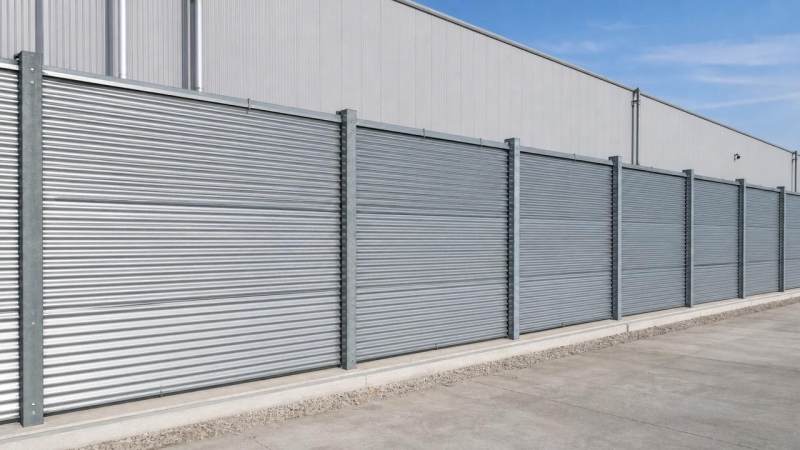
For many commercial and industrial projects, it is a strong and cost-effective answer. Corrugated galvanized panels combine the strength of steel with the corrosion protection of zinc coating, while the corrugated profile improves stiffness compared with flat sheet of the same thickness.
This means project teams can build solid visual barriers quickly without paying the premium associated with heavier plate systems or more decorative fencing products. In many cases, the system offers a useful balance between service life, privacy, material availability, and installation efficiency.
From a project management perspective, the biggest advantages are predictable procurement, relatively simple installation, and lower maintenance exposure in outdoor environments. These factors support better life-cycle cost control, especially on large perimeters where repainting or frequent replacement can become expensive.
The key point is that the phrase galvanized steel corrugated sheet for fence should not be treated as a single universal specification. Performance depends on coating mass, steel grade, thickness, span between supports, fastening method, and local environmental loads.
What do project managers care about most when selecting this fencing material?
Most decision-makers are not just asking whether the material can work. They want to know whether it will perform reliably over time, meet the project budget, install on schedule, and avoid future complaints or repair costs.
In practice, the most common concerns fall into five areas: corrosion resistance, structural durability, installation speed, security level, and total cost of ownership. If a fence material scores well in these categories, it becomes much easier to justify at procurement and approval stages.
Corrosion resistance is usually the first issue because fencing is permanently exposed to moisture, sunlight, airborne contaminants, and sometimes chemicals. A galvanized coating protects the steel by forming a barrier and also providing sacrificial protection if the surface is scratched.
Durability is the second major concern. The corrugated shape helps the sheet resist minor impact and improves panel rigidity, but overall fence strength still depends heavily on post spacing, rail design, fasteners, and edge treatment.
Installation speed matters because fencing is often part of site security planning, construction staging, or perimeter control before other works begin. A system that can be installed quickly helps reduce labor pressure and may support earlier site handover or operational readiness.
Security and privacy also influence the choice. Corrugated steel fencing can provide strong visual screening and a harder physical barrier than wire mesh, but it is not automatically the highest-security system unless combined with suitable posts, anti-tamper fixings, and top-edge protection.
Where does galvanized corrugated sheet fencing perform best?
This fencing solution performs especially well in industrial and functional settings. Examples include logistics yards, temporary and semi-permanent construction fencing, equipment enclosures, factory boundaries, agricultural storage areas, and service corridors around utilities or infrastructure assets.
It is also a sensible option when privacy matters more than transparency. Unlike chain link or open mesh, corrugated steel panels block direct visibility, which can help with site control, equipment concealment, and reduced visual clutter.
In coastal, humid, or moderately polluted environments, galvanized panels can still perform well if the zinc coating level is selected correctly. Projects in such areas should avoid making decisions based only on initial material price and instead evaluate coating thickness against expected service conditions.
For temporary project fencing, galvanized corrugated sheet can be reused in some cases if disassembly is handled carefully. This may improve asset value for contractors or developers managing multiple sites over time.
That said, projects requiring a premium decorative look may prefer powder-coated systems, perforated architectural panels, or other designed façade-style barriers. In urban public-facing locations, appearance may carry more weight than basic durability alone.
What are the main limitations and risks?
One limitation is noise. In windy environments, thin corrugated metal sheets can rattle or vibrate if fastening points are insufficient or support members are not designed properly. This is a technical issue that can usually be managed, but it should not be ignored during planning.
Another risk is under-specification. Buyers sometimes focus on low sheet thickness to save cost, only to find that panels deform more easily under impact or wind pressure. A fence failure rarely comes from sheet material alone; it often results from an overall system that was designed too lightly.
Cut edges and drilled holes also deserve attention. While galvanized coating provides strong protection on the sheet surface, exposed fabrication points are more vulnerable. Good detailing, proper handling, and where needed, touch-up protection can help reduce localized corrosion risks.
There is also the issue of aesthetics over time. Galvanized steel usually ages well from a functional standpoint, but visual changes such as dulling, water marks, or minor surface variation may appear. For strictly architectural projects, this may matter more than for industrial sites.
Finally, in highly aggressive environments such as heavy chemical exposure or severe marine conditions, standard galvanizing alone may not be enough. In those cases, a higher coating class or additional protective system should be evaluated.
How do you judge whether the specification is strong enough for your fence?
Start with site conditions. A fence around a calm inland warehouse is different from a perimeter exposed to coastal wind, road salt, or industrial pollution. Environmental exposure should guide coating level and structural design from the beginning.
Next, define the fence function clearly. Is the purpose boundary marking, privacy screening, equipment protection, theft deterrence, or temporary site control? The answer affects required panel thickness, support spacing, post section size, and fastening details.
Then review wind load and impact expectations. Corrugated sheet increases stiffness, but large solid surfaces attract wind pressure. Taller fences or fences in open terrain usually need stronger posts, deeper foundations, and tighter spacing than buyers initially expect.
Fastening design is equally important. Self-drilling screws, bolted connections, overlap details, and anti-loosening measures all influence long-term performance. A good sheet can still fail prematurely if the fixing method is weak or inconsistent.
Finally, verify compliance with project standards. International buyers often need materials aligned with ASTM, EN, JIS, or GB requirements. For export or multinational projects, documentation quality can be just as important as the steel itself.
How product choice affects fence life and maintenance
The durability of galvanized fencing begins with the coil quality used to make the sheet. A reliable galvanized coil with consistent zinc coating, stable mechanical properties, and controlled surface quality supports better forming results and more predictable outdoor performance.
For buyers evaluating material sources, it helps to understand the typical specification range available in coil supply. Products such as Steel Coil Galvanized are commonly offered in grades including DX51D+Z, SGCC, S250GD+Z, S350GD+Z, and Z275, with thicknesses from 0.12mm to 3.5mm and widths from 600mm to 1500mm.
These ranges matter because different fence projects require different balances of formability, strength, and coating mass. Zinc coating levels such as 60–275g/m² can significantly influence corrosion performance, while higher-strength grades may help support more demanding structural requirements.
From a maintenance standpoint, galvanized material reduces the need for frequent repainting compared with unprotected steel. Zinc acts as a barrier between the environment and the steel, and it also sacrifices itself first, helping protect the underlying substrate if the surface is damaged.
For project managers, this usually translates into fewer maintenance interruptions, lower long-term repair frequency, and better predictability for budgeting. The best results come when the base material, fabrication process, and installation details are aligned rather than treated as separate decisions.
Is galvanized steel corrugated sheet for fence cost-effective over the full project life?
In many cases, yes. The upfront material cost is often competitive, especially compared with heavier fabricated steel panel systems or masonry boundary walls. Installation is usually faster than building solid walls, which can reduce labor and schedule pressure.
The real value becomes clearer when maintenance is included. A fence that resists corrosion and holds shape under normal service conditions can reduce repainting cycles, part replacement, and emergency repair work. This is especially important on long site perimeters.
Procurement efficiency is another cost factor. Galvanized corrugated sheet is widely used, which often means easier sourcing and shorter production cycles than highly customized fence systems. For export buyers, stable production capacity and documentation support can lower sourcing risk.
Still, the lowest purchase price is not always the lowest total cost. Very thin panels, low coating mass, or weak supports can lead to earlier failure, visual dissatisfaction, or repeated maintenance. The better approach is to compare systems on service life, not only on invoice price.
A simple cost model should include material, support steel, fasteners, foundations, installation labor, transport, maintenance, expected replacement interval, and downtime risk. This gives project leaders a more realistic basis for specification approval.
What should you ask suppliers before placing an order?
Ask for the exact steel grade, coating mass, sheet thickness, and manufacturing standard. General descriptions are not enough. A supplier should be able to explain how the proposed material suits your fence height, environment, and service expectations.
Request information on tolerance control, coating consistency, and quality inspection. For global projects, also confirm whether the supplier can support the documentation package your procurement process requires, such as test reports and standard compliance records.
It is wise to ask whether the sheets will be supplied as raw corrugated panels, cut-to-length components, or part of a more complete fence system. The more clearly responsibilities are divided, the lower the risk of mismatch during installation.
Lead time and packaging are also practical concerns. Fence materials can suffer transport damage if edge protection and bundling are poor. Reliable export packaging helps preserve coating quality and reduce avoidable site losses.
Finally, ask for project references or recommended applications. A capable manufacturer should understand not only steel production but also how the material performs in real construction and industrial environments.
Final answer: should you choose this fencing option?
Yes—galvanized steel corrugated sheet can work very well for fencing when your priority is practical durability, privacy, corrosion resistance, and cost control. It is especially suitable for industrial, commercial, infrastructure, agricultural, and temporary project environments.
Its success depends less on the idea of galvanized steel alone and more on proper specification. Project managers should focus on coating level, sheet thickness, support structure, fastening method, and site exposure before making a final decision.
If your project needs an efficient perimeter solution with solid life-cycle value, galvanized steel corrugated sheet for fence is often a smart option. If you need premium aesthetics or specialized high-security performance, compare alternatives carefully before locking the specification.
The most effective buying decision is not simply choosing a material that can work. It is choosing a fence system that fits your environmental conditions, operational goals, and maintenance strategy from day one.
Please give us a message


Please enter what you want to find