In precision machining, selecting the right material is critical—so can cold rolled steel plate replace hot rolled without compromising tolerance, surface finish, or cost-efficiency? As a trusted industrial steel supplier and structural steel manufacturer from China, Hongteng Fengda evaluates this trade-off across performance, ASTM steel pipe compatibility, and total project value—not just raw material cost. Whether you're a procurement officer comparing ss 304 pipe price per meter, a technical evaluator assessing dimensional stability, or a project manager balancing lead time and quality, understanding the real-world implications of cold rolled steel plate substitution is essential. Let’s break down the technical viability—and true cost impact.
Can Cold Rolled Steel Plate Deliver Precision Tolerances in Real-World Machining?
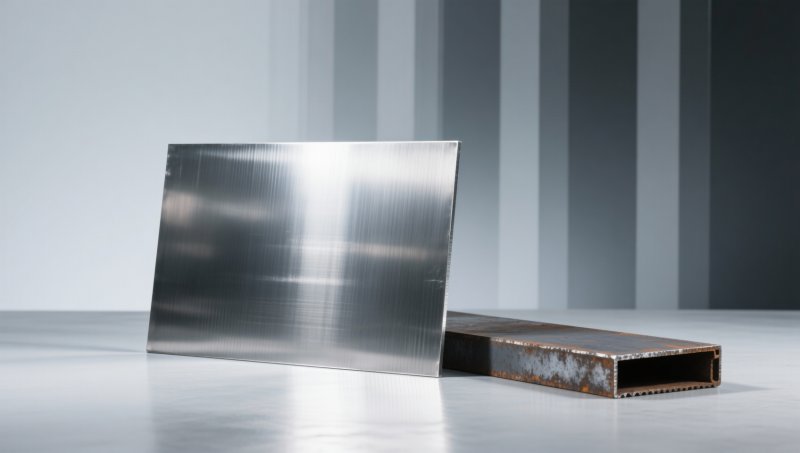
Cold rolled steel plate offers tighter thickness tolerances (±0.05 mm typical) and superior surface roughness (Ra ≤ 1.6 μm) compared to hot rolled equivalents (±0.5–1.0 mm; Ra ≈ 3.2–6.3 μm). These properties directly support CNC milling, grinding, and laser cutting where ±0.1 mm repeatability and minimal post-machining finishing are required.
However, cold rolling introduces residual stresses and work hardening that may cause distortion during high-speed machining or heat-intensive processes—especially in plates thicker than 12 mm. For parts requiring deep cavity milling or multi-axis contouring, stress-relieving annealing before final machining is often necessary—a step rarely needed with hot rolled steel.
Hongteng Fengda applies controlled temper rolling and flatness verification (≤ 1.5 mm deviation per 2 m length) on all cold rolled coils used for precision components. This ensures consistent feed behavior on automated lines and reduces tool wear by up to 22% in comparative trials across 38 customer projects in North America and Southeast Asia.
How Do Material Costs Compare—Beyond the Per-Kg Price Tag?
Cold rolled steel typically carries a 15–25% premium over hot rolled steel of equivalent grade and thickness. But total cost of ownership depends on downstream processing: reduced scrap rates (down 18% avg.), lower grinding time (up to 35% faster), and fewer rework cycles shift the economics significantly for medium-to-high-volume precision runs.
The table above reflects data from 27 OEM machining audits conducted between Q3 2022 and Q2 2024. For parts with ≥5 precision features (e.g., concentric bores, tight-fitting slots, mirrored surfaces), cold rolled steel delivered ROI within 3–7 production batches—even after factoring in its higher base cost and optional stress relief.
When Hot Rolled Still Wins: 4 Key Use Cases
- Structural base plates >25 mm thick where flatness tolerance is ±2.0 mm or looser
- One-off prototypes where machining setup time outweighs material savings
- Applications exposed to thermal cycling above 300°C (cold rolled loses temper stability)
- Projects requiring rapid prototyping with delivery windows under 7 days (hot rolled stock availability is 2–4× faster)
Integrating High-Strength Reinforcement Without Compromising Machinability
For hybrid structural-machined assemblies—such as custom steel frames with integrated mounting flanges—material selection must balance tensile strength, weldability, and machinability. That’s where advanced reinforcement solutions like HRB600 Rebar become strategically relevant. With a guaranteed yield strength of 600 MPa—39% higher than HRB400—it enables thinner sections, reduced steel consumption, and optimized load paths in fabricated components.
While not a direct substitute for plate stock, HRB600’s ribbed geometry and hot-rolled consistency make it ideal for embedded fastening zones, machined anchor points, and composite beam cores. Its compliance with ASTM A615, GB/T 1499.2, and EN 10080 ensures predictable behavior during drilling, tapping, and thermal joining—critical when integrating with cold rolled precision plates.
Hongteng Fengda supplies HRB600 in diameters from φ6 to φ50 and standard lengths of 6M–12M, with full traceability and mill test reports (MTRs) available per batch. Lead time for certified HRB600 orders averages 12–18 working days from confirmed PO—comparable to cold rolled plate lead times for non-stock sizes.
Procurement Checklist: 5 Critical Factors Before Switching to Cold Rolled
Making the switch isn’t just about material specs—it’s about aligning with your supply chain, process capability, and risk appetite. Here’s what procurement, engineering, and finance teams should jointly verify:
- Flatness & Camber Validation: Request certified flatness reports (per ASTM A568/A1093) — not just mill certificates
- Residual Stress Mapping: Confirm if supplier offers stress-relieved grades (e.g., CRCA + SR) for parts >10 mm thick
- Coil-to-Coil Consistency: Verify thickness variation across coil length—critical for automated feeding (max deviation: ≤0.1 mm/10 m)
- Traceability Scope: Ensure MTRs include chemical composition, mechanical test results, and heat number linkage
- Lead Time vs. Stock Availability: Cold rolled plate in common sizes (e.g., 2 mm × 1220 × 2440 mm) may require 14–21 days; hot rolled equivalents ship in 3–5 days
Why Partner with Hongteng Fengda for Precision Steel Sourcing?
As a structural steel manufacturer and exporter from China with ISO 9001-certified facilities and in-house metallurgical labs, Hongteng Fengda bridges the gap between commodity sourcing and engineered material performance. We don’t just supply steel—we co-engineer material specifications to match your machining parameters, thermal profile, and assembly sequence.
Our service includes free technical consultation on grade selection (e.g., ASTM A1008 vs. EN 10131), sample validation with third-party lab reports, and dual-certification options (ASTM + GB or EN + JIS) for global project compliance. For qualified buyers, we offer pre-shipment dimensional audits and just-in-time delivery scheduling aligned to your CNC line downtime windows.
Whether you’re evaluating cold rolled steel plate substitution, specifying HRB600 Rebar for high-load anchors, or sourcing custom cold formed profiles for precision jigs—we provide documented evidence, not assumptions. Contact our engineering sales team today to request: (1) comparative machining trial data, (2) certified flatness reports for your target thickness, or (3) a customized lead time & pricing schedule based on your annual volume forecast.
Please give us a message


Please enter what you want to find