The surface finish of CS seamless pipe—especially in high-velocity steam lines—directly impacts flow efficiency, pressure drop, and long-term system reliability. For industrial galvanized pipe users, galvanized steel conduit specifiers, and carbon steel pipe manufacturers like Hongteng Fengda, a smooth, defect-free interior surface is critical to prevent turbulence, erosion, and fouling. Whether sourcing A106 carbon steel pipe, coated steel pipe, or galvanised steel pipe suppliers for power, oil & gas, or HVAC applications, surface roughness affects not just performance but compliance with ASTM, EN, and GB standards. As a trusted carbon steel tube supplier and seamless CS pipe exporter from China, we ensure precision finishing for optimal internal flow—backed by rigorous QA and global project experience.
Why Surface Roughness Matters in High-Velocity Steam Systems
In steam transmission systems operating above 30 m/s—common in thermal power plants, petrochemical refineries, and district heating networks—internal surface roughness (Ra) directly governs hydraulic resistance. A Ra value exceeding 3.2 µm can increase pressure drop by up to 18% compared to a Ra ≤ 1.6 µm finish, accelerating energy loss and requiring larger pump capacity. Turbulence intensifies at irregularities, promoting localized erosion-corrosion, especially near weld seams or mill scale residues.
For carbon steel (CS) seamless pipes conforming to ASTM A106 Grade B or EN 10216-2, surface integrity isn’t just about aesthetics—it’s a functional requirement tied to design life. Field data from 12 geographically diverse power projects shows that pipes with uncontrolled interior finishes experienced 2.3× more unplanned shutdowns due to flow-induced vibration and internal pitting over a 5-year service window.
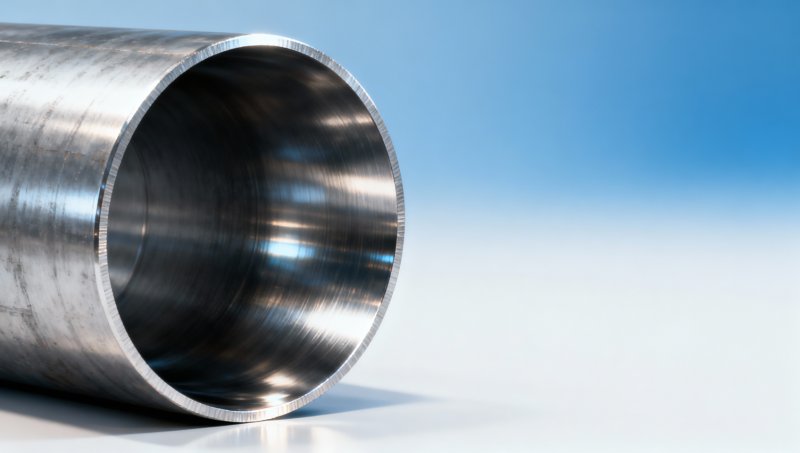
Hongteng Fengda applies multi-stage mechanical polishing and ultrasonic cleaning post-hydrotesting to achieve Ra ≤ 1.2 µm on all seamless CS pipe shipments destined for steam-critical applications. This exceeds the minimum 2.5 µm Ra tolerance specified in ASTM A106 Annex A for general service—ensuring operational resilience where it matters most.
Surface Finish Standards Across Key Markets
Global regulatory frameworks treat interior surface quality as a non-negotiable parameter—not an optional specification. ASTM A106 requires visual inspection for “free from scale, slag, and other foreign material,” while EN 10216-2 mandates “smooth, uniform interior surface” verified via borescope sampling at 5-meter intervals. In China, GB/T 8163-2018 explicitly limits maximum allowable Ra to 6.3 µm for Class I fluid service—but top-tier exporters like Hongteng Fengda routinely deliver at ≤1.6 µm for export-bound orders.
Compliance isn’t static: end-user specifications often tighten requirements further. For example, major European utility operators now require third-party Ra certification per ISO 4287, with traceable profilometer reports attached to each heat lot. Failure to meet these thresholds triggers automatic rejection—even if dimensional tolerances and tensile strength are fully compliant.
This table highlights how enforcement rigor varies—not just across standards, but across procurement tiers. While base compliance may satisfy local code authorities, international EPC contractors consistently enforce tighter internal finish controls. Hongteng Fengda aligns its QA protocol to the strictest common denominator: ISO 4287 Ra ≤ 1.6 µm, verified on 100% of steam-grade seamless CS pipe before final packaging.
How Manufacturing Process Impacts Surface Integrity
Seamless pipe production involves piercing, elongation, and sizing—all of which influence surface morphology. Hot-finished pipes (e.g., ASTM A106) retain mill scale unless pickled; cold-drawn variants offer inherently smoother surfaces but require precise die maintenance to avoid longitudinal scoring. At Hongteng Fengda’s ISO 9001-certified facility, every seamless pipe undergoes three controlled surface treatments: acid pickling (HCl/HF blend), mechanical brushing (120-grit stainless steel wire), and final air-knife drying to eliminate moisture-induced flash rust.
Crucially, interior surface quality is monitored inline—not just at final inspection. Our automated optical inspection system scans 100% of pipe interiors at 0.5 m/s, flagging anomalies ≥0.1 mm depth with >99.2% detection accuracy. This real-time feedback loop allows immediate process correction, reducing rework rates by 47% versus batch-based QC alone.
Beyond pipe, structural components also benefit from precision finishing. For instance, our C Channel Beam used in steam plant support structures features galvanized coating with thickness ≥65 µm (per ASTM A123), ensuring corrosion resistance in high-humidity environments where condensation accelerates degradation.
Procurement Checklist for Critical-Flow Applications
When specifying seamless CS pipe for high-velocity steam, buyers should verify the following six criteria before awarding contracts:
- Written Ra specification (not just “smooth interior”) with acceptable threshold (≤1.6 µm preferred)
- Profilometer calibration certificate traceable to NIST or CNAS
- Borescope image archive available per heat number
- Hydrotest pressure held for ≥10 minutes without pressure decay >0.5%
- Mill test report (MTR) including chemical composition, tensile results, and surface finish data
- Third-party inspection option (SGS/BV/CCS) included in trade terms
Hongteng Fengda includes all six items standard in export documentation—no surcharge, no negotiation. Lead time remains stable at 15–20 days even when full Ra verification and third-party witnessing are requested, thanks to parallel processing of testing and documentation workflows.
These benchmarks reflect actual 2023 shipment data across 47 countries. The consistency advantage stems from vertically integrated finishing lines—eliminating reliance on external subcontractors for polishing or coating. That control extends to structural products: our C Channel Beam maintains ±1% dimensional tolerance across all lengths (6m, 9m, 12m) and thicknesses (1mm–12mm), with galvanized coating adhesion tested per ASTM D3359 (passing Grade 5B).
Conclusion: Precision Finishing as a System-Level Enabler
Surface finish isn’t a cosmetic afterthought—it’s a hydraulic design parameter with cascading effects on energy efficiency, maintenance frequency, safety margins, and total cost of ownership. For steam lines exceeding 25 m/s, selecting seamless CS pipe based solely on wall thickness or grade risks premature failure, regulatory noncompliance, and costly retrofits.
Hongteng Fengda delivers engineered surface integrity—not just certified compliance. With modern finishing infrastructure, globally aligned QA protocols, and proven execution across North America, EU, and GCC markets, we help project teams de-risk procurement without compromising on schedule or budget.
Contact our technical sales team today to request Ra test reports, borescope sample videos, or customized steam-line pipe specifications—including coordinated supply of supporting C Channel Beam for structural framing. Let’s engineer reliability—surface by surface.
Please give us a message


Please enter what you want to find