A brushed stainless steel plate can transform the visual quality of equipment, interiors, and fabricated metal parts. Yet appearance is never only cosmetic. In steel-related projects, finish uniformity, reflectivity, grain direction, and defect tolerance all influence pricing, processing effort, and final value.
When selecting a brushed stainless steel plate, the right decision depends on where it will be used, how visible it is, and how much surface consistency matters. A decorative lobby panel and a concealed industrial cover may use similar steel, but they are priced very differently.
For global steel sourcing, appearance-sensitive applications also affect quality control, packaging, and lead time. Understanding these cost drivers helps balance aesthetics, durability, and budget without over-specifying the material.
When does a brushed stainless steel plate become a cost-sensitive choice?
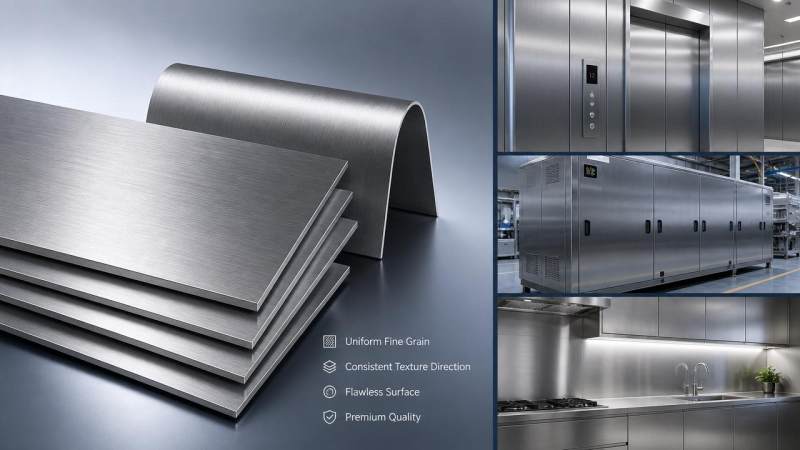
A brushed stainless steel plate becomes cost-sensitive when the surface is visible, customer-facing, or part of a premium design language. In these cases, small scratches, inconsistent grain, and color variation can create rejection risk.
The finish itself adds processing steps. Brushing requires controlled abrasion, stable feed speed, and inspection under proper lighting. The tighter the appearance standard, the higher the production and handling cost.
This is especially true in steel fabrication projects where the plate is later cut, bent, welded, or assembled beside other visible components. Matching one panel to another often matters as much as the base material grade.
How application scenes change the value of surface appearance
Not every project needs the same brushed finish quality. Cost rises when the application demands a cleaner visual effect, better stain resistance, or stronger consistency across multiple sheets or coils.
Interior decorative panels and architectural trims
In interior cladding, elevators, columns, and trims, the brushed stainless steel plate is often judged first by appearance. Grain direction, gloss balance, and edge condition strongly influence acceptance.
These projects usually require tighter protective packaging and better sheet-to-sheet consistency. Any mismatch becomes obvious under directional lighting, increasing waste and replacement cost.
Appliance shells and kitchen-related fabrication
Appliances and kitchen products use brushed surfaces because fingerprints and minor wear are less visible than on mirror finishes. However, repeated human contact raises expectations for smooth texture and clean appearance.
Here, a brushed stainless steel plate must also perform during forming and assembly. Surface defects introduced before stamping or bending can remain visible after production.
Industrial covers, enclosures, and equipment panels
In industrial settings, appearance still matters, but only to a certain level. If the plate is visible in a machine housing or control cabinet, moderate finish consistency may be enough.
This scene often allows wider tolerance for minor marks. As a result, the brushed stainless steel plate may deliver the desired look without the highest finishing premium.
Transport, public-use, and high-touch environments
Vehicles, trains, and public equipment need a finish that looks stable after frequent cleaning and contact. Surface wear behavior becomes part of the value equation.
In these scenes, a brushed stainless steel plate may cost more upfront if a more durable finish reduces visible wear, maintenance work, or premature replacement.
Which specific factors make a brushed stainless steel plate more expensive?
Several practical factors influence the final price beyond base stainless steel cost. The visible finish is only one part of the full sourcing equation.
- Surface finish grade, such as HL or NO.4, and the required grain consistency
- Base material quality, including flatness, inclusions, and edge condition
- Thickness and width, which affect brushing stability and yield
- Protective film quality and packaging standards
- Inspection level for scratches, color tone, and directional uniformity
- Further fabrication steps such as laser cutting, bending, or welding
Mid-project material selection also matters. For some applications, coil-based supply can improve processing efficiency and reduce waste while still achieving a brushed finish requirement.
One example is 202 Stainless Steel Coil. This material offers good ductility, useful toughness, and practical corrosion resistance for many fabricated products where appearance and forming both matter.
Available finishes include BA, 2B, NO.1, NO.4, 4K, HL, and 8K. Thickness ranges from 2.5mm to 10.0mm, with widths from 610mm to 2000mm, supporting multiple fabrication routes.
For applications in kitchen supplies, vehicles, conveyor systems, packaging, and equipment construction, this option can support appearance-focused processing while maintaining cost control under ISO, SGS, and BV-backed supply standards.
How do different application scenes change finish requirements?
The same brushed stainless steel plate may be ideal in one scene and excessive in another. Comparing scene-specific needs helps avoid unnecessary cost.
What is the best way to match a brushed stainless steel plate to the real project need?
A good selection process starts with visibility. If the plate is front-facing and touched often, finish quality deserves more budget. If it is secondary or partially hidden, moderate standards may be enough.
- Define whether the surface is decorative, semi-visible, or functional only
- Specify grain direction before production begins
- Confirm acceptable scratch level and inspection conditions
- Match the stainless steel grade to corrosion and forming demands
- Review whether sheet or coil processing gives better cost efficiency
- Ask for sample comparison under the actual installation lighting
This approach keeps the brushed stainless steel plate aligned with practical use, not just catalog description. It also reduces quality disputes caused by vague appearance expectations.
Common mistakes when evaluating appearance-driven stainless steel costs
One common mistake is comparing prices without matching finish standards. Two brushed stainless steel plate quotes may look close on paper but differ greatly in film quality, brushing consistency, and defect tolerance.
Another mistake is ignoring fabrication influence. Cutting, welding, and bending can change visible appearance. A low-cost surface may lead to higher rejection after processing.
It is also risky to select solely by initial appearance. In high-touch or high-cleaning scenes, long-term wear behavior matters as much as first impression.
Finally, some projects over-specify premium finishes for non-visible parts. That raises material cost without improving end-use performance.
Next-step guidance for choosing the right brushed stainless steel plate
The best brushed stainless steel plate is not always the most expensive one. It is the one that matches the scene, processing route, and appearance priority with the least waste.
Start by defining the visible area, finish expectation, service environment, and fabrication method. Then compare material grade, finish level, and packaging standard as a complete package.
Hongteng Fengda, as a structural steel manufacturer and exporter from China, supports global projects with stable supply, customized steel solutions, and dependable quality control. For appearance-sensitive stainless steel applications, clear technical communication early in sourcing can save both cost and time.
If a project requires a brushed stainless steel plate with balanced aesthetics and performance, the most effective next step is to confirm the application scene, define the finish standard, and request material options based on actual use conditions.
Please give us a message


Please enter what you want to find