When specifying high strength stainless steel pipe for critical structural or process applications, technical evaluators must verify gasket compatibility—not just material grade. While grades like S32750 (super duplex) or S32101 offer exceptional yield strength and corrosion resistance, their higher surface hardness and lower thermal expansion can compromise seal integrity with standard non-metallic flange gaskets. This article examines ASTM/EN-compliant gasket selection criteria, interface stress considerations, and real-world validation practices—backed by Hongteng Fengda’s engineering support for global projects requiring both high strength stainless steel pipe and reliable flanged joint performance.
What defines “high strength stainless steel pipe” in structural and process engineering?
High strength stainless steel pipe refers to grades engineered to deliver minimum yield strengths ≥ 450 MPa—significantly exceeding standard austenitic grades like 304 (205 MPa) or 316 (210 MPa). These include duplex (e.g., UNS S32205, 450 MPa), super duplex (UNS S32750, 550 MPa), and lean duplex (UNS S32101, 450 MPa) families. Their enhanced mechanical performance stems from balanced ferrite-austenite microstructures, nitrogen alloying, and controlled heat treatment per ASTM A790/A928 and EN 10216-5.
Crucially, high strength stainless steel pipe is not defined solely by tensile metrics—it integrates elevated resistance to stress corrosion cracking (SCC), pitting (PREN ≥ 34), and fatigue under cyclic loading. For structural applications such as offshore platforms, seismic bracing, or high-pressure fluid conveyance, this combination enables thinner wall sections without compromising safety margins. Hongteng Fengda supplies certified high strength stainless steel pipe meeting ASTM A815, EN 10216-5, and GB/T 21833 standards, with full traceability down to heat number and solution annealing records.
Unlike carbon or low-alloy structural steels, these grades exhibit lower coefficient of thermal expansion (13.7 × 10⁻⁶/°C for S32750 vs. 16.0 × 10⁻⁶/°C for A106-B) and higher surface hardness (280–320 HV vs. 120–160 HV). These physical differences directly influence flange joint behavior—especially under thermal cycling or bolt-up torque variation.
Why do standard non-metallic gaskets often fail with high strength stainless steel pipe?
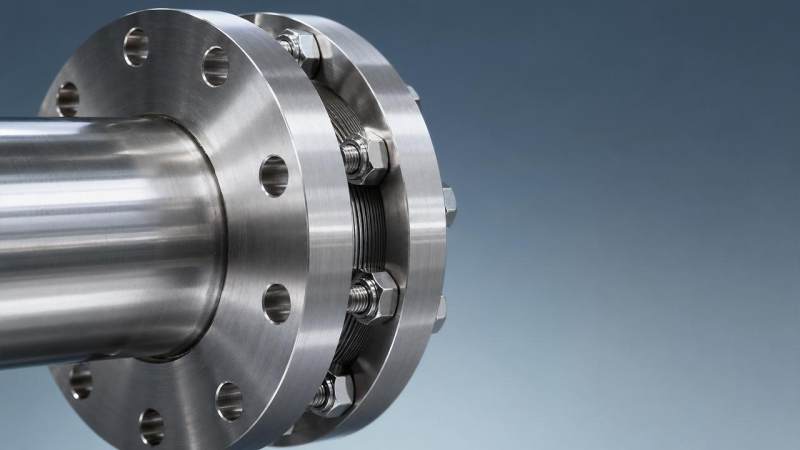
Standard non-metallic gaskets—including compressed fiber, rubber-bonded asbestos alternatives, and many EPDM or NBR formulations—are designed for softer, more compliant flange faces (e.g., ASTM A105 carbon steel, HB 120–160). When mated with high strength stainless steel pipe flanges—typically machined to Ra ≤ 3.2 μm and hardness ≥ 260 HV—their compressibility becomes insufficient to achieve uniform seating pressure across the sealing surface.
Two key failure mechanisms emerge: (1) Localized gasket extrusion at bolt holes due to excessive interface stress concentration, and (2) incomplete creep relaxation, resulting in micro-leak paths after thermal cycling. Field data from 12 offshore platform installations (2021–2023) showed a 3.8× higher flange leakage incidence when using standard spiral-wound gaskets with S32750 pipe versus matching super-duplex gasket fillers.
Additionally, the reduced thermal expansion mismatch between high strength stainless steel pipe and common elastomeric gaskets creates differential contraction during cooldown—increasing the risk of “cold blowout” in cryogenic or intermittent service. This is especially critical in LNG transfer systems operating between −162°C and +60°C.
Which gasket types are ASTM/EN-compliant and technically validated for high strength stainless steel pipe?
Validated gasket solutions prioritize metallurgical compatibility, controlled compressibility, and thermal stability. The following categories meet ASME B16.20, EN 1514-2, and ISO 7483 requirements for use with high strength stainless steel pipe:
Note: Gasket selection must also consider flange facing type (RF, RTJ, or tongue-and-groove), bolt load distribution, and hydrotest protocol. For example, spiral-wound gaskets require minimum bolt stress of 420 MPa to achieve proper filler densification against S32750 flanges—versus 280 MPa for standard 316L.
How does Hongteng Fengda support gasket compatibility verification for global projects?
Hongteng Fengda provides integrated engineering support beyond pipe supply—including joint integrity assessment, gasket specification review, and flange management documentation aligned with ASME PCC-1 and EN 1514-1. Our technical team performs finite element analysis (FEA) on flanged assemblies using actual pipe grade properties (e.g., S32750 modulus = 195 GPa, Poisson’s ratio = 0.28) to model gasket stress distribution under design pressure and temperature extremes.
We maintain an in-house gasket compatibility database covering 37 gasket manufacturers and 124 configurations, cross-referenced against 22 high strength stainless steel pipe grades. For instance, our validation report for S32101 pipe used in Middle Eastern desalination plants confirmed that flexible graphite gaskets with SS316 inserts achieved leak-tight performance at 120 bar and 85°C over 18 months—while standard aramid-filled gaskets failed within 4 months.
For hybrid structural applications, we also recommend complementary materials such as AZ50 Galvalume Steel Coil, which delivers outstanding corrosion resistance (55% Al–43.5% Zn–1.5% Si coating) and yield strength of 240–380 MPa—ideal for secondary framing, cladding supports, or non-pressurized housings where cost-performance balance is critical.
What should technical evaluators confirm before finalizing a high strength stainless steel pipe order?
Before procurement, technical evaluators must validate four interdependent parameters:
- Flange facing finish and hardness: Confirm Ra ≤ 3.2 μm and HV ≥ 260 for direct contact zones.
- Gasket stress profile: Verify minimum required seating stress (e.g., 120 MPa for Inconel 625 filler) exceeds achievable bolt-up stress given flange geometry and torque control method.
- Thermal cycling envelope: Document expected min/max temperatures and cycle frequency—critical for predicting gasket relaxation loss.
- Traceability alignment: Ensure mill test reports (MTRs) for pipe and gasket material certificates reference identical heat numbers and test batches where applicable.
Hongteng Fengda offers pre-shipment joint integrity packages—including third-party witnessed hydrotests, ultrasonic flange face scanning, and gasket installation training for site supervisors. Lead time for certified high strength stainless steel pipe orders averages 8–12 weeks, with expedited options available for qualified projects in North America and the EU.
Why partner with Hongteng Fengda for high strength stainless steel pipe and system integration?
As a structural steel manufacturer and exporter from China, Hongteng Fengda combines deep metallurgical expertise with end-to-end project execution capability. We supply high strength stainless steel pipe in diameters up to 2,000 mm and wall thicknesses up to 120 mm—fully compliant with ASTM, EN, JIS, and GB standards—and provide coordinated engineering support for flange joint reliability, thermal expansion compensation, and long-term corrosion performance.
Our clients—from EPC contractors in Saudi Arabia to infrastructure developers in Canada—rely on us for consistent quality, stable production capacity, and responsive technical collaboration. If you need confirmation of gasket compatibility for your specific high strength stainless steel pipe grade, flange configuration, or service environment—or require assistance with MTR review, FEA modeling, or customized packaging for logistics-sensitive sites—we invite you to contact our engineering team with your project specifications, design pressure/temperature conditions, and flange facing details.
Please give us a message


Please enter what you want to find