Are Steel Beams the Right Choice for Long Spans?
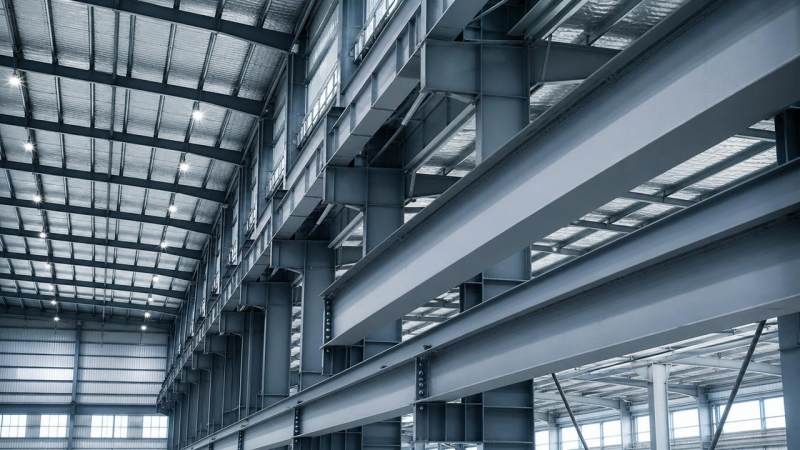
For long-span structures, selecting the right load-bearing material affects safety, cost, fabrication efficiency, and long-term performance.
Steel Beams are widely used in industrial plants, commercial buildings, bridges, and infrastructure projects.
They offer high strength-to-weight ratios, predictable engineering properties, and flexible design options.
However, Steel Beams must be evaluated against span length, load conditions, deflection limits, connections, corrosion protection, and project standards.
Why a Checklist Matters for Long-Span Steel Beams
Long spans create higher bending moments, vibration sensitivity, and serviceability demands.
A checklist prevents material selection from being based only on price, section size, or previous project habits.
Steel Beams can be highly efficient, but only when geometry, loads, fabrication, transport, and installation are considered together.
This approach helps reduce redesign, field welding delays, excessive camber correction, and unexpected maintenance costs.
Core Checklist for Evaluating Steel Beams
- Confirm the clear span, support layout, and load path before selecting Steel Beams or comparing alternative structural systems.
- Calculate dead loads, live loads, wind loads, snow loads, crane loads, and seismic actions using the required design code.
- Check bending strength, shear resistance, lateral torsional buckling, and web crippling for the proposed beam section.
- Set deflection limits early, because long-span Steel Beams may satisfy strength requirements but still fail serviceability criteria.
- Review vibration performance when Steel Beams support floors, walkways, equipment platforms, or occupied commercial spaces.
- Compare rolled sections, welded built-up beams, castellated beams, and plate girders based on span, weight, and fabrication complexity.
- Verify connection capacity, bolt spacing, weld size, end plate thickness, and erection tolerances before finalizing drawings.
- Evaluate fire protection requirements, including intumescent coating, board encasement, or concrete encasement for exposed Steel Beams.
- Specify corrosion protection according to environment, especially for coastal, industrial, bridge, and high-humidity applications.
- Confirm delivery length, transport route, lifting plan, and site access before approving oversized long-span Steel Beams.
Where Steel Beams Perform Well in Long Spans
Industrial Plants and Warehouses
Steel Beams are often suitable for industrial buildings because they support large open bays and flexible equipment layouts.
They integrate well with columns, roof purlins, crane girders, mezzanines, and bracing systems.
For heavy manufacturing spaces, Steel Beams should be checked for dynamic loads, fatigue, and local reinforcement around equipment zones.
Commercial Buildings and Public Spaces
In offices, malls, stations, and exhibition halls, Steel Beams help create column-free interiors.
Long-span beams can also simplify architectural planning when services must pass through ceilings or raised floors.
Serviceability becomes critical in these buildings, so deflection, vibration, acoustic performance, and fire rating need early coordination.
Bridges and Infrastructure
Steel Beams are widely used in bridges because they are strong, prefabricated, and suitable for staged construction.
They allow faster installation over roads, railways, rivers, and constrained urban sites.
For bridge applications, fatigue design, coating durability, drainage details, and inspection access are essential decision factors.
Material, Standards, and Supply Considerations
Long-span Steel Beams require consistent mechanical properties, dimensional accuracy, and traceable quality documentation.
Common specifications may include ASTM, EN, JIS, and GB standards, depending on the project location.
Grades should be selected by yield strength, toughness, weldability, availability, and compatibility with connection materials.
Hongteng Fengda supplies structural steel products for global construction, industrial, and manufacturing projects.
Its product range includes angle steel, channel steel, steel beams, cold formed profiles, and customized structural components.
For supporting systems, drainage, protection, or low-pressure fluid pipelines, Galvanized Pipe can complement long-span steel structures.
Available options include DX52D galvanized steel, lengths from 1–12 m, and dimensions customized according to project requirements.
Surface options include clean finish, blasting, painting, hot-dip galvanizing, or electro-galvanized protection for improved corrosion resistance.
Common Risks When Using Steel Beams for Long Spans
Underestimating Deflection
Steel Beams may carry the required load but still deflect beyond acceptable limits.
Excessive deflection can crack finishes, affect drainage, misalign equipment, or reduce user comfort.
Ignoring Lateral Restraint
Long-span Steel Beams can twist if the compression flange is not properly restrained.
Bracing, decking, secondary beams, or rigid connections must be detailed to control lateral torsional buckling.
Treating Connections as Secondary Details
Connection design can govern long-span structural performance more than the main beam section.
Bolted end plates, splice joints, stiffeners, and bearing details should be reviewed before fabrication release.
Overlooking Corrosion and Maintenance
Exposed Steel Beams need suitable coating systems, especially in marine, chemical, or humid environments.
Maintenance access should be considered during design, not after installation is complete.
Practical Selection Guide for Steel Beams
- Define the span, bay spacing, support conditions, and functional requirements before choosing beam depth or steel grade.
- Ask for preliminary structural calculations covering strength, deflection, vibration, buckling, and connection forces.
- Compare total installed cost, not only material price, because lighter Steel Beams may increase fabrication complexity.
- Check whether standard rolled sections are available, or whether welded built-up Steel Beams offer better efficiency.
- Coordinate openings, service routes, cladding supports, roof systems, and fire protection before final detailing.
- Review coating specification, packaging, inspection documents, and shipping schedule for international structural steel supply.
Cost Factors Beyond Beam Weight
The lowest tonnage does not always create the lowest project cost.
Deep Steel Beams may reduce steel weight but increase transport difficulty, lifting demand, or architectural depth.
Shallow beams may fit better within ceiling zones but require heavier sections or additional composite action.
Fabrication cost also changes with stiffeners, cambering, splice plates, welding volume, and surface treatment requirements.
A realistic comparison should include steel supply, detailing, fabrication, coating, freight, erection, inspection, and maintenance.
When Steel Beams May Not Be the Best Option
Steel Beams are not automatically ideal for every long-span structure.
Projects with strict fire exposure limits, aggressive corrosion, or severe vibration criteria may require hybrid solutions.
In some cases, trusses, arches, prestressed concrete, or composite systems may offer better structural efficiency.
The decision should be based on engineering performance, construction method, lifecycle cost, and local code compliance.
Final Decision Checklist
- Use Steel Beams when high strength, predictable fabrication, and fast erection are priorities for long-span structures.
- Avoid early section selection without checking serviceability, stability, connection behavior, and environmental exposure.
- Require mill certificates, dimensional inspection, coating records, and standard compliance for every structural steel order.
- Plan logistics early, because long-span Steel Beams often create transport, unloading, and lifting constraints.
- Select a supplier with stable production capacity, export experience, quality control, and customized fabrication capability.
Conclusion and Next Steps
Steel Beams are often an excellent choice for long spans when design, fabrication, protection, and erection are coordinated.
Their main advantages include strength, versatility, prefabrication speed, and compatibility with many building systems.
The key is to evaluate Steel Beams through a complete checklist, not through beam size alone.
Before ordering, confirm loads, standards, deflection limits, connection drawings, surface treatment, and delivery constraints.
With accurate specifications and reliable structural steel supply, long-span projects can achieve safety, efficiency, and durable performance.
Please give us a message


Please enter what you want to find