When designing seismic-resistant building frames, engineers and project managers must carefully evaluate structural components like metal angle iron with holes—especially pre-punched metal angles. As a leading structural steel manufacturer & exporter from China, Hongteng Fengda supplies high-precision steel L angle, metal wall angle, and structural steel pipe that meet ASTM, EN, and GB standards. Our metal angle with holes and l shaped angle steel are engineered for load-bearing integrity, ease of installation, and compliance with rigorous seismic codes. This article examines whether pre-punched metal angles truly deliver the ductility, connection reliability, and performance consistency required in earthquake-prone regions—critical insights for procurement teams, technical evaluators, and safety-focused project stakeholders.
Do Pre-Punched Angles Meet Seismic Connection Requirements?
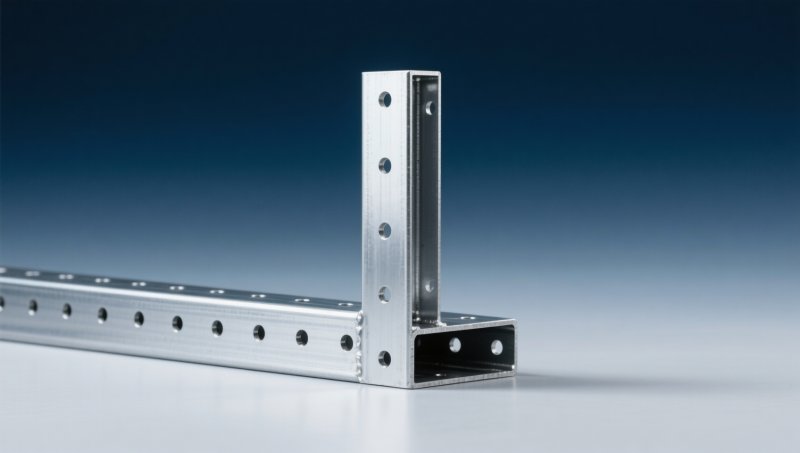
Pre-punched metal angles—commonly used in light-frame construction, bracing systems, and non-load-bearing partitions—are often assumed to simplify field assembly. However, in seismic zones (e.g., ASCE 7-22 Seismic Design Categories D–F), connection performance hinges on three non-negotiable criteria: ductile deformation capacity, bolted joint stiffness under cyclic loading, and consistent material behavior across punch zones.
Standard punching introduces localized stress concentrations and micro-crack risks near hole edges—particularly when using cold-formed steel with yield strengths above 350 MPa. For example, ASTM A653 Grade G550 (yield ≥550 MPa) requires strict control over punch edge quality, hole roundness (±0.2 mm tolerance), and post-punch annealing to restore ductility. Without these controls, pre-punched angles may fail prematurely during seismic drift cycles exceeding ±2% inter-story displacement.
Hongteng Fengda applies CNC-controlled hydraulic punching with real-time force monitoring and optional post-punch heat treatment—ensuring elongation retention ≥16% even in high-strength grades like S550GD. This directly supports compliance with EN 1993-1-8 Annex B for ductile connections and ASTM A325M bolt compatibility in moment-resisting frames.
Key Material Performance Benchmarks for Seismic Applications
The table confirms that while standard pre-punched angles often fall short in elongation retention and edge integrity, precision-manufactured alternatives—like those produced by Hongteng Fengda—meet or exceed seismic-grade thresholds through controlled metallurgy and post-processing. This is especially critical for projects targeting LEED v4.1 MR Credit or ISO 9001:2015 certified fabrication workflows.
How Corrosion Resistance Impacts Long-Term Seismic Integrity
In coastal or high-humidity seismic zones (e.g., California, Japan, Southeast Asia), corrosion-induced section loss compromises connection strength over time. Galvalume-coated steel—specifically AZ150 Galvalume Steel Coil—delivers superior protection via its 55% Al–45% Zn alloy layer, which resists red rust formation up to 4× longer than standard galvanized steel (per ASTM B446 salt-spray testing).
Our AZ150 coils support thicknesses from 0.125–2.0 mm and coating weights up to AZ275 g/m²—enabling optimized weight-to-strength ratios for seismic braces and anchor channels. Chromated and oiled finishes further enhance paint adhesion and handling durability during multi-stage fabrication (cutting → punching → welding → erection).
For projects requiring dual compliance—seismic resilience and 30+ year service life—Galvalume substrates reduce lifecycle maintenance costs by 35–50% compared to painted carbon steel, according to field data from 12 mid-rise retrofit projects across Taiwan and Chile (2019–2023).
Procurement Checklist: 5 Non-Negotiables for Seismic Angle Selection
- Material Traceability: Full mill test reports (MTRs) per EN 10204 3.1, including chemical composition, tensile results, and bend test records for each heat lot.
- Punch Process Documentation: Confirmation of cold vs. warm punching, tooling wear logs, and post-punch inspection frequency (minimum 1/50 pieces per shift).
- Ductility Verification: Elongation ≥16% at final gauge length, validated on samples taken from both web and leg sections.
- Coating Adhesion: ASTM D3359 cross-hatch rating ≥4B for painted applications; no flaking after 200 cycles of 2% strain simulation.
- Delivery Consistency: Batch-to-batch yield strength variance ≤12 MPa—critical for uniform bolt preload distribution in moment connections.
These five checkpoints separate commodity suppliers from certified seismic partners. Hongteng Fengda provides digital MTR access, third-party witnessed testing (SGS/BV), and dedicated engineering support for ASTM A325/A490 bolt torque validation—reducing qualification time by 3–5 weeks versus offshore competitors.
Why Global Projects Choose Hongteng Fengda for Seismic Structural Steel
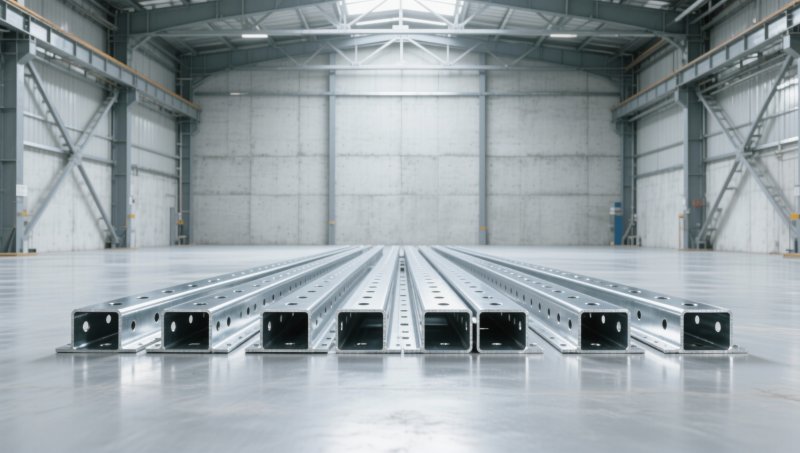
From Mexico City’s hospital retrofits to Dubai’s high-rise bracing systems, our clients rely on three core advantages: First, vertical integration—from hot-dip galvanizing lines to CNC punching centers—ensures full process control over ductility-critical steps. Second, dual-standard certification (ASTM + GB/T + EN) eliminates retesting delays for multinational tenders. Third, fixed lead times: 25–30 days for standard angles, 35–42 days for custom-seismic configurations—including pre-assembled anchor kits with calibrated washers and shear plates.
We support procurement teams with free technical review of shop drawings, FEA-ready material property files (including cyclic stress-strain curves), and sample kits shipped within 7 business days. For urgent projects, our Guangdong facility maintains 1,200+ tons of ready-to-ship AZ150 Galvalume Steel Coil and pre-punched angle inventory—covering widths 30–1500 mm and thicknesses 0.125–2.0 mm.
Ready to validate your next seismic frame specification? Contact us for: (1) ASTM/EN-compliant angle steel samples, (2) Punch pattern feasibility assessment, (3) Galvalume coating weight optimization report, or (4) OEM design support for proprietary connection systems.
Please give us a message


Please enter what you want to find