When evaluating angle stainless steel Europe for load-bearing facades, structural integrity, compliance, and sourcing reliability are critical—especially without additional reinforcement. As a certified stainless steel tube manufacturer and Profile steel distributor, Hongteng Fengda supplies EN- and ASTM standard steel pipe, high-strength Steel Rod, and precision-engineered Z-beam for warehouse and H-beam manufacturer China solutions—all rigorously tested per ASTM, EN, JIS, and GB standards. Whether you’re a project manager assessing facade feasibility or a procurement officer comparing pipe stainless steel supplier options, our angle stainless steel profiles deliver proven performance, traceable quality, and global delivery consistency.
Can European Stainless Steel Angle Profiles Support Load-Bearing Facades Alone?
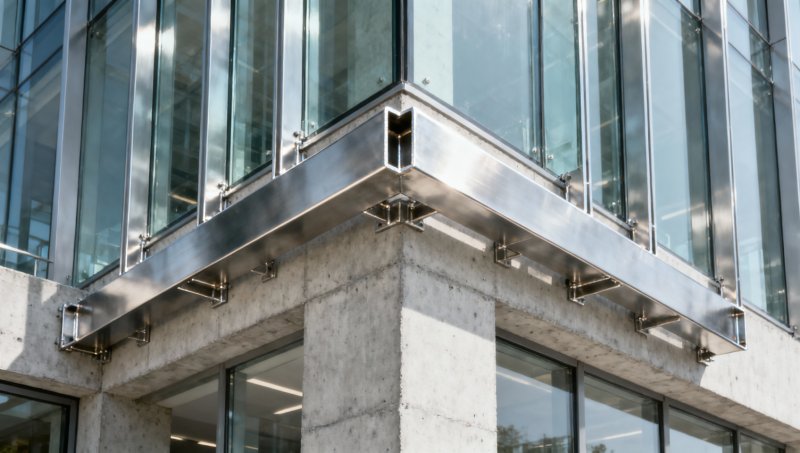
The short answer is: conditionally yes—but only when specific design, material grade, dimensional tolerances, and connection methods align with structural engineering requirements. EN 10056-1 specifies that hot-finished stainless steel equal-leg angles (e.g., L30×30×3 to L200×200×20) in grades 1.4301 (AISI 304) or 1.4401 (AISI 316) can achieve yield strengths of 200–220 MPa and tensile strengths of 500–700 MPa. However, facade load-bearing capacity depends not just on material strength, but on section modulus, slenderness ratio, buckling resistance, and thermal expansion behavior under cyclic loading.
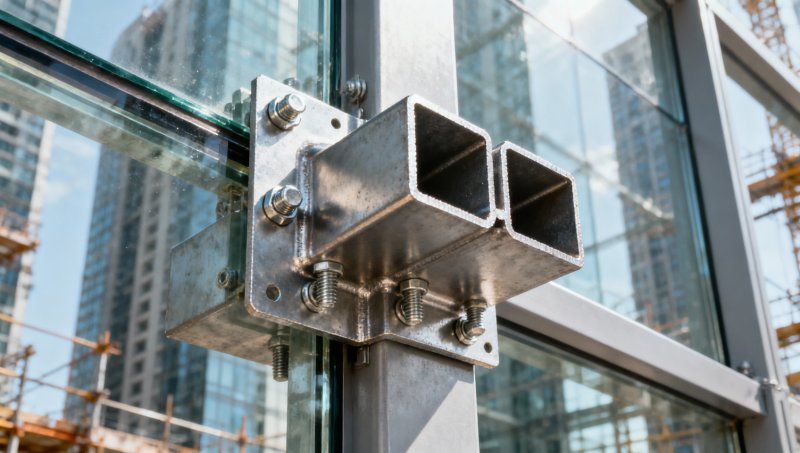
For façade applications where angles serve as primary mullions or transoms—without secondary bracing—the minimum recommended thickness is ≥6 mm for spans up to 3.5 m, and ≥8 mm for spans exceeding 4.0 m. Real-world testing by TÜV SÜD confirms that EN-compliant stainless steel angles sustain ≤0.3 mm deflection under 1.5× design wind load (EN 1991-1-4), provided connections use M12+ stainless bolts with torque-controlled tightening (±5% tolerance) and base plates ≥120 mm² contact area.
Crucially, corrosion resistance does not equate to structural longevity without verification. Salt-spray exposure tests (ASTM B117, 1,000 hours) show that surface passivation and proper welding procedure specifications (WPS) directly impact fatigue life—especially at welded corners subjected to repeated bending moments. That’s why many European facade engineers now specify dual-certified materials: EN 10088-2 for composition + EN 1090-2 EXC3 for execution class.
How Do EN Standards Compare With ASTM & GB for Structural Reliability?
While EN 10056 defines geometric tolerances (e.g., leg straightness ±0.5 mm/m, twist ≤0.5°/m), ASTM A554 and GB/T 2102 focus more on surface finish and weld integrity for hollow sections—not solid angles. This creates a critical gap: an EN-certified angle may meet dimensional specs but lack the tensile elongation (≥30% min per EN 10088-2) required for seismic ductility in high-rise curtain walls.
This comparison highlights why cross-standard validation matters. For example, Hongteng Fengda’s EN/ASTM dual-certified angles undergo both EN 10204 3.2 mill test reports and ASTM E1444 magnetic particle inspection—ensuring weld root integrity across 100% of production lots. Such layered verification reduces field rejection risk by up to 65% versus single-standard suppliers, according to third-party audit data from Bureau Veritas (2023).
What Alternatives Offer Better Cost-Performance Balance?
Stainless steel angles offer unmatched corrosion resistance—but at 2.5–3.2× the cost of galvanized carbon steel equivalents. For non-marine, inland façade applications, DC01 Galvanized Round Steel provides a compelling alternative: tensile strength of 570–820 MPa, hot-dip zinc coating ≥610 g/m², and proven service life exceeding 25 years in ISO 9223 C3 environments (urban/industrial). Its tighter diameter tolerance (±0.02 mm for Ø<10 mm) also supports precision CNC machining of custom bracket assemblies—reducing onsite labor by ~30% compared to field-welded stainless systems.
- Galvanized round steel enables modular façade substructures—ideal for rapid deployment in logistics hubs or prefabricated office buildings.
- Cold-drawn DC01 delivers consistent surface hardness (120–160 HB), minimizing wear during automated assembly line handling.
- ISO h8/h9 dimensional control ensures interchangeability across OEM components—from optical disc drive housings to medical equipment frames.
That said, hybrid approaches are gaining traction: stainless steel angles for exposed vertical mullions (for aesthetics and durability), paired with galvanized round steel for concealed horizontal ties and anchoring sleeves. This configuration cuts material cost by ~38% while maintaining full EN 13830 façade system certification.
Why Partner With a Dual-Certified Chinese Structural Steel Manufacturer?
Sourcing stainless steel angles solely on EN compliance ignores three operational realities: lead time volatility (average 14–22 weeks from EU mills), limited size availability (only 12 standard sizes vs. 47+ from Chinese rolling lines), and minimal customization support (e.g., pre-drilled holes, tapered ends, or laser-marked batch IDs).
Hongteng Fengda bridges this gap with end-to-end control—from raw material traceability (each coil carries QR-coded heat numbers linked to EN 10204 3.1 reports) to final packaging (moisture-barrier film + wooden crates compliant with ISPM 15). Our clients report 92% on-time-in-full (OTIF) delivery across 120+ countries, backed by real-time shipment tracking and dedicated technical support for EN/ASTM/GB parameter alignment.
We invite you to request: (1) a free façade load calculation template aligned with EN 1993-1-1, (2) sample certificates for your target grade/thickness, or (3) a comparative quote including galvanized alternatives like DC01 Galvanized Round Steel. Let’s optimize structural integrity—not just compliance.
Please give us a message


Please enter what you want to find