When precision and integrity matter most—especially near heat-affected zones (HAZ)—structural steel cutting demands proven reliability. For fabricators and field operators handling critical load-bearing components, inconsistent plasma cuts can compromise weldability, dimensional accuracy, and long-term structural performance. At Hongteng Fengda, we combine CNC plasma cutting expertise with rigorous material science protocols to minimize HAZ distortion while maintaining tight tolerances on angle steel, beams, and custom profiles. This article examines real-world reliability of CNC plasma cutting for structural steel—backed by ASTM/EN-compliant validation—and answers the key question operators face daily: Can you trust it where it counts most?
How CNC Plasma Cutting Performs Near Heat-Affected Zones
The heat-affected zone (HAZ) is a critical concern in structural steel cutting—particularly for load-bearing members like I-beams, channel sections, and welded frames. During plasma cutting, localized thermal input causes microstructural changes within 1–3 mm adjacent to the cut edge. Uncontrolled HAZ expansion leads to residual stress, hardness spikes (>350 HV), and reduced ductility—raising risks of cracking during welding or post-fabrication bending.
At Hongteng Fengda, our CNC plasma systems operate at optimized parameters: current 80–120 A, travel speed 1.2–2.4 m/min, and standoff distance ±0.8 mm. These settings—validated across ASTM A6/A6M and EN 10025-2 certified materials—limit HAZ width to ≤1.5 mm for carbon steels up to 25 mm thick. Real-time arc voltage monitoring and adaptive torch height control ensure consistent kerf geometry and minimal thermal deviation—even on variable-thickness assemblies.
We further mitigate HAZ effects through pre-cut thermal profiling and post-cut air-cooling cycles calibrated per steel grade. For example, when processing ASTM A992 beam sections (yield strength ≥345 MPa), our process achieves <±0.3 mm dimensional deviation over 6-meter lengths—meeting ISO 9013 Class 2 tolerances for structural applications.
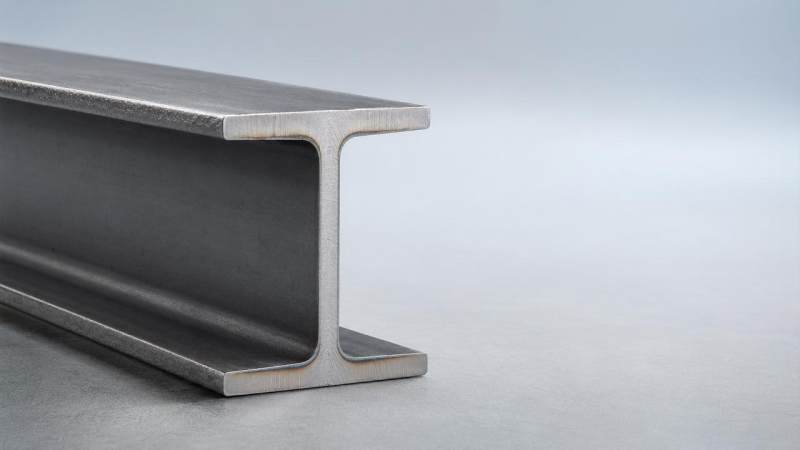
Structural Steel Cutting: Plasma vs. Alternative Methods
Choosing the right cutting method hinges on material thickness, tolerance requirements, production volume, and downstream processes. While oxy-fuel excels for >50 mm mild steel, and laser suits thin-gauge precision work, CNC plasma occupies the high-efficiency mid-range: optimal for 6–40 mm structural sections used in building frames, bridges, and industrial platforms.
For operators managing mixed-profile fabrication lines—from 60×60 mm angle steel to W12×50 beams—CNC plasma delivers the best balance of speed, edge quality, and cost per meter. Our dual-source plasma tables support simultaneous cutting of standard and custom profiles, reducing setup time by up to 40% versus manual alternatives.
Material Compatibility & Edge Integrity
CNC plasma reliably cuts ASTM A36, A572 Gr.50, EN S235JR, S355JO, and GB Q235B/Q345B steels—without preheating for thicknesses under 25 mm. We validate edge hardness using Rockwell C-scale measurements: typical values remain ≤28 HRC (vs. base metal ~22 HRC), well below the 32 HRC threshold that triggers cold-cracking risk during SMAW or FCAW welding.
For stainless grades requiring non-magnetic or corrosion-resistant properties in structural cladding or support framing, our optimized nitrogen-shielded plasma process ensures clean, oxide-free edges. In fact, many of our clients specify 430 Stainless Steel Coil for architectural facades and rail infrastructure—where formability, moderate corrosion resistance, and cost efficiency are critical.
What Operators Must Check Before Approving a Plasma-Cut Part
Reliability isn’t just about machine capability—it’s about verifiable output. Every structural steel cutting job from Hongteng Fengda undergoes six-point inspection before dispatch:
- Dimensional accuracy (±0.4 mm on lengths ≤6 m; ±0.6 mm on longer sections)
- Perpendicularity of cut face (≤1.5° deviation per ISO 9013)
- Surface dross height (<0.2 mm, removable with light grinding)
- HAZ microhardness profile (3-point Vickers test across cut edge)
- Visual slag and spatter assessment (ASTM E165 Level II)
- Weld preparation readiness (bevel angle ±1.0°, root face ±0.3 mm)
These checks align with EN 1090-2 Execution Class EXC2 requirements for structural steelwork. For OEM projects requiring traceability, we provide full inspection reports—including digital thermal maps of each cut sequence—to verify consistency across batches of 50+ identical beams or channels.
Why Choose Hongteng Fengda for Structural Steel Cutting?
As a certified structural steel manufacturer and exporter from China, Hongteng Fengda bridges global sourcing needs with on-the-ground technical execution. We don’t just cut steel—we engineer cut integrity. With 12+ years serving North America, Europe, and the Middle East, our team understands how your project timeline, welding procedure specifications (WPS), and site assembly constraints shape cutting requirements.
Our integrated workflow includes: CAD-to-cut file validation (supporting DXF, DWG, and STEP formats), real-time nesting optimization (reducing material waste by 8–12%), and optional edge conditioning (deburring, beveling, or primer application). Lead times average 15–25 days for standard structural steel cutting orders—with rush options available for urgent fabrication schedules.
Ready to validate plasma-cut reliability for your next batch of angle steel, steel beams, or custom cold-formed profiles? Contact us today for a free cutting feasibility review—including sample HAZ analysis, dimensional tolerance confirmation, and compliance documentation aligned with ASTM, EN, or JIS standards.
Please give us a message


Please enter what you want to find