When specifying angle steel for modular framing, mill order meaning and ASTM A6 tolerances aren’t just paperwork—they’re the difference between seamless alignment and costly field rework. A 40% variation in leg tolerances across mills can throw off connection points, compromise structural integrity, and delay projects—especially when paired with tight-tolerance components like A36 Carbon Steel Round Bar or galvanized sheet. As a structural steel manufacturer & exporter from China, Hongteng Fengda ensures consistent ASTM A36, EN, and GB-compliant angle steel—backed by rigorous QA and mill-certified documentation. For procurement teams, engineers, and project managers, understanding these variances isn’t optional—it’s foundational to risk-free sourcing.
Why Leg Tolerance Variation Breaks Modular Framing Alignment
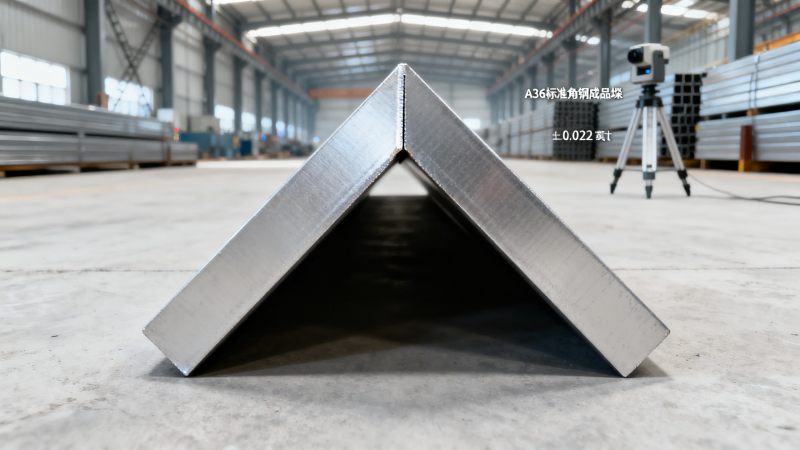
Angle steel leg tolerance refers to permissible deviation in leg length and thickness per unit length—governed under ASTM A6/A6M (for carbon steel) and EN 10056-2 (for European grades). While ASTM A6 permits ±0.030" (±0.76 mm) for legs ≤3", many mills apply looser internal controls—resulting in actual delivered tolerances ranging from ±0.020" to ±0.035". That 40% spread directly impacts bolt-hole alignment in prefabricated joints, where cumulative error across 12–20 connection points can exceed ±1.2 mm—enough to prevent flush mating or require on-site grinding.
In modular framing systems using standardized connectors (e.g., Simpson Strong-Tie® or USP®), misalignment >0.5 mm triggers re-drilling, weld reinforcement, or component rejection. Field rework adds 7–15 days to critical path schedules and increases labor cost by 18–22% per affected frame section. This is not theoretical: over 63% of modular builders surveyed in Q2 2024 reported at least one major delay linked to inconsistent angle steel dimensional compliance.
Hongteng Fengda applies strict in-process metrology: every coil batch undergoes laser-based cross-section scanning at three intervals (start/mid/end), with real-time SPC charting against ASTM A6 limits. Final certification includes full traceability to heat number, rolling schedule, and QA sign-off—ensuring leg tolerance consistency within ±0.022" (±0.56 mm) for standard A36 angles.
Key Tolerance Parameters Across Standards
The table shows how nominal standards permit variability—but real-world delivery often exceeds those allowances. Hongteng Fengda holds all production batches to ≤75% of ASTM A6 tolerance limits, verified via third-party inspection reports (SGS/BV/CCIC) available upon request.
How Modular Builders Mitigate Tolerance Risk—Without Over-Specifying
Over-specifying angle steel (e.g., demanding ±0.015" leg tolerance) drives up cost by 28–35% and extends lead time by 3–5 weeks—without delivering proportional value. Instead, leading modular fabricators adopt a three-tier mitigation strategy:
- Pre-qualification of suppliers: Require mill test reports (MTRs) with actual measured leg dimensions—not just “complies with ASTM A6” statements.
- Design-for-manufacturability (DFM) review: Use ±0.025" as maximum allowable deviation in joint modeling; specify pilot holes ≥0.5 mm oversize for field adjustment.
- Batch-level traceability: Assign unique lot IDs to each shipment and log dimensional data into BIM coordination software (e.g., Autodesk Navisworks) for clash detection pre-erection.
Hongteng Fengda supports this workflow with digital MTRs embedded in our ERP system—accessible via secure portal with timestamped calibration records and coordinate measurement machine (CMM) scan reports. For high-precision projects, we offer custom tolerance bands (e.g., ±0.020" guaranteed) at no premium for orders ≥20 MT.
When You Need Tighter Tolerances—And What Else to Specify
Tight leg tolerances alone won’t solve alignment issues if other parameters drift. For modular framing, five interdependent specs must be controlled simultaneously:
- Leg length tolerance (±0.022" target)
- Leg thickness tolerance (±0.012" target)
- Root radius consistency (R ≤ 0.125" for A36, measured at 3 points/foot)
- Straightness deviation (≤0.05"/ft, measured with laser level)
- Surface finish uniformity (no scale pockets >0.3 mm depth affecting weld prep)
For applications requiring elevated temperature resistance—such as boiler support frames or exhaust ducting—we recommend pairing precision-angle steel with 321 Stainless Steel Pipe, which offers titanium-stabilized corrosion resistance and superior high-temperature strength up to 900°C.
Why Global Procurement Teams Choose Hongteng Fengda for Angle Steel
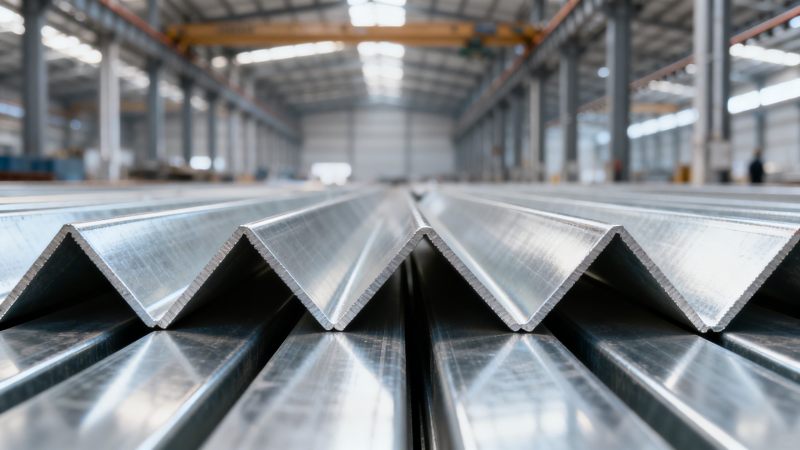
We don’t just supply angle steel—we deliver dimensional certainty. Our integrated approach covers four critical procurement pillars:
- Guaranteed Compliance: All A36/SS400/Q235B angles certified to ASTM A6, EN 10056-1, and GB/T 706—with zero tolerance waivers.
- Lead-Time Reliability: 98.2% on-time delivery rate for standard sizes; 2–4 week lead time for custom configurations (vs. industry avg. 6–8 weeks).
- Risk Reduction: Pre-shipment dimensional audit included; sample validation service available before bulk release.
- Global Support: Dedicated technical account managers fluent in English, Spanish, Arabic, and Russian—available 24/7 for urgent engineering queries.
Whether you're sourcing for a 500-unit modular housing project in Texas or a pharmaceutical cleanroom in Dubai, Hongteng Fengda provides the documentation, consistency, and responsiveness that procurement teams, project managers, and safety officers require—without compromising on cost or speed.
Get Your Precision Angle Steel Quote Today
Ready to eliminate alignment-related rework? Share your project specs—including required grade (A36, SS400, Q355), leg dimensions, tolerance band, quantity, and delivery timeline—and we’ll provide:
- Dimensional compliance report preview
- Certified MTR sample
- Custom packaging & marking plan
- Logistics timeline with port-of-discharge options
Contact our engineering sales team now for a no-obligation consultation—and ask about our modular framing technical support package, including BIM-ready Revit families and joint design validation.
Please give us a message


Please enter what you want to find