When sourcing angle plate steel—especially l shape angles, 90 angle metal, or cold formed angle profiles—many buyers assume pickling is essential for corrosion resistance and surface quality. But does removing mill-scale always add value? For applications using cold rolled steel, ASTM stainless steel (e.g., 316 angle), or corrosion-resistant plate, the answer depends on end-use, cost targets, and spec compliance. As a certified structural steel manufacturer exporting angle bars and stainless steel sheet globally, Hongteng Fengda helps technical evaluators, procurement teams, and project managers weigh trade-offs between surface treatment, lead time, and total landed cost—without compromising ASTM, EN, or GB standards.
Understanding Mill-Scale: Not a Defect, but a Byproduct
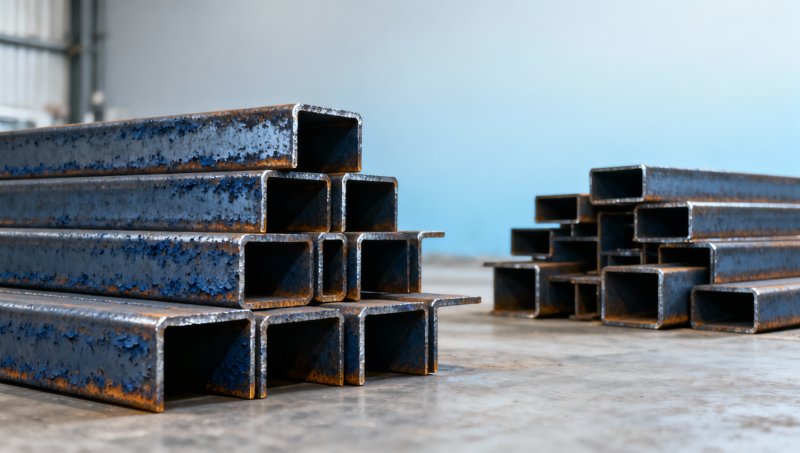
Mill-scale is a tightly bonded, bluish-black iron oxide layer (Fe3O4) that forms naturally during hot rolling at temperatures above 800°C. It’s not rust—it’s denser, more adherent, and acts as a temporary barrier against atmospheric moisture. Contrary to common perception, mill-scale is neither a flaw nor evidence of poor quality; it’s an inherent characteristic of hot-rolled structural steel—including ASTM A36, EN S235JR, and GB Q235B angle sections.
For projects where angles are welded, painted, or galvanized post-fabrication, mill-scale can actually improve adhesion in certain coating systems—if properly prepared. However, if left unaddressed before painting with epoxy or polyurethane systems, mill-scale may delaminate over time due to differential thermal expansion, leading to underfilm corrosion. That’s why context—not blanket removal—is key.
Hongteng Fengda applies ISO 8501-1 Sa 2.5 blast cleaning when required by specification—but never prescribes pickling unless technically justified. Our QC team verifies surface condition per SSPC-SP6/NACE No. 3 prior to shipment, ensuring full traceability for every batch of L-shaped angles, unequal leg sections, or custom cold-formed profiles.
When Pickling Adds Value—and When It Doesn’t
Pickling removes mill-scale using acid baths (typically HCl or H2SO4), yielding a uniformly matte gray surface ideal for precision bending, electrogalvanizing, or high-gloss powder coating. But it incurs measurable costs: +12–18% unit price increase, +7–15 days extended lead time, and added wastewater treatment liability.
The decision hinges on three criteria: functional requirement, downstream process, and lifecycle cost. For example, pickled angles used in cleanroom HVAC ductwork (per ASTM E1293) justify the premium. But for embedded anchor plates in concrete foundations (EN 1992-1-1), mill-scale poses zero risk—and pickling adds no performance benefit.
Below is a comparative assessment across six common application scenarios:
This table underscores a critical insight: surface treatment must align with system-level performance—not isolated material specs. At Hongteng Fengda, we co-develop surface strategy with engineers during OEM design review, avoiding over-engineering while guaranteeing compliance with ASTM A6/A6M, EN 10025-2, or JIS G3101.
Cost-Benefit Analysis: Quantifying the Pickling Premium
For procurement and finance teams evaluating total landed cost, pickling impacts five levers: raw material yield loss (1.2–1.8%), chemical consumption (0.8–1.5 kg acid/ton), energy use (+220 kWh/ton), effluent disposal fees ($12–$28/ton), and inventory holding cost (+9–14 days).
A real-world case study with a Middle East infrastructure contractor revealed that specifying pickled ASTM A500 Gr.B angles increased per-ton cost by $86–$112, yet delivered no measurable improvement in 5-year field performance versus blasted-and-painted equivalents. In contrast, switching to pre-coated S220GD Galvalume Steel Coil reduced lifecycle maintenance by 65% in coastal installations—despite similar upfront cost.
Galvalume’s aluminum-zinc alloy (55% Al, 43.5% Zn, 1.5% Si) delivers 2–4× the durability of standard galvanized steel, excellent heat resistance up to 600°C, and superior cut-edge protection—making it a smarter alternative where mill-scale removal alone falls short.
Standards, Certifications, and Compliance Pathways
Global projects demand verifiable conformity—not assumptions. Hongteng Fengda maintains dual-certified mills compliant with ISO 9001:2015 and ISO 14001:2015, with third-party audits conducted annually by SGS, Bureau Veritas, and TÜV Rheinland. All angle steel shipments include mill test reports (MTRs) per EN 10204 3.1 or ASTM A6/A6M Annex A4.
We support clients navigating complex spec trees: ASTM A6/A6M Table 2 (surface condition tolerances), EN 10025-2 Clause 9.2 (mill-scale acceptance), and JIS G3101 Section 6.3 (visual inspection criteria). For projects requiring NACE SP0188 or ISO 12944 C5-M exposure class, we recommend pairing mill-scale-retained angles with duplex zinc-aluminum coatings—like those derived from Galvalume substrate—to meet 25+ year service life targets.
Our documentation package includes digital MTRs, dimensional inspection reports, and weldability test summaries—enabling seamless audit readiness for Tier-1 EPC contractors and government infrastructure authorities.
Strategic Recommendations for Procurement & Engineering Teams
Based on 12+ years serving 37 countries, Hongteng Fengda recommends this four-step evaluation framework before mandating pickling:
- Step 1: Confirm whether the end-use environment exceeds ISO 12944 C3 (moderate industrial) or C4 (high chloride). If not, mill-scale retention is technically sound.
- Step 2: Map downstream processes—welding, punching, drilling, coating. Pickling adds value only if >2 of these occur pre-assembly.
- Step 3: Benchmark against alternatives: blast-cleaned + zinc-rich primer (cost: $4.2–$6.8/kg) vs. pickled + epoxy topcoat (cost: $9.1–$13.5/kg).
- Step 4: Validate with accelerated testing: ASTM B117 salt spray (≥1,000 hrs for Galvalume-coated substrates) or ISO 6270 humidity cycling.
For fast-track projects, our standard lead time is 25–35 days ex-works Qingdao. Pickling extends this to 42–55 days. Where schedule compression matters, we offer pre-inspected, ready-to-paint mill-scale angles with certified surface profile (25–50 µm Ra) and compatibility data for major coating suppliers including PPG, AkzoNobel, and Sherwin-Williams.
Conclusion: Value Lies in Precision—Not Presumption
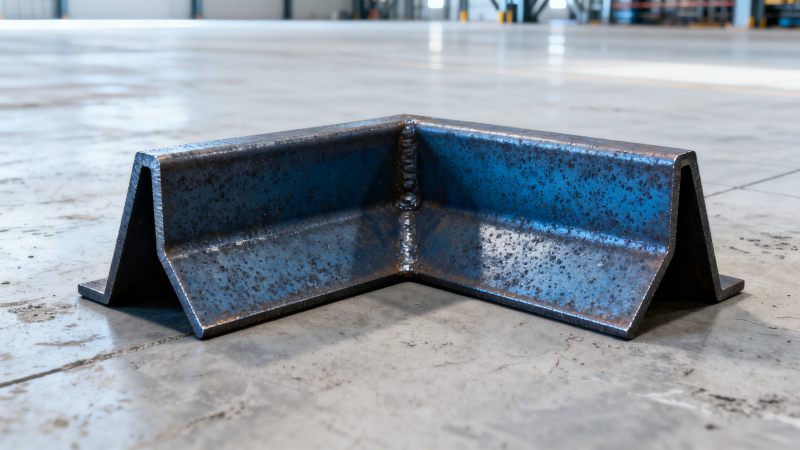
“Angle plate steel with mill-scale residue” isn’t a compromise—it’s a specification-ready condition aligned with global structural standards. The real value driver isn’t automatic pickling, but intelligent surface management calibrated to application physics, regulatory thresholds, and total cost of ownership.
Hongteng Fengda empowers procurement, engineering, and project leadership teams with data-backed guidance—not default assumptions. Whether you’re specifying ASTM A36 equal-leg angles for a Southeast Asian power plant, EN 10025 S355J2 channels for a European logistics hub, or custom cold-formed brackets for North American manufacturing lines—we ensure your surface strategy enhances—not hinders—performance, compliance, and competitiveness.
Ready to optimize your angle steel sourcing? Contact Hongteng Fengda today for a complimentary technical consultation, dimensional feasibility review, or customized quote—including side-by-side comparisons of mill-scale retained, pickled, and Galvalume-integrated solutions.
Please give us a message


Please enter what you want to find