Choosing the right angle iron for trailer frames is not just about price—it directly affects load capacity, vibration resistance, and long-term durability. For buyers, engineers, and fabricators, understanding thickness options, steel angle for construction performance, and sourcing from a reliable structural steel manufacturer can help reduce failure risks, control costs, and ensure safer trailer applications.
Why trailer angle iron thickness changes real-world durability
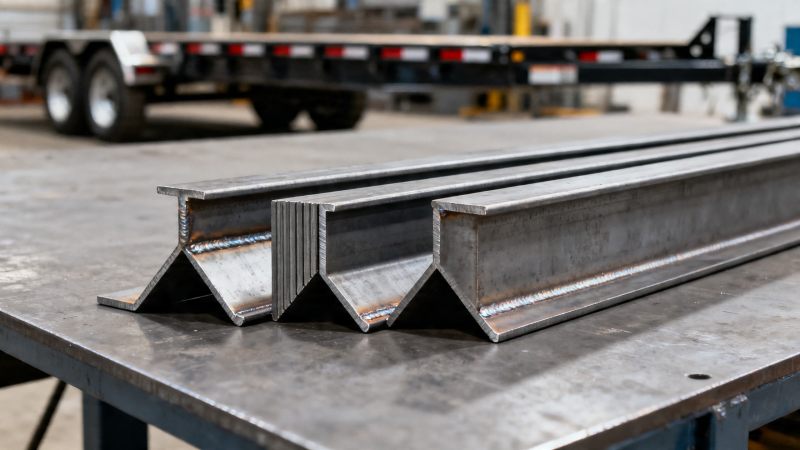
In trailer manufacturing, angle iron is often selected for frame edges, cross members, side rails, gate structures, and reinforcement corners. Thickness is one of the most important variables because it affects bending resistance, weld stability, fatigue life, and the trailer’s ability to withstand repeated road shock. A trailer that works well under static load can still fail early when exposed to vibration, potholes, side impact, or uneven loading over 12–36 months of service.
For technical evaluators and project managers, the question is not simply “thicker or thinner.” The better question is how thick the angle iron should be for the trailer type, expected payload range, road conditions, and fabrication method. In many practical applications, common trailer angle thickness options may fall within a moderate range such as 3 mm, 4 mm, 5 mm, or 6 mm, but the right choice depends on section size, span length, and structural layout rather than thickness alone.
For procurement teams and financial approvers, this matters because under-specification can increase repair, downtime, and warranty cost, while over-specification can raise steel consumption, transport weight, and fabrication cost. A balanced choice helps control total cost of ownership over the trailer life cycle, especially when orders involve small-batch prototypes, medium-volume production, or recurring OEM supply.
For distributors and end users, thickness also influences handling and maintenance. Heavier sections may improve stiffness, but they can also affect payload efficiency. That is why experienced structural steel manufacturers usually review 3 core inputs before quotation: intended load class, frame geometry, and compliance standard. This method is more reliable than selecting angle iron only by habit or by comparing unit price per ton.
What thickness actually changes in a trailer frame
- Load-bearing capacity: thicker angle iron generally provides higher section strength and better resistance to local deformation at bolted or welded zones.
- Fatigue performance: trailers face repeated dynamic stress, so additional thickness can reduce crack initiation risk at corners and joints over many loading cycles.
- Welding tolerance: if the material is too thin for the design, heat input may distort the frame more easily during fabrication.
- Corrosion allowance: in outdoor or marine-adjacent use, extra material thickness can provide more life margin before section loss becomes critical.
How to compare thickness options for different trailer applications
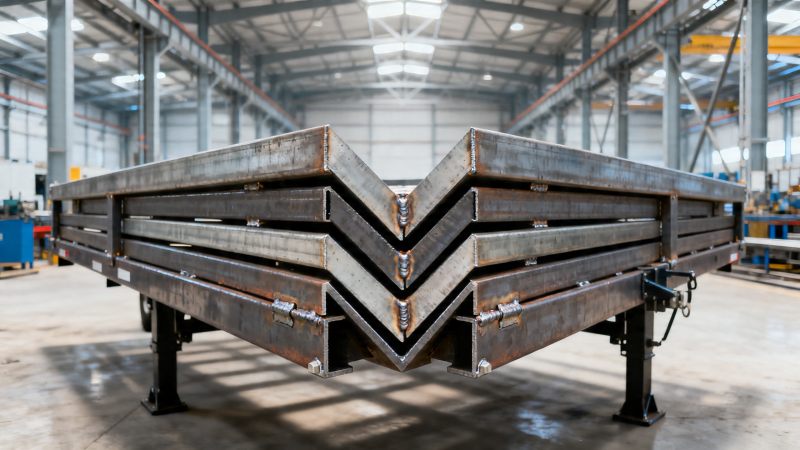
Not all trailers need the same angle iron thickness. A light utility trailer used for garden equipment is very different from a construction trailer carrying steel parts or machinery. Buyers should compare thickness together with leg size, steel grade, weld design, and cross-member spacing. In many fabrication workshops, angle size and thickness are selected after checking 4 factors: payload range, road environment, frame span, and expected service frequency.
The table below gives a practical comparison approach for common trailer scenarios. These are general selection references rather than fixed design rules, because exact structural requirements should still be verified by the design engineer or fabricator. However, the table is useful for purchasing discussions, RFQ preparation, and early-stage technical evaluation.
The key takeaway is that thickness should be linked to service conditions. For example, a trailer operating daily on rough roads may need a more conservative specification than a similar trailer used twice a month on paved surfaces. This is why quality control personnel often examine not only incoming material dimensions, but also straightness, edge quality, and consistency across batches.
Common comparison points used by technical and commercial teams
When comparing angle iron quotations from different suppliers, teams should review at least 5 checkpoints: material standard, actual thickness tolerance, angle leg dimensions, available length range, and surface condition. For export projects, it is also useful to confirm whether the material can be supplied according to ASTM, EN, JIS, or GB aligned requirements, depending on the destination market.
Lead time is another practical issue. Standard trailer angle sizes may have shorter production cycles, while custom punching, cutting, or OEM structural assemblies may extend delivery into a 2–4 week or longer planning window depending on quantity and finishing requirements. This affects project scheduling, inventory turnover, and container loading plans.
Which technical details matter beyond thickness alone
Thickness is only one part of trailer durability. Section geometry, steel grade, fabrication quality, and corrosion protection can be equally important. A poorly welded thick section may perform worse than a properly fabricated moderate-thickness section. That is why serious buyers often ask for mill standard references, dimensional tolerance control, and processing capability before confirming supply.
In steel sourcing for trailer production, some buyers also need complementary materials for exhaust, trim, support tubing, equipment guards, or auxiliary fabricated assemblies. For such mixed-material procurement, it can be practical to consolidate sourcing through a supplier with broad metal processing capability. For example, mid-project buyers may also require 201 Stainless steel pipe for non-frame applications where oxidation resistance, smooth surface finish, and cost control are relevant.
That stainless product is commonly available in round tube 4 mm–200 mm, square tube 10×10 mm–100×100 mm, rectangular tube 10×20 mm–50×100 mm, with wall thickness 0.6 mm–6.0 mm and length 1–6 meters. Depending on the application, buyers may compare 201 and 304 material options for food equipment, building components, auto parts, water treatment, and general fabrication where corrosion resistance and mechanical strength are both considered.
For trailer angle iron itself, however, the evaluation path should stay focused on structural performance. The table below shows which technical points typically deserve attention during supplier assessment and drawing review.
The best sourcing result usually comes from combining structural review and commercial review. Engineers focus on fatigue, deflection, and joining details. Procurement teams focus on cost, lead time, and supply stability. Quality teams focus on dimensions, standards, and traceability. When these 3 functions align early, trailer frame failures and rework rates are easier to control.
A practical 4-step review before placing an order
- Confirm the trailer type, target payload, and road condition. This defines whether the design should favor lighter weight or higher impact reserve.
- Match the angle iron thickness with section size, support spacing, and weld plan rather than checking thickness in isolation.
- Review compliance requirements and destination market standards before production starts.
- Request dimensional inspection and processing details for trial orders, especially when moving from sample stage to bulk supply.
What procurement teams should check before buying angle iron for trailers
Procurement in the steel industry is rarely about a single price line. It usually involves technical risk, timeline pressure, packaging efficiency, and post-delivery consistency. For trailer projects, buyers often compare 3 categories at the same time: raw material quality, fabrication readiness, and supplier responsiveness. A lower offer can become expensive if thickness deviation, poor straightness, or late shipment interrupts assembly.
A reliable structural steel manufacturer should be able to supply standard sections and customized processing with clear communication on specification, quantity break, and shipment planning. This is especially important for trailer OEMs, project contractors, and distributors serving multiple local markets. If a supplier can coordinate angle steel, channels, beams, cold formed profiles, and custom structural components, sourcing becomes more efficient and risk is easier to manage.
Hongteng Fengda supports this type of procurement model by combining structural steel manufacturing, export experience, and customized supply capability. With product coverage that includes angle steel, channel steel, steel beams, cold formed steel profiles, and custom structural components, the company is positioned to support buyers who need both standard specifications and OEM-oriented solutions. For international projects, this can simplify communication from drawing review to shipment execution.
From a compliance perspective, many buyers also need confidence that materials can align with major standards such as ASTM, EN, JIS, and GB where applicable. While exact certification and test document requirements vary by project, discussing them before order confirmation can save 7–15 days of avoidable back-and-forth later in the procurement cycle. This is especially useful for commercial evaluators, QA teams, and import-focused distributors.
5 key checks that reduce sourcing risk
- Check whether the quoted thickness is nominal only or supported by practical tolerance control and inspection records.
- Confirm whether the supplier can provide cutting, punching, beveling, or bundled OEM processing if needed.
- Review standard compatibility for the target market, especially when the project references ASTM, EN, JIS, or GB dimensions and quality expectations.
- Ask about production scheduling and container planning, particularly for recurring orders or mixed-size shipments.
- Evaluate communication speed on drawings, revisions, and inspection points, because procurement delays often start with incomplete technical clarification.
Typical procurement questions from different decision roles
Engineers usually ask whether the section is strong enough for the intended loading cycle. Purchasers ask whether the supply is stable and cost-competitive. Financial approvers want to know whether the thicker option truly reduces lifetime cost. Quality managers focus on inspection checkpoints and standard alignment. Distributors ask whether standard stock and customized sizes can be supplied together. A supplier that understands all these viewpoints is easier to work with over the long term.
FAQ: common mistakes and practical answers on trailer angle iron selection
Many sourcing mistakes happen because buyers use a simple rule such as “thicker is always better” or “the cheapest angle will do.” In reality, trailer durability depends on matching the section to the operating environment and fabrication quality. The questions below address common concerns from operators, technical reviewers, and procurement teams.
How do I choose angle iron thickness for a trailer without overbuying?
Start with 4 inputs: payload range, road condition, frame span, and service frequency. If the trailer runs daily and carries concentrated loads, the design usually needs more reserve than a trailer used occasionally with evenly distributed cargo. Instead of jumping to the highest thickness, compare section size, support layout, and joint design together. This can reduce unnecessary steel weight while preserving durability.
Is a thicker angle iron always stronger in practice?
Not by itself. Thickness improves capacity, but poor welding, excessive span, weak connection points, or corrosion can still shorten service life. A well-designed frame with appropriate thickness often outperforms a heavier but poorly detailed frame. This is why technical review should include at least 3 aspects: section selection, fabrication quality, and protective finish.
What standards or documents should buyers ask for?
The answer depends on the destination market and project specification, but buyers commonly ask for material standard reference, dimensional confirmation, inspection records, and packing details. For export steel supply, it is practical to discuss whether the project expects ASTM, EN, JIS, or GB alignment before production. That avoids mismatch between engineering documents and shipment preparation.
How long does trailer angle iron sourcing usually take?
For standard sizes, planning may be faster than for custom-processed items. If the order includes cutting, punching, coating coordination, or mixed specifications, the procurement cycle can extend into a 2–4 week or project-dependent range. Early confirmation of quantity, tolerances, and inspection needs helps shorten the timeline and reduce revision risk.
Why choose a structural steel partner with manufacturing and export capability
When trailer manufacturers, project buyers, or distributors source angle iron internationally, the supplier relationship affects more than price. It affects dimensional consistency, communication speed, production coordination, and shipment reliability. Working with a structural steel manufacturer and exporter that understands global requirements can help reduce sourcing uncertainty, especially when orders include multiple steel categories or custom processing steps.
Hongteng Fengda provides structural steel products and customized solutions for construction, industrial, and manufacturing projects, with supply capabilities that cover angle steel, channel steel, steel beams, cold formed profiles, and custom structural components. For buyers comparing trailer frame materials, this means one supplier can support both standard section procurement and more specialized OEM discussions. That is valuable when project schedules are tight and coordination must be efficient.
If you are evaluating angle iron for trailer frames, the most useful next step is a specification-based discussion. You can send section size, target thickness, estimated tonnage, processing requirements, destination market, and expected delivery window. This makes it easier to confirm suitable options, compare cost versus durability, and identify whether standard supply or a customized solution is more appropriate.
Contact us if you need support with angle iron thickness selection, trailer frame steel comparison, quotation review, OEM processing, standard confirmation, sample planning, or delivery schedule assessment. A focused technical and commercial review at the start can help you avoid under-specification, control budget, and move your trailer project forward with clearer sourcing decisions.
Please give us a message


Please enter what you want to find