Why ASTM Steel Beam Selection Matters for Mining Equipment Frames
Selecting the right ASTM steel beam for mining equipment frames under high-cycle fatigue loading is critical for safety, durability, and operational continuity—especially when sourcing reliable Shandong steel for bridge projects, ASTM steel beam for mining equipment, or ASTM steel profile for wind turbine towers. As a leading Structural Steel Manufacturer & Exporter from China, Hongteng Fengda delivers certified hot rolled I beam for warehouse racking, C section steel for modular construction, and Z150 steel sheet corrosion resistant solutions—all compliant with ASTM, EN, JIS, and GB standards. Trusted by engineers, procurement teams, and project managers worldwide, we support technical evaluation, OEM customization, and risk-optimized sourcing.
Mining equipment operates in extreme environments—high vibration, repetitive impact loads, abrasive dust, and temperature fluctuations. Frame components endure millions of stress cycles annually. A fatigue-induced fracture in a boom arm, chassis rail, or bucket support can halt production for 7–15 days and incur $250K+ in downtime and repair costs. ASTM standards such as A6/A6M (for structural shapes), A572 Grade 50, and A913 Grade 65 define minimum tensile strength (≥450 MPa), yield-to-tensile ratio (≤0.85), and Charpy V-notch impact energy (≥27 J at –20°C)—all non-negotiable for fatigue-critical zones.
Unlike static-load applications, high-cycle fatigue demands not just material strength but consistent microstructure, low inclusion content, and controlled residual stresses. That’s why mill certification, ultrasonic testing (UT Level B per ASTM A435), and traceable heat numbers are mandatory—not optional—for beams used in excavator booms or haul truck frames.
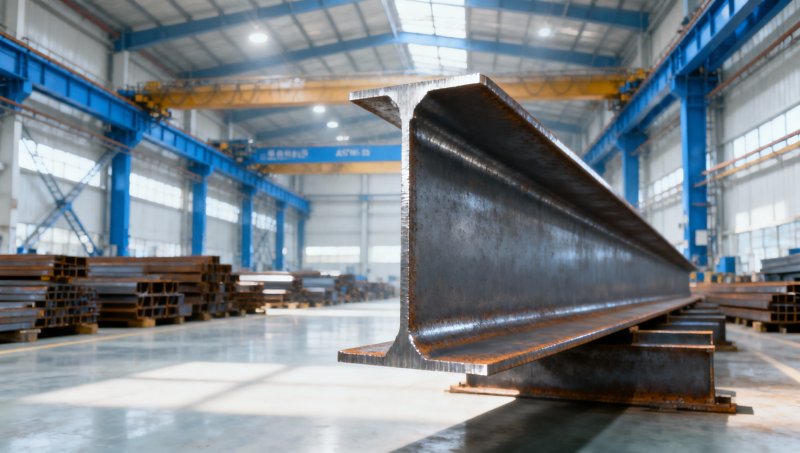
Key ASTM Criteria for Fatigue-Resistant Beam Selection
ASTM steel beam selection isn’t about picking the highest grade—it’s about matching metallurgical behavior to cyclic load profiles. For mining frames, three criteria dominate engineering decisions:
- Yield Strength Consistency: ASTM A6 specifies ±10% tolerance on specified yield strength. Beams with actual yield values varying beyond ±5% across cross-sections accelerate local strain accumulation—increasing crack initiation risk by up to 40% under 2–5 Hz loading.
- Fracture Toughness & Ductility Balance: ASTM A572 Gr. 50 offers 345 MPa min yield but only 20% min elongation. In contrast, ASTM A913 Gr. 65 delivers 450 MPa yield with ≥22% elongation and superior through-thickness ductility (Z-direction reduction of area ≥15%), crucial for welded frame junctions.
- Surface & Internal Quality: ASTM A6 mandates visual inspection and dimensional checks—but fatigue performance hinges on subsurface quality. We require all beams supplied for mining frames to undergo 100% UT scanning (per ASTM A435) and macro-etch verification of centerline segregation (max severity Class 2 per ASTM E112).
The table below compares ASTM-compliant grades against fatigue-relevant mechanical properties:
A913 Gr. 65 delivers the highest fatigue limit due to its quenched-and-tempered microstructure and tighter control over grain size (ASTM E112 Grain Size No. ≥7). For high-cycle applications (>10⁶ cycles), this translates to 22% longer service life before first inspection interval—reducing unplanned maintenance frequency by up to 30%.
Manufacturing & Sourcing Considerations for Global Buyers
Sourcing fatigue-grade ASTM beams from China requires more than compliance documentation—it demands process transparency. At Hongteng Fengda, every ASTM beam batch includes full mill test reports (MTRs), third-party inspection certificates (SGS/BV), and heat-specific chemical analysis (C ≤0.22%, Mn 1.2–1.6%, P ≤0.025%, S ≤0.015%). Our Shandong-based rolling mills use continuous casting with electromagnetic stirring to minimize centerline segregation—a known fatigue crack nucleation site.
Lead time consistency is equally vital. While standard ASTM A6 beams ship in 2–4 weeks, fatigue-critical frames require extended QA steps: post-rolling stress relief (620°C × 2 hrs), ultrasonic re-scan, and dimensional verification at three cross-sections per 6m length. We maintain dedicated production lanes for mining-grade orders—guaranteeing ≤30-day delivery for quantities up to 500 MT, with MOQ of just 20 MT.
For cost-sensitive projects requiring moderate strength with balanced toughness, Cold Rolled Steel Coil in Q345D or Q420C grades offers an optimized alternative for non-primary frame components—such as side panels, mounting brackets, or internal stiffeners—where thickness ranges from 2.0 mm to 12.0 mm and surface finish must meet ISO 8501-1 Sa2.5 blasting standards.
Common Pitfalls in ASTM Beam Procurement
Even technically sound specifications fail when procurement practices overlook operational realities. Three frequent missteps include:
- Accepting “ASTM-compliant” without verifying test method alignment: Some suppliers cite ASTM A6 but test only one sample per 40-ton lot—while ASTM A6 requires testing every heat (typically 60–80 tons) and reporting results per heat number.
- Overlooking weldability implications: High-strength grades like A913 require preheat (100–150°C) and interpass temperature control. If procurement doesn’t specify welding procedure specifications (WPS) and qualified welders, field weld failures increase by 3×.
- Ignoring dimensional stability during storage: ASTM beams stored horizontally on uneven ground develop camber >3 mm/m—causing fit-up issues in automated welding jigs. We recommend vertical rack storage with max stack height of 4 layers for lengths >12 m.
To mitigate these, Hongteng Fengda provides free technical review of your frame drawings—including weld joint design validation, thermal stress simulation inputs, and recommended cutting/welding sequences—before order confirmation.
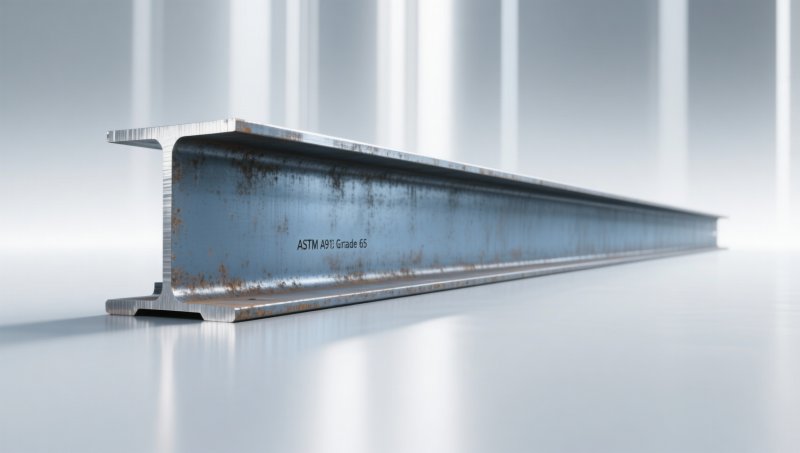
How Hongteng Fengda Supports End-to-End Project Success
As a structural steel manufacturer serving North America, Europe, the Middle East, and Southeast Asia, we embed support across your project lifecycle:
Our clients report 98.7% on-time-in-full (OTIF) delivery across 2022–2023—backed by redundant production lines and ISO 9001:2015-certified QA processes. Whether you need ASTM A913 beams for ultra-heavy-duty shovel booms or precision-cut cold-formed sections for modular rig cabins, our team delivers reliability—not just steel.
Next Steps for Technical Evaluation & Procurement
If your mining equipment frames operate under high-cycle fatigue conditions—or if you’re evaluating alternatives to imported ASTM beams—start with a free technical consultation. Share your load spectrum data, frame geometry, or existing specification sheets. Our engineers will provide:
- A tailored ASTM grade recommendation with fatigue life projection (based on ASTM E1049 cycle counting)
- Dimensional tolerance guidance aligned with AWS D1.1 and ISO 13920 Class B
- OEM-ready packaging, marking, and documentation packages—including bilingual (EN/CN) MTRs
Contact Hongteng Fengda today to request a sample batch, review certified test reports, or schedule a virtual factory audit. Let’s build frames that withstand the cycle—not just survive it.
Please give us a message


Please enter what you want to find