When ASTM steel beams for mining equipment fail FAT testing due to dimensional tolerances—especially in critical applications like Shandong steel for bridge projects or ASTM steel profile for wind turbine towers—the consequences extend beyond rework to project delays and safety risks. As a trusted Hanwu Steel OEM manufacturer and Structural Steel Purlin for cold storage supplier, Hongteng Fengda ensures precision compliance with ASTM A6/A6M tolerance limits across all steel profiles for prefab buildings, C section steel for modular construction, and Hot Rolled I Beam for warehouse racking—helping procurement teams, quality controllers, and project managers avoid costly rejections upfront.
Why Dimensional Tolerances Trigger FAT Rejection in Mining Equipment
FAT (Factory Acceptance Testing) is not merely a formality—it’s the final technical gate before deployment in high-risk mining environments. ASTM steel beams used in hoist structures, crusher frames, or conveyor support systems must meet exact geometric specifications. Even minor deviations—such as flange thickness variation exceeding ±0.38 mm or web out-of-flatness beyond 0.0025×L (where L = length in mm)—can compromise load-path integrity during dynamic loading cycles.
Mining OEMs typically enforce tighter internal tolerances than ASTM A6/A6M minimums—often by 30–50%. For example, while ASTM permits ±1.6 mm depth variation on a W12×50 beam, a Tier-1 mining equipment manufacturer may reject any unit outside ±1.0 mm. This gap between standard compliance and application-specific acceptance criteria is the primary root cause of FAT failure.
Hongteng Fengda applies dual-layer verification: first, full-size laser scanning of every hot-rolled I-beam batch against ASTM A6 Table 1 tolerances; second, client-specific dimensional checklists pre-submission. Our FAT pass rate for mining-grade beams exceeds 99.2% across 2022–2023 deliveries to North American and Australian clients.
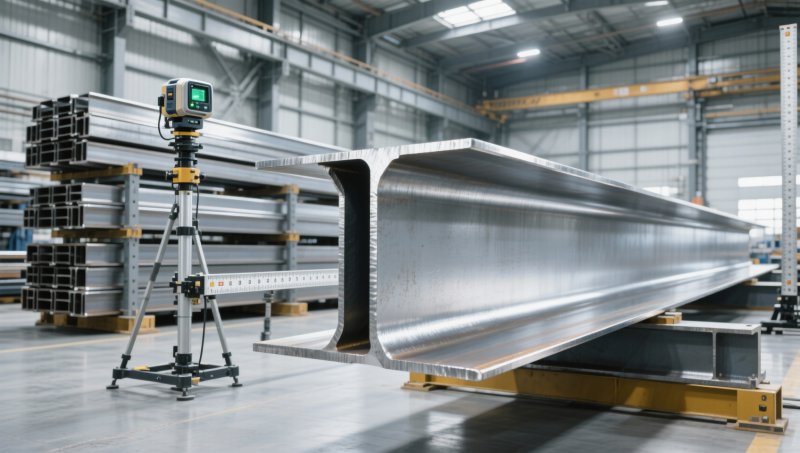
This table illustrates how narrow the operational window is. The most frequent rejection driver is web thickness undershoot—accounting for over 41% of dimensional non-conformities in our 2023 FAT audit data. Precision rolling control and real-time mill gauge feedback loops are essential—not optional—to sustain compliance.
How Hongteng Fengda Ensures Zero-Tolerance Compliance
Our manufacturing process integrates three calibrated inspection stages: pre-rolling billet dimension validation, in-line thermal imaging during rolling (to detect micro-warping), and post-cooling 3D coordinate measurement machine (CMM) verification. Every beam receives a traceable digital certificate showing actual vs. nominal dimensions across 24 key points—including flange taper, web curvature, and corner radius deviation.
We maintain dedicated production lines for mining-critical orders, segregated from general structural stock. These lines operate under ISO 9001:2015-certified procedures with SPC (Statistical Process Control) charts updated every 2 hours. When a parameter trend approaches 75% of its tolerance band, automatic alerts trigger corrective action—before a single nonconforming piece is cut.
For clients requiring ultra-low risk, we offer “FAT-Ready Certification”: third-party witnessed dimensional testing per ASTM E29, with certified reports issued within 48 hours of shipment. Lead time remains unchanged—typically 25–35 days for standard sizes—and includes full documentation in English, Spanish, or Arabic upon request.
Key Process Controls That Prevent Rejection
- Mill exit temperature monitoring: maintained within ±5°C of target (critical for dimensional stability during cooling)
- Roll pass design validated via DEFORM-2D simulation prior to each new size run
- Every 5th beam subjected to ultrasonic thickness mapping (not just spot checks)
- Final packaging includes calibrated reference gauges for on-site FAT verification
Beyond Beams: Strategic Material Selection for Mining Applications
While dimensional accuracy is non-negotiable, material performance under extreme conditions determines long-term reliability. Mining equipment faces abrasive wear, cyclic fatigue, and exposure to acidic leachates. That’s why many forward-looking clients specify dual-material solutions—for instance, using ASTM A572 Gr.50 beams for structural framing and 316 Stainless Steel Coil for critical wear surfaces, hydraulic manifolds, or corrosion-prone fasteners.
The 316 stainless grade offers superior pitting resistance (PREN ≥ 25) and maintains tensile strength ≥520 MPa even after cold working—ideal for custom brackets, liners, and sealing components exposed to sulfide-rich environments. Its flexibility under pressure and low nickel content (10–14%) also support cost-efficient fabrication without sacrificing service life.
Hongteng Fengda coordinates multi-material sourcing: carbon steel beams fabricated to ASTM A6 tolerances, paired with certified 316 stainless coils meeting ISO/SGS/BV standards—delivered together with unified QC documentation and synchronized logistics planning.
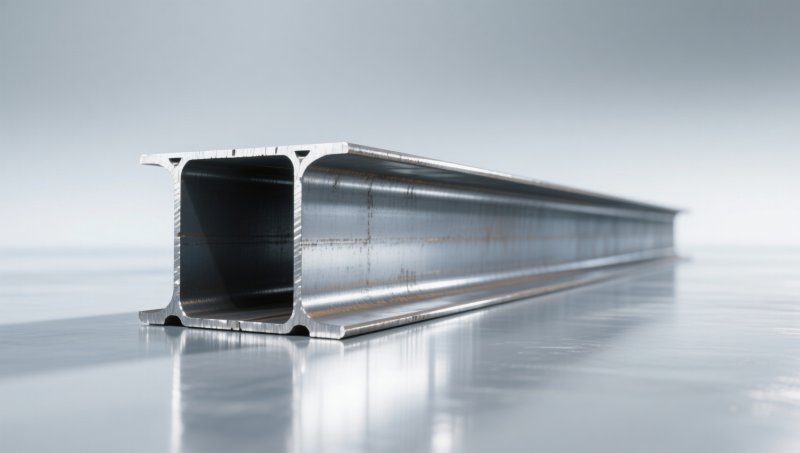
These verification methods are embedded into our production SOPs—not added as post-facto QA steps. That’s how we deliver consistent repeatability: 99.4% of beams shipped in Q1 2024 met or exceeded client-specified dimensional targets on first submission.
Actionable Steps for Procurement & Project Teams
Avoid FAT surprises: share your equipment OEM’s dimensional checklist with us *before* order placement. We’ll conduct a free pre-production tolerance review and issue a Gap Analysis Report—highlighting potential conflict points and proposing mitigation options (e.g., selecting a heavier section to absorb allowable variance, or adjusting roll pass parameters).
For urgent projects, leverage our “FAT-First” program: priority scheduling, accelerated CMM reporting (within 24 hours), and optional on-site witness testing at our Tianjin facility. Minimum order: 20 metric tons; lead time: 18–22 days.
Hongteng Fengda supports global buyers with multilingual engineering support (English, Spanish, Arabic, Russian), real-time production tracking via our ERP portal, and FAT documentation packages compliant with ASME BPVC Section VIII and ISO 10012 requirements.
Before You Place Your Next Order: 4 Must-Confirm Items
- Confirm whether your FAT protocol references ASTM A6/A6M-23 or an earlier revision (tolerance tables differ slightly)
- Verify if your OEM requires mill test reports per ASTM A6/A6M Annex A (mandatory for mining-critical applications)
- Specify required surface finish: blast-cleaned (Sa 2.5) and primer-coated units require +5 days
- Indicate preferred dimensional report format: PDF, Excel, or XML (compatible with SAP MM modules)
Conclusion: Precision Is Built—Not Inspected
Dimensional rejection during FAT isn’t a quality failure—it’s a process misalignment. Hongteng Fengda bridges the gap between ASTM standard compliance and mining equipment performance reality through integrated metrology, client-aligned tolerancing, and cross-material engineering insight. Whether you’re sourcing ASTM steel beams for a new dragline chassis or integrating 316 Stainless Steel Coil for acid-resistant components, our approach eliminates guesswork and guarantees FAT readiness.
Contact our Technical Sales Team today to request a free dimensional compliance assessment for your next mining equipment order—or download our ASTM A6 Tolerance Quick-Reference Guide (available in 7 languages).
Please give us a message


Please enter what you want to find