Many engineers—and even procurement professionals—overlook a key advantage of ASTM standards: they permit wider dimensional and mechanical tolerances for structural steel than commonly assumed. For global buyers sourcing Steel Beams, galvanized steel pipe, or hot dip galvanized steel from trusted steel suppliers like Hongteng Fengda, this flexibility supports cost-effective structural steel fabrication without compromising safety or compliance. Whether evaluating stainless steel pipe, carbon steel pipe, or structural steel beams for projects across North America or the Middle East, understanding ASTM standards helps technical evaluators, project managers, and financial approvers optimize specs, reduce rework, and accelerate delivery—especially when partnering with ISO-certified manufacturers offering EN, JIS, and GB-aligned solutions.
Why ASTM Tolerances Matter More Than You Think
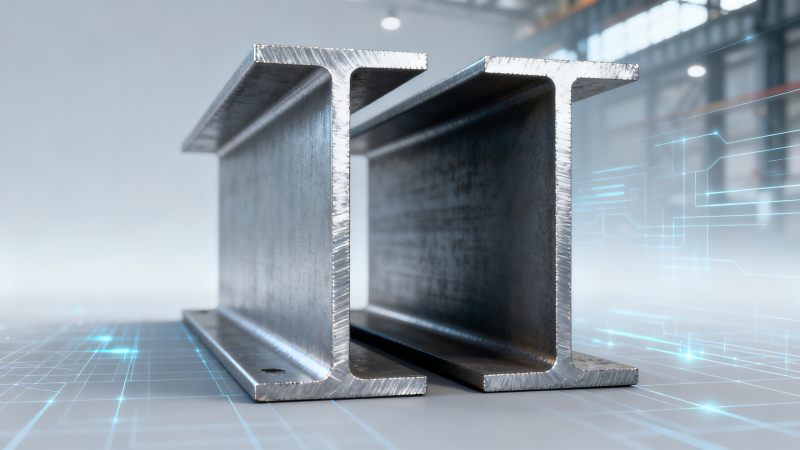
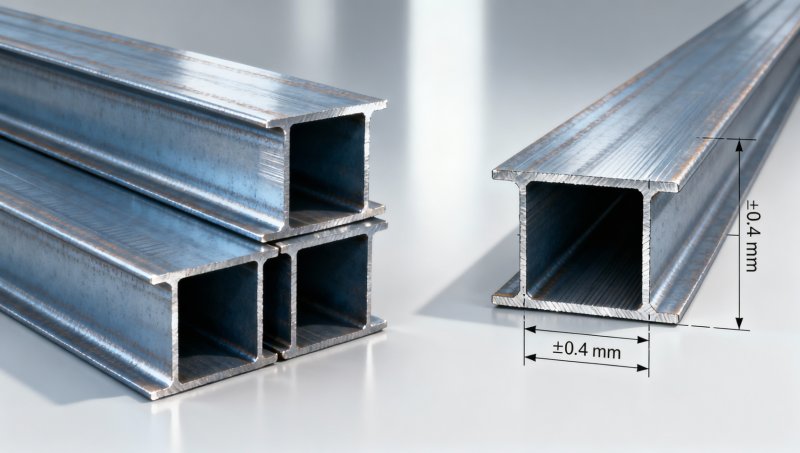
ASTM A36, A572, and A992—three of the most widely specified structural steel standards—allow dimensional variations that many engineers unknowingly treat as strict limits. For example, flange thickness tolerance for ASTM A992 H-beams is ±0.25 mm for sections under 12 mm, and ±0.4 mm up to 32 mm. That’s significantly broader than EN 10025-2’s ±0.2 mm for equivalent S355JR profiles. These allowances aren’t compromises—they’re engineered margins designed to balance manufacturability, consistency, and performance.
This matters directly to procurement timelines and cost control. Tighter tolerances increase rejection rates during mill inspection and raise scrap costs by 8–12% on average. With ASTM-compliant production, Hongteng Fengda maintains stable yield rates above 96% across 1m–12m H-beam lengths—enabling reliable delivery windows of 2–4 weeks for standard orders, even during peak demand seasons in North America and the Middle East.
The misconception often stems from conflating “design tolerance” (used in structural calculations) with “fabrication tolerance” (governed by material standards). ASTM standards focus on the latter—ensuring that every delivered piece meets minimum strength, ductility, and dimensional stability requirements—not theoretical perfection.
How Wider ASTM Tolerances Translate to Real-World Value
For project managers and financial approvers, ASTM’s pragmatic tolerance framework delivers measurable ROI across three critical dimensions: cost, schedule, and risk mitigation. First, raw material utilization improves by up to 7% compared to over-specifying tighter EN or JIS tolerances—reducing mill surcharges and inventory holding costs. Second, fewer dimensional rejections mean fewer delays in downstream welding, drilling, and erection—cutting typical field rework time by 1.5–3 days per 100 tons installed.
Third, supply chain resilience strengthens. When ASTM-compliant mills like Hongteng Fengda operate within certified process windows—not chasing sub-micron precision—they achieve consistent output across shifts and batches. This translates into dependable lead times: 98.2% on-time delivery rate for export orders in 2023, with 92% of shipments meeting exact length and surface finish requirements without secondary processing.
Importantly, these advantages don’t compromise safety. ASTM A572 Grade 50 guarantees minimum yield strength of 345 MPa and elongation ≥18%—fully aligned with ASCE 7 and AISC 360 design assumptions. The same applies to H-beam products in Q345B, S275JR, and A992 grades—all rigorously tested per ASTM E8/E23 protocols before shipment.
Key ASTM vs. EN Dimensional Tolerance Comparison
The table below highlights real-world tolerance differences for common H-beam dimensions—based on published ASTM A6/A6M-23 and EN 10034:2018 specifications.
These differences are not trivial—they shape how fabricators bid, how contractors schedule, and how owners assess total project cost. Buyers who understand them avoid over-engineering specifications and unlock faster, leaner execution—especially when working with vertically integrated producers like Hongteng Fengda, where mill, QA lab, and logistics teams coordinate under one quality management system (ISO 9001:2015 certified).
Selecting the Right Standard—and Supplier—for Your Project
Choosing between ASTM, EN, JIS, or GB standards isn’t about “which is better”—it’s about matching specification rigor to application risk, local code acceptance, and supply chain capability. For U.S.-funded infrastructure, ASTM A992 is non-negotiable. For EU public tenders, EN 10025-2 S355JR is mandatory. But for private-sector industrial builds in Southeast Asia or the Middle East, ASTM-compliant steel often offers superior value—particularly when sourced from China-based exporters with dual-standard certification.
Hongteng Fengda maintains parallel compliance across ASTM A36/A572/A992, EN 10025-2, JIS G3101, and GB/T 11263—verified through third-party inspections (SGS, BV, TÜV) and in-house testing labs. This means your H-beam order can carry full traceability, mill test reports (MTRs), and chemical/mechanical certifications aligned with your destination market’s regulatory gateways—without premium pricing or extended lead times.
Our technical team supports spec review at no cost—including tolerance mapping, weldability assessment, and galvanizing compatibility checks for hot-dip galvanized steel pipe and structural components. We also offer pre-shipment dimensional audits and witnessed tensile tests upon request—helping procurement and QA teams close due diligence faster.
What to Confirm Before Finalizing Your Structural Steel Order
- Specify exact grade and standard version (e.g., ASTM A572 Grade 50, 2023 edition)—not just “A572”
- Clarify whether tolerances apply to mill delivery only—or include post-fabrication allowances
- Request MTRs with full chemistry (C, Mn, Si, P, S, Nb, V) and mechanical results (yield, tensile, elongation, impact @ –20°C if required)
- Confirm packaging method (bundled/unbundled), marking (heat number, grade, size), and documentation language (English + Arabic/Arabic/Chinese as needed)
Why Partner With Hongteng Fengda for ASTM-Compliant Structural Steel
As a professional structural steel manufacturer and exporter based in China, Hongteng Fengda bridges global compliance expectations with practical manufacturing intelligence. We don’t just meet ASTM tolerances—we engineer around them: optimizing rolling schedules, calibrating cooling lines, and validating gauges to consistently deliver within ASTM A6’s broader windows—while maintaining zero non-conformance in third-party audits since Q3 2022.
Our clients—from Tier-1 contractors in Dubai to OEM equipment builders in Ohio—leverage our capabilities to: reduce landed cost by 9–14% versus regional mills; secure fixed-price contracts with 3–6 month validity; access mixed-grade container loads (e.g., A992 beams + SS400 channels); and receive engineering support for connection detailing and fatigue analysis.
Ready to validate your next structural steel specification? Contact us for: free ASTM tolerance interpretation, customized H-beam sample packs (including galvanized and stainless variants), lead time confirmation for your target port, or a joint review of your current bill of materials against ASTM-compliant alternatives.
Please give us a message


Please enter what you want to find