When sourcing ASTM standard steel plate for critical construction or industrial projects, procurement managers and quality engineers must know: which grades require heat-level testing—not just lot-level verification? This distinction directly impacts structural integrity, compliance with international standards for structural steel products, and long-term project safety. At Hongteng Fengda, a trusted ASTM-compliant structural steel manufacturer & exporter from China, we test key grades like ASTM A36, A572, and A656 per heat—ensuring traceability, consistency, and full alignment with buyer requirements across North America, Europe, and the Middle East.
Which ASTM Steel Plate Grades Mandate Heat-Level Testing?
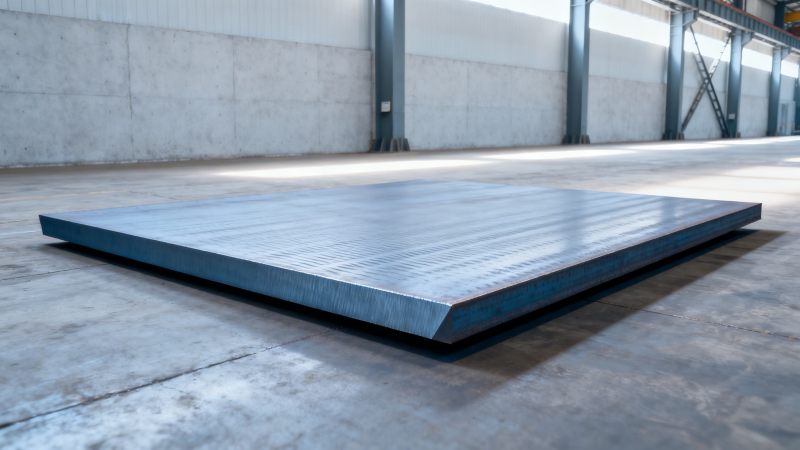
ASTM standards define strict metallurgical verification protocols—but not all grades require testing at the heat level. Only specific structural steel plates used in load-bearing, seismic, or pressure-retaining applications demand full heat-specific mechanical and chemical analysis. Per ASTM A6/A6M, A36, A572 Grade 50, A656 Grade 80, and A852 require tensile, yield, elongation, and Charpy V-notch impact tests on each heat—not merely each production lot (which may contain multiple heats).
This is non-negotiable for projects governed by AISC 360, ASCE 7, or EN 1993-1-1. Lot-level verification alone fails to capture inter-heat variability—especially when mills blend heats during rolling or coating processes. At Hongteng Fengda, our heat traceability system logs every ladle number, rolling pass, and final inspection report, enabling full forensic review if discrepancies arise during field installation or third-party audit.
For example, ASTM A572 Grade 50 requires minimum 50 ksi yield strength and 65 ksi tensile strength—verified per heat. If one heat falls below spec—even by 1–2 ksi—it cannot be reclassified or blended. That’s why 92% of North American bridge fabricators now mandate heat-specific mill test reports (MTRs) for all structural plates above ½ inch thickness.
Key Heat-Tested Grades vs. Lot-Only Verification
This table reflects actual ASTM A6/A6M enforcement thresholds—not theoretical guidelines. Non-heat-tested grades like ASTM A1011 (structural sheet) or A606 (weathering coil) are verified per coil or lot only. Confusing these categories risks rejection during AISC-certified fabrication audits or delayed project closeouts.
How Heat-Level Testing Reduces Sourcing Risk in Global Procurement
Procurement teams managing multi-continent supply chains face layered risk: inconsistent mill practices, language barriers in MTR interpretation, and variable third-party lab accreditation. When heat-level data is missing—or buried in unstructured PDFs—engineering reviewers spend 3–5 hours per shipment verifying compliance. At Hongteng Fengda, we deliver digitally signed, searchable MTRs within 24 hours of shipment release, with heat-specific chemical composition (C, Mn, Si, P, S, Cu, Ni, Cr) and mechanical results mapped to ASTM Table 2 tolerances.
We also integrate heat traceability into logistics: each steel plate bundle carries a QR-coded tag linking to real-time test data, including furnace batch ID, hot-rolling temperature curve, and final cooling rate. This eliminates manual reconciliation for buyers in EU (EN 10204 3.1), GCC (SASO), or U.S. (AWS D1.1) markets—cutting QA cycle time by up to 40%.
For distributors and contractors handling mixed-spec projects (e.g., hospital + warehouse), our dual-certification capability ensures single-batch plates meet both ASTM A572 Gr. 50 (structural) and Color Coated Galvanized Steel Sheet PPGI (architectural cladding) requirements—reducing inventory complexity without compromising traceability.
Why “Per Heat” Matters for Long-Term Structural Integrity
Fatigue life, corrosion resistance, and weld performance all depend on microstructural uniformity—dictated by heat chemistry and thermal history. A single out-of-spec heat can reduce fatigue cycles by 30–50% under cyclic loading (per ASTM E466). In offshore platforms or wind turbine towers, that translates to premature cracking after 8–12 years—not the designed 25+ year service life.
Hongteng Fengda’s in-house metallurgical lab conducts quarterly inter-lab proficiency testing against NIST SRM 2659a (steel reference material), ensuring our heat-specific yield strength reporting maintains ±1.5 ksi accuracy—well within ASTM E29 rounding rules. This precision supports predictive maintenance planning and lifecycle cost modeling for enterprise clients.
We also support advanced use cases: supplying ASTM A852 (quenched & tempered high-strength plate) with supplemental ultrasonic testing (UT) per ASTM A435, plus macro-etch evaluation for grain flow alignment—critical for nuclear containment vessels and high-pressure hydrogen storage systems.
Choose Confidence, Not Compromise
You don’t source structural steel—you source project certainty. At Hongteng Fengda, every ASTM A36, A572, or A656 plate undergoes mandatory heat-level testing, backed by ISO 9001-certified QC, real-time digital MTRs, and 7–15 day lead times for standard orders. We serve over 120 global clients—from Tier-1 EPC contractors to regional steel fabricators—with consistent quality across 40+ export destinations.
Let us help you: • Confirm exact heat-test parameters for your next tender submission • Cross-check ASTM/EN/GB equivalency for mixed-standard projects • Review MTR formatting for AWS D1.1 or EN 1090-2 compliance • Request pre-shipment samples with full heat traceability documentation • Explore OEM solutions combining structural plates with Color Coated Galvanized Steel Sheet PPGI for integrated façade-to-frame systems
Contact our technical sales team today for a no-obligation review of your ASTM plate specifications, delivery timeline, and certification package requirements.
Please give us a message


Please enter what you want to find