Choosing the right ASTM standard steel pipe affects design safety, fabrication efficiency, maintenance cost, and service life. Different project conditions demand different pipe grades, wall thicknesses, and manufacturing routes.
This guide explains how ASTM standard steel pipe selections change across structural, pressure, mechanical, and corrosion-sensitive applications. It also highlights practical comparison points for faster specification review.
Why application context matters when selecting ASTM standard steel pipe
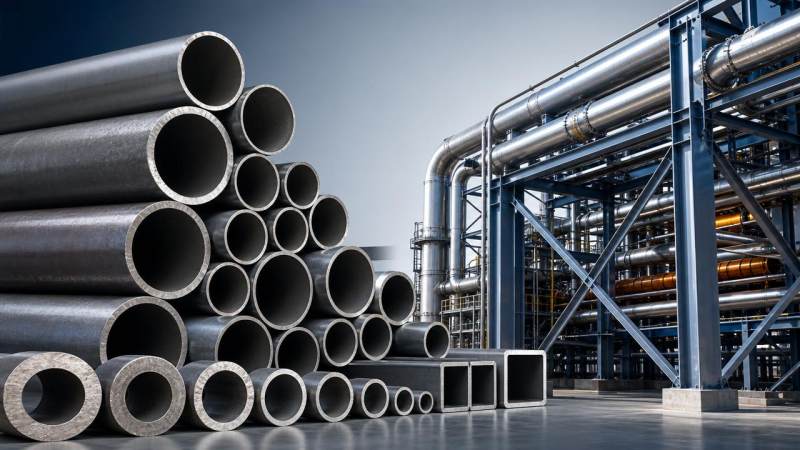
ASTM standard steel pipe is not a single product category with identical performance. The correct choice depends on load type, fluid conditions, weldability, coating needs, and code compliance.
A structural frame may prioritize strength and dimensional consistency. A process line may focus on pressure resistance, temperature range, and chemical compatibility instead.
The same nominal size can behave very differently under cyclic loading, outdoor exposure, or elevated temperature. That is why scenario-based evaluation is more useful than grade names alone.
How ASTM standard steel pipe choices differ by project scenario
Structural support and load-bearing steel frameworks
For columns, trusses, platforms, and equipment supports, ASTM A500 is often the first reference. It is widely used for hollow structural sections with good strength and weldability.
ASTM A53 may also appear in structural work, especially where standard pipe shapes are acceptable. However, it is usually compared carefully against A500 for dimensional and mechanical requirements.
Key judgment points include yield strength, section efficiency, weld seam quality, and fabrication convenience. Surface protection also matters in outdoor or coastal structures.
Water, gas, and general low-pressure transport lines
ASTM A53 is a common ASTM standard steel pipe option for water pipelines, fire protection systems, compressed air lines, and general utility transport.
It is available in seamless and welded forms and can be supplied in black or galvanized condition. Selection often depends on corrosion environment and joining method.
In these applications, buyers usually compare pressure rating, schedule, galvanizing need, and compatibility with fittings, flanges, and site installation practices.
High-temperature, high-pressure, or industrial process systems
ASTM A106 is widely specified when elevated temperature service is involved. It is a seamless carbon steel pipe grade commonly used in refineries, power plants, and process piping.
Compared with general-purpose pipe, this ASTM standard steel pipe option is chosen for pressure stability, heat performance, and stricter service reliability in demanding systems.
Critical checks include temperature range, pressure design, NDT requirements, hydrostatic testing, and traceability from heat number to final delivery batch.
Mechanical fabrication, machining, and precision component use
When pipe is used as a mechanical component rather than a fluid conduit, ASTM A513 and similar tubing standards may become more relevant than conventional piping grades.
These applications focus on tolerance control, surface finish, concentricity, and forming behavior. Examples include sleeves, rollers, frames, guards, and machine bases.
The lesson is simple: not every round steel section should be treated as interchangeable ASTM standard steel pipe. End use defines the right standard.
Mid-project corrosion control often changes the pipe selection logic
In humid, coastal, or industrial atmospheres, corrosion protection can become the deciding factor. The base pipe grade may remain the same, but surface strategy changes total lifecycle cost.
For associated cladding, enclosures, and protective fabrication around pipe systems, corrosion-resistant sheet products are often selected together with pipe materials.
One practical option is S220GD Galvalume Steel Coil , which offers a 55% aluminium-zinc coating system and strong atmospheric durability.
With yield strength of at least 220 MPa and tensile strength of at least 300 MPa, it suits formed accessories, covers, and supporting fabricated parts near pipe installations.
Its corrosion resistance is often described as two to four times that of galvanized steel sheets. That makes it useful where surrounding steel components face long outdoor exposure.
Typical ASTM pipe grades and the scenarios they fit best
Where different scenario demands create specification gaps
Many sourcing errors happen because project documents mention ASTM standard steel pipe without defining the service condition in enough detail.
- Structural use needs strength and section control more than internal pressure capacity.
- Process piping needs pressure, temperature, and testing compliance first.
- Outdoor systems need coating, galvanizing, or corrosion strategy built into specification review.
- Cold-region use needs impact toughness verification, not only standard room-temperature properties.
- Fabricated components may need tighter tolerances than standard pipe production normally provides.
These differences explain why one ASTM standard steel pipe grade can be cost-effective in one project and risky in another.
Practical selection suggestions for better scenario matching
Start with service condition, not with available stock only
Define whether the pipe carries load, fluid, pressure, heat, or corrosive media. This prevents confusion between structural and process standards.
Check manufacturing method early
Seamless, ERW, and other production routes influence cost, lead time, and service suitability. Some ASTM standard steel pipe applications strongly prefer seamless material.
Review coating and surrounding steel system together
Pipe selection should align with the protection strategy of supports, brackets, covers, and enclosures. Mixed durability levels often increase maintenance complexity.
Request proof of standards and inspection scope
Mill test certificates, dimensional reports, hydro tests, and chemical composition records help confirm that the ASTM standard steel pipe matches the required scenario.
Common mistakes when evaluating ASTM standard steel pipe
A frequent mistake is selecting by price per ton only. Low unit cost may hide added expenses in welding, coating, replacement cycles, or delayed approvals.
Another mistake is assuming ASTM A53 and ASTM A500 are interchangeable everywhere. They may overlap in some uses, but their primary design logic is different.
Some projects also ignore environmental exposure. A correct ASTM standard steel pipe grade can still fail early if corrosion control is treated as an afterthought.
Dimensional compatibility is also overlooked. Schedule, outside diameter, end finish, and connection method all affect installation speed and total project accuracy.
A clearer next step for project-ready specification decisions
The best ASTM standard steel pipe choice comes from matching grade, manufacturing method, coating, and inspection level to the real operating scenario.
For structural, industrial, and fabricated steel needs, Hongteng Fengda supplies steel products aligned with ASTM, EN, JIS, and GB requirements.
A focused review of drawings, service conditions, and corrosion expectations can quickly narrow the right ASTM standard steel pipe solution and related steel components.
If a project needs standard sections, custom fabrication, or supporting corrosion-resistant materials, a technical comparison before ordering can reduce sourcing risk and improve delivery confidence.
Please give us a message


Please enter what you want to find