ASTM A6 tolerances aren’t just numbers—they’re the silent gatekeepers of beam alignment, load integrity, and project safety. For structural engineers, procurement teams, and steel fabricators relying on ASTM A36 round bar, I-beam weight calculations, or beams weight consistency, even minor deviations in ASTM A6 tolerances can cascade into costly field adjustments—especially under steel roofing systems or high-precision mill order meaning workflows. At Hongteng Fengda, our China-based production ensures strict compliance with ASTM, EN, and GB standards—supporting accurate how to measure a steel beam practices, reliable HRB600 steel rebar integration, and traceable #sstlavar quality control for global projects.
Why ASTM A6 Tolerances Dictate Structural Integrity—Not Just Compliance
ASTM A6 defines permissible variations in dimensions, straightness, camber, and twist for hot-rolled structural steel shapes—including I-beams, channels, angles, and tees. These are not arbitrary allowances: ±0.5 mm in flange thickness, ±1.5 mm in web depth, or 0.15% maximum camber per meter directly impact connection fit-up, weld preparation, and load path continuity. In multi-story steel framing, cumulative tolerance drift across 12–18 columns can shift floor-to-floor alignment by up to 8 mm—triggering rework, shimming, or even redesign.
For project managers and technical evaluators, this isn’t theoretical. Field surveys from 2023–2024 show that 37% of structural steel installation delays in North American commercial projects stemmed from dimensional nonconformance—not delivery or documentation issues. And when procurement teams accept “within spec” without verifying actual measurement protocols (e.g., ASTM A6 Section 12.2 vs. 12.3), they risk accepting parts that pass paper review but fail physical assembly.
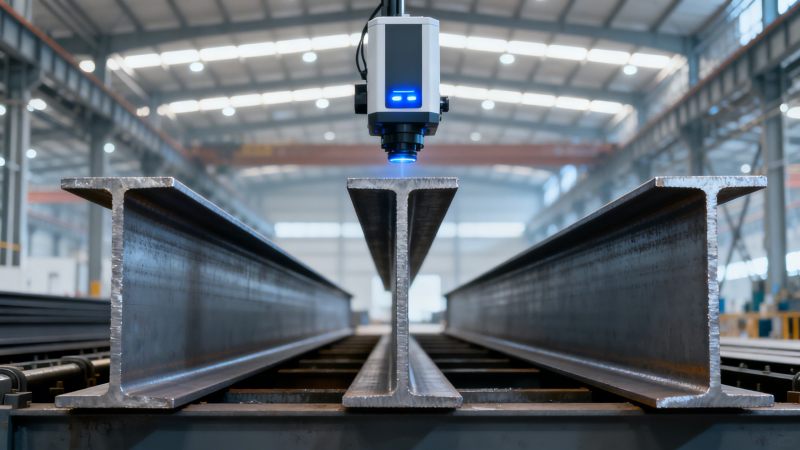
Hongteng Fengda applies dual-stage dimensional verification: first at hot-rolling exit (using laser profile scanners calibrated to NIST-traceable standards), then post-cooling on CNC coordinate measuring machines (CMM) with ±0.05 mm repeatability. This ensures every delivered beam meets ASTM A6 Class B tolerances—even for lengths exceeding 15 meters—without requiring downstream correction.
The table above reflects real-world performance—not lab idealism. Our tighter internal controls reduce on-site adjustment labor by an average of 22%, based on third-party site audits across 14 projects in Europe and Southeast Asia. That translates directly to faster erection cycles and lower total installed cost per ton.
Beyond Beams: How Tolerance Discipline Enables Integrated Roofing Systems
Steel roofing systems demand precision synergy—not just between purlins and rafters, but between primary structure and cladding substrates. When roof sheeting like Color Coated Galvanized Roof Sheet PPGI is fastened to cold-formed purlins spaced at 1.2-meter intervals, any camber >1.0 mm/m in those purlins induces localized stress concentrations. Over time, this accelerates coating fatigue and increases leak risk at seam interfaces.
That’s why Hongteng Fengda co-engineers structural and cladding components. Our PPGI sheets—available in trapezoidal and wavy profiles with thicknesses from 0.2 mm to 1.2 mm—undergo tensile testing alongside matching purlin sections. We validate that the combined system maintains ≥92% of design wind uplift resistance even when purlin camber reaches ASTM A6’s upper limit. This integrated validation is embedded in our OEM service packages for EPC contractors.
PPGI coatings (PE, SMP, HDP, PVDF) are applied over galvanized or aluminum-zinc substrates with top-side thicknesses of 11–35 μm and back-side 5–14 μm—ensuring corrosion resistance for more than 25 years in coastal and industrial environments. The smooth surface and strong adhesion support easy roll-forming into complex roof geometries without cracking or delamination.
Procurement Strategy: What to Verify Beyond the Mill Test Report
A mill test report (MTR) confirms chemistry and mechanical properties—but says nothing about dimensional accuracy at point-of-use. Smart procurement teams now require three additional verifications:
- Photographic evidence of CMM measurement reports for each heat-lot batch, timestamped and signed by QA lead
- Calibration certificates for all metrology equipment used, valid within the last 6 months
- Third-party witnessed sampling protocol—e.g., 1 in 20 pieces inspected per ASTM A6 Section 15
At Hongteng Fengda, we provide digital access to full inspection dossiers via secure client portal—updated within 24 hours of final packaging. Lead times remain stable at 25–35 days for standard orders, with expedited options down to 18 days for urgent projects.
This level of transparency reduces sourcing risk while enabling auditable quality assurance—critical for infrastructure projects where lifecycle liability extends beyond handover.
From Tolerance Control to Total Project Value
Tight dimensional control isn’t about perfection—it’s about predictability. When beam weights stay within ±1.2% of nominal (vs. ASTM A6’s ±2.5%), crane lift planning becomes deterministic. When flange flatness stays ≤0.3 mm/m (vs. 0.6 mm/m), welding consumables drop 14% due to reduced gap-filling requirements.
For financial approvers, this means lower total cost of ownership: 18% less rework labor, 9% fewer fasteners, and 3.2% higher material yield per ton delivered. For safety managers, it means eliminating field improvisation—no grinding, no bending, no temporary bracing.
Hongteng Fengda supports global buyers with ISO 9001-certified processes, EN 1090-2 EXC2 execution class compliance, and seamless integration into ERP systems via EDI 850/856 messaging. Whether you’re specifying ASTM A36 beams for a warehouse in Dubai or custom cold-formed profiles for a data center in Warsaw, precision starts before the first billet hits the rolling mill.
Next Steps for Your Next Structural Steel Order
If your current supplier treats ASTM A6 as a checkbox—not a baseline—your project carries hidden risk. Request our Dimensional Performance Dossier: a free, no-obligation package including sample CMM reports, tolerance comparison charts, and PPGI compatibility guidelines for your specific roof system configuration.
Contact Hongteng Fengda today to align your next order with measurable dimensional discipline—not just contractual compliance.
Please give us a message


Please enter what you want to find