ASTM A36 Steel Plate: Strength and Use Cases
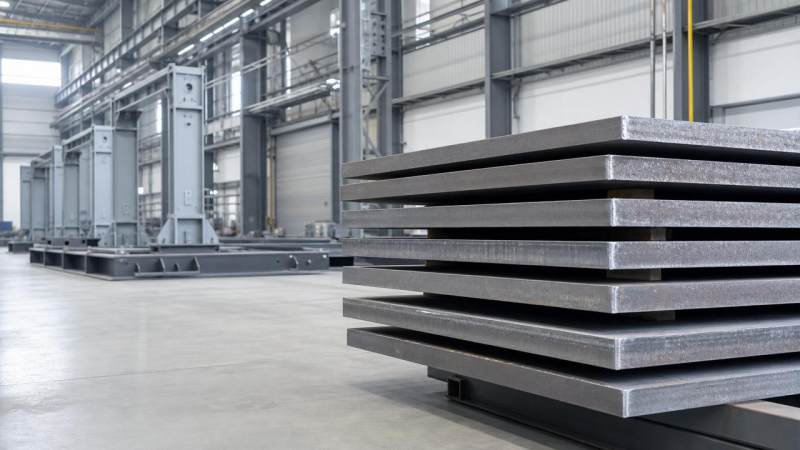
For technical evaluation of structural materials, ASTM A36 steel plate remains a widely specified carbon steel option.
It is valued for balanced strength, weldability, formability, availability, and cost efficiency in demanding steel projects.
Common uses include buildings, bridges, machinery bases, platforms, frames, brackets, and fabricated steel components.
This article reviews ASTM A36 steel plate properties, application logic, selection factors, and sourcing considerations for international projects.
Basic Overview of ASTM A36 Steel Plate
ASTM A36 steel plate is a hot-rolled carbon structural steel defined by ASTM International.
The standard covers chemical composition, tensile performance, yield strength, elongation, and basic quality expectations.
The grade is commonly supplied as plate, bar, shape, and structural section for general engineering use.
For plate products, ASTM A36 steel plate usually provides a minimum yield strength of 36 ksi.
That value equals about 250 MPa, making it suitable for many non-alloy structural applications.
Its tensile strength normally falls in a moderate range, supporting both load resistance and fabrication flexibility.
Unlike high-strength alloy plate, ASTM A36 steel plate is not selected for maximum strength alone.
Its main value lies in predictable performance, broad availability, and compatibility with common fabrication methods.
Key Mechanical Characteristics
Industry Background and Current Selection Signals
Structural steel demand continues to follow infrastructure, industrial construction, transportation, and equipment manufacturing cycles.
Within these sectors, ASTM A36 steel plate remains relevant because many designs require dependable general-purpose plate.
The grade is familiar to fabricators, inspectors, welding teams, and design authorities across multiple markets.
That familiarity reduces specification ambiguity and helps simplify material approval across cross-border supply chains.
- Standard recognition: ASTM A36 steel plate is accepted in many international project documents.
- Fabrication efficiency: cutting, drilling, welding, and forming are generally straightforward.
- Cost control: mild carbon steel usually offers favorable economics for large structures.
- Supply stability: common thicknesses and sizes are available from established steel mills.
- Inspection clarity: mechanical test values and mill certificates are easy to review.
The current focus is not only price per ton.
Consistency, traceability, dimensional tolerance, packaging, and reliable delivery now strongly influence steel purchasing decisions.
Application Value in Structural Steel Projects
The main advantage of ASTM A36 steel plate is its balanced performance profile.
It offers enough strength for many structural tasks without creating unnecessary fabrication complexity.
In welded frames, the plate supports base plates, gussets, stiffeners, splice plates, and connection details.
In machinery, ASTM A36 steel plate is often used for bases, supports, guards, brackets, and mounting surfaces.
Its moderate carbon content supports conventional welding processes when procedures and consumables are properly selected.
For cutting operations, the grade works well with plasma, oxy-fuel, laser, and mechanical methods.
Forming is possible for reasonable bend radii, especially when thickness and direction are considered.
These qualities make ASTM A36 steel plate practical for both standard parts and customized steel fabrication.
Related Reinforcement Material for Construction
Some construction packages combine structural plate, beams, channels, angles, and reinforcing bars in one supply plan.
For reinforced concrete applications, HRB600 Rebar provides a high-strength reinforcing option.
It offers standard yield strength of 600 MPa and improves strength compared with HRB400 grade bars.
Available diameters include φ6 through φ50, with lengths such as 1M, 4M, 6M, 8M, and 12M.
When paired with ASTM A36 steel plate, reinforcing steel can support integrated civil and industrial construction needs.
Typical Use Cases and Object Classification
ASTM A36 steel plate appears in many sectors because it supports versatile fabrication and accessible engineering design.
The following classification shows common use cases and typical selection reasons.
For heavy dynamic loading, low-temperature service, or pressure containment, another steel grade may be required.
ASTM A36 steel plate should always be matched with design codes and service conditions.
Practical Selection Factors for ASTM A36 Steel Plate
Material selection should begin with load requirements, plate thickness, fabrication process, and operating environment.
Thickness affects strength capacity, bending behavior, welding heat input, and cutting efficiency.
Surface condition also matters, especially when coating, galvanizing, painting, or visible fabrication is required.
For export projects, ASTM A36 steel plate should be supplied with clear documentation and traceable heat numbers.
- Confirm the exact ASTM standard edition required by the project.
- Check yield strength, tensile strength, elongation, and chemical composition.
- Review plate thickness tolerance, flatness, length, and edge condition.
- Match welding procedure with plate thickness and joint design.
- Define surface treatment before production or shipment.
- Require mill test certificates and third-party inspection when necessary.
The most common mistake is treating ASTM A36 steel plate as a universal substitute.
It is versatile, but each project still needs engineering review and standard confirmation.
Sourcing and Quality Control Considerations
Reliable sourcing depends on production capability, inspection discipline, document accuracy, and delivery control.
A qualified structural steel supplier should understand ASTM, EN, JIS, and GB requirements.
Hongteng Fengda manufactures and exports structural steel products from China for global construction and industrial projects.
The supply range includes angle steel, channel steel, steel beams, cold formed profiles, and customized components.
For ASTM A36 steel plate sourcing, coordinated production and quality control can reduce project uncertainty.
Important verification steps include heat traceability, dimensional inspection, chemical testing, mechanical testing, and packaging review.
Export packaging should protect surfaces, edges, markings, and documents during inland and ocean transportation.
Stable lead times are also critical when steel plate supports phased fabrication schedules.
Final Assessment and Next Steps
ASTM A36 steel plate remains a practical choice for general structural fabrication and industrial steel components.
Its strength, weldability, formability, availability, and cost position explain its continued international use.
The grade is best applied where moderate strength and predictable fabrication performance are required.
For special fatigue, corrosion, low-temperature, or high-strength demands, alternative grades should be reviewed.
Before ordering ASTM A36 steel plate, confirm dimensions, standards, certificates, inspection scope, and delivery schedule.
Hongteng Fengda can support structural steel requirements with standard products and customized solutions for international projects.
Share drawings, specifications, quantity, destination, and quality requirements to receive a practical steel supply proposal.
Please give us a message


Please enter what you want to find