Choosing the right astm a36 round bar for construction is essential for safe, efficient, and reliable jobsite performance.
For daily fabrication work, A36 round bars are valued for weldability, machinability, and dependable structural strength.
Understanding common uses helps reduce installation errors, improve material planning, and maintain consistent project quality.
What Is ASTM A36 Round Bar for Construction?
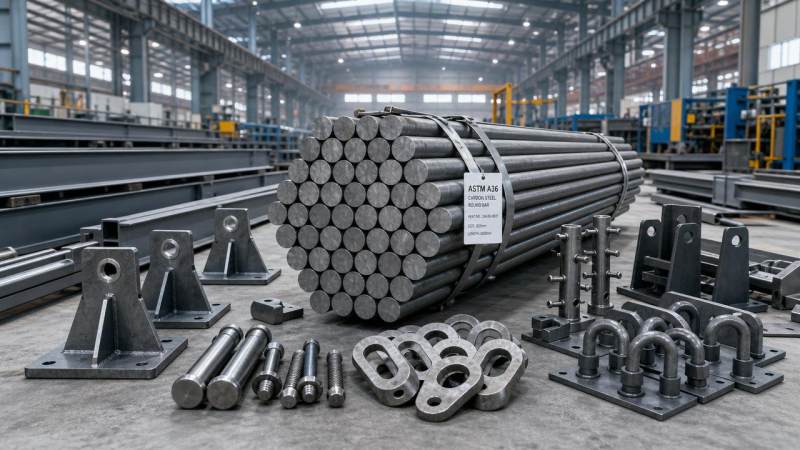
ASTM A36 is a widely used carbon structural steel grade.
It offers a practical balance of strength, formability, and cost control.
An astm a36 round bar for construction is produced in a circular solid profile.
This shape performs well in supports, pins, braces, anchors, shafts, and general fabrication components.
The material is not usually selected for extreme alloy performance.
Instead, it is chosen when stable mechanical properties and easy processing matter most.
On construction sites, simple machining and reliable welding can save time.
That is why astm a36 round bar for construction remains common in structural and utility applications.
Key material characteristics
- Good weldability for field and shop fabrication.
- Acceptable machinability for cutting, drilling, and turning.
- Reliable strength for moderate structural loading.
- Broad availability in many diameters and lengths.
- Cost-effective performance for routine construction tasks.
Where Is ASTM A36 Round Bar Commonly Used?
An astm a36 round bar for construction appears in many practical jobsite details.
It can support temporary works, permanent assemblies, and customized steel components.
Common applications include building frames, bracing systems, base connections, handrail posts, and support rods.
It is also used in equipment foundations and mechanical support structures.
Structural supports and braces
Round bars are often installed as tension members, cross braces, and stabilizing rods.
Their circular profile handles axial loading efficiently when designed correctly.
For frames and light structures, astm a36 round bar for construction provides dependable support without unnecessary complexity.
Pins, dowels, and connection parts
A36 round bars can be cut and machined into pins, dowels, sleeves, and spacers.
These small components influence alignment, installation accuracy, and assembly stability.
Using a consistent steel grade supports predictable fabrication and repeatable site results.
General steel fabrication
Fabricators use astm a36 round bar for construction in brackets, fixtures, guards, frames, and maintenance parts.
Its flexibility allows teams to adapt designs without changing material systems frequently.
This is useful when project drawings require both standard and custom steel components.
How Does It Compare With Other Structural Steel Profiles?
Round bar is only one option in structural steel construction.
Angle steel, channel steel, beams, and cold formed profiles each serve different load paths.
An astm a36 round bar for construction is strongest when used for rods, pins, tie members, and machined parts.
It should not replace beams or channels where bending resistance is the main requirement.
For U-shaped structural members, a reliable Channel Steel Supplier can support related framing needs.
Channel steel is commonly used in construction, automobile manufacture, purlins, wall beams, brackets, lightweight roofs, and mechanical columns.
Available options may include Q195, Q235B, Q345B, Duplex, 201, 304, and 316 materials.
Typical specifications include 1.5mm–25mm thickness, 80–160mm height, and 6–12m length.
Galvanized finishes can improve corrosion resistance in exposed or humid environments.
How Should ASTM A36 Round Bar Be Selected?
Selecting astm a36 round bar for construction starts with load requirements.
Diameter, length, tolerance, finish, and processing method must match the intended use.
A bar used as a machined pin may need tighter dimensional control.
A bar used as a brace may require careful length accuracy and end preparation.
Practical selection checklist
- Confirm the design standard and material grade requirement.
- Check diameter, length, straightness, and surface condition.
- Review welding, cutting, drilling, or threading needs.
- Match finish selection with corrosion exposure.
- Request mill certificates when traceability is required.
- Plan packaging to avoid bending or surface damage.
For international projects, documentation is especially important.
Compliance with ASTM, EN, JIS, or GB standards should be clear before shipment.
This reduces inspection delays and helps control project risk.
What Mistakes Should Be Avoided During Use?
The most common mistake is treating every steel bar as interchangeable.
An astm a36 round bar for construction has defined properties, but design context still matters.
Improper loading, poor welding practice, or inaccurate machining can reduce performance.
Risk points to control
- Do not use undersized bars for critical load paths.
- Avoid unverified substitutions between grades.
- Do not ignore corrosion protection in outdoor applications.
- Avoid overheating during cutting or welding.
- Check alignment before final tightening or welding.
Storage also affects final quality.
Bars should remain dry, supported, and separated from aggressive chemicals.
Good handling prevents unnecessary rework before installation.
FAQ Table: Quick Answers for Common Project Questions
How Can Sourcing Support Better Construction Results?
Reliable sourcing affects quality, delivery, and total project cost.
A consistent supplier helps maintain grade accuracy, dimensional stability, and packaging quality.
For astm a36 round bar for construction, stable supply reduces schedule pressure during fabrication.
It also helps avoid emergency substitutions that may affect safety or inspection approval.
Hongteng Fengda is a structural steel manufacturer and exporter from China.
The company supplies angle steel, channel steel, steel beams, cold formed profiles, and customized structural components.
Production follows major standards, including ASTM, EN, JIS, and GB.
Support covers standard specifications and OEM solutions for construction, industrial, and manufacturing projects.
Summary: When Is A36 Round Bar the Right Choice?
Choose astm a36 round bar for construction when the application needs weldable, machinable, and dependable carbon steel.
It is suitable for braces, rods, anchors, pins, spacers, and general fabrication parts.
It is less suitable when large bending spans require beams, channels, or engineered profiles.
Before ordering, confirm grade, dimensions, tolerance, finish, documentation, and delivery schedule.
For safer procurement, compare the design requirement with real site conditions.
Then select steel products that support installation accuracy, long-term durability, and predictable project execution.
Please give us a message


Please enter what you want to find