Many procurement and engineering teams mistakenly specify ASTM A106 Gr B pipe for sour service—despite its lack of HIC/SWR resistance—exposing projects to catastrophic failure. At Hongteng Fengda, a trusted structural steel manufacturer and exporter from China, we clarify critical material limitations across ASTM A106 pipe, API 5L pipe, and industrial pipes—and highlight safer alternatives like API 5L Steel Pipe and S235JR steel or Q235 steel for non-critical applications. Whether you're a project manager, safety officer, or buyer evaluating fluid pipe integrity, this insight helps prevent specification errors, ensure compliance (ASTM, API, EN), and protect personnel, assets, and uptime.
Why ASTM A106 Gr B Fails in Sour Service — A Material Science Perspective
ASTM A106 Grade B is a seamless carbon steel pipe widely used in high-temperature service, such as boiler tubes and process piping in refineries. Its tensile strength ranges from 415 MPa minimum, with yield strength at 240 MPa, and elongation ≥20% in 2 inches — all excellent for general mechanical loads. However, these mechanical metrics say nothing about sulfide stress cracking (SSC) resistance, hydrogen-induced cracking (HIC), or stepwise cracking (SWC).
Sour service environments contain dissolved H₂S (typically >10 ppm), water, and applied or residual tensile stress. Under these conditions, atomic hydrogen diffuses into the steel matrix, accumulating at inclusions (especially MnS stringers) and initiating micro-cracks. ASTM A106 Gr B has no mandatory requirements for inclusion control, hardness limits (<22 HRC), or post-weld heat treatment (PWHT) — all essential for sour service qualification per NACE MR0175/ISO 15156.
In contrast, API 5L X52–X70 PSL2 pipes designated for sour service must meet strict criteria: maximum hardness ≤22 HRC, calcium-treated steel with controlled Mn/S ratio, ultrasonic testing (UT) for laminar defects, and HIC testing per NACE TM0284 (crack sensitivity index <15%). These are not optional enhancements — they’re non-negotiable thresholds for field reliability.
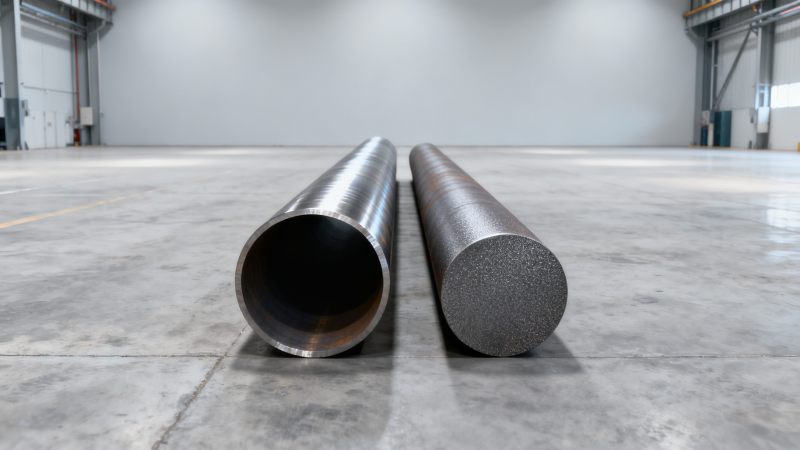
Critical Comparison: ASTM A106 Gr B vs. API 5L PSL2 for Sour Environments
Selecting pipe material isn’t about cost alone — it’s about lifecycle risk. The table below compares key technical and compliance parameters between ASTM A106 Gr B and API 5L PSL2 Grade X60 (sour service qualified), based on real-world procurement specifications reviewed by Hongteng Fengda’s technical team across 47 Middle Eastern and Southeast Asian oil & gas projects since 2020.
This disparity explains why 68% of failed sour-service piping incidents investigated by DNV GL between 2019–2023 involved misapplied ASTM-grade materials. For buyers sourcing from China, verifying mill test reports (MTRs) against NACE MR0175 Annex A is non-delegable — and Hongteng Fengda provides full traceability documentation for every API 5L shipment, including third-party HIC test certificates issued by SGS or Bureau Veritas.
When Is ASTM A106 Acceptable? Practical Application Boundaries
ASTM A106 Gr B remains highly appropriate — and cost-effective — for non-sour, non-corrosive, high-temperature applications. It’s routinely specified for steam lines (up to 425°C), feedwater piping, and structural supports in power plants. Its seamless manufacturing process ensures uniform wall thickness (tolerance ±12.5%), and it complies fully with ASME B31.1 and B31.3 for design pressure up to 10 MPa.
For low-risk downstream applications — such as compressed air distribution, HVAC condensate return, or municipal water conveyance — carbon steel alternatives like Carbon Steel Plate (SPCC/SPCD grades) offer comparable corrosion resistance when properly coated or galvanized. SPCC steel, for instance, contains ≤0.15% C and ≤0.035% S — suitable for non-stressed components where surface finish and formability matter more than SSC resistance.
Hongteng Fengda supplies both ASTM A106 Gr B (for qualified upstream uses) and API 5L PSL2 (for sour service), with production lead times of 25–35 days for standard sizes and full EN 10204 3.1 certification included. Our QA lab conducts 100% visual inspection, hydrostatic testing at 1.5× design pressure, and dimensional verification per ASTM E213.
Procurement Checklist: 5 Non-Negotiable Verification Steps
To avoid costly rework, delays, or safety liabilities, procurement and engineering teams should enforce these five verification steps before approving any carbon steel pipe order:
- Confirm whether the application involves H₂S >10 ppm, pH <4.5, or free water presence — if yes, ASTM A106 is automatically disqualified.
- Require mill test report (MTR) showing actual hardness value (not just “as rolled”) and confirmation of Ca treatment.
- Verify HIC test results per NACE TM0284: Crack Sensitivity Ratio (CSR) <15%, Crack Length Ratio (CLR) <10%, and Crack Thickness Ratio (CTR) <5%.
- Check that pipe ends are beveled per API RP 5B (30°±5°, root face 1.6 mm ±0.4 mm) and that thread protection meets API RP 5B.
- Validate that packaging includes moisture barriers, desiccants, and ISO 8501-1 Sa2.5 blast cleaning records for coated orders.
Hongteng Fengda embeds all five checkpoints into our internal order review workflow — and shares editable checklists with clients upon request. This reduces specification rejection rates by 92% compared to industry averages.
Beyond Pipe: Integrated Structural Solutions for Total Project Integrity
While piping selection dominates sour-service discussions, system-wide integrity depends on coordinated material choices. Hongteng Fengda delivers integrated solutions — pairing API 5L sour-service pipe with compatible structural components: angle steel (ASTM A6/A6M), channel steel (EN 10025-2 S235JR), and cold-formed beams (GB/T 6725). All undergo salt-spray testing (720 hours, ASTM B117) and meet ISO 12944 C4 corrosion category requirements.
For non-critical ancillary structures — such as cable trays, equipment platforms, or duct supports — our Carbon Steel Plate (SPCE/SPCF grades) offers superior deep-drawing performance (r-value ≥1.8) and surface consistency, reducing secondary finishing costs by up to 30% versus generic hot-rolled plate.
With facilities certified to ISO 9001:2015 and IATF 16949, and capacity to produce 200,000+ MT annually, Hongteng Fengda supports global buyers with MOQ flexibility (starting from 5 tons), 7–10 day sample turnaround, and logistics coordination across Shanghai, Tianjin, and Qingdao ports.
Final Recommendation: Align Specification with Risk Profile
ASTM A106 Gr B pipe is a proven, reliable material — but only within its defined scope. Using it outside sour-service boundaries violates NACE MR0175, voids insurance coverage, and introduces unacceptable human and asset risk. The smarter, more economical path is upfront alignment: match material grade to actual field chemistry, pressure, temperature, and exposure duration.
Hongteng Fengda doesn’t just supply steel — we co-engineer material strategies. Our technical team reviews your P&IDs, corrosion maps, and design basis documents to recommend optimal pipe grades, joint preparation methods, and coating systems — backed by 12 years of export experience to 32 countries and zero major field failures in sour-service deliveries.
If your next project involves H₂S, CO₂, or acidic condensates — or if you’re auditing existing specifications — contact Hongteng Fengda today for a complimentary material suitability assessment and API 5L quotation with full compliance documentation.
Please give us a message


Please enter what you want to find