Understanding ASTM A106 Gr B chemical composition is essential when selecting seamless carbon steel pipe for high-temperature and pressure applications. This guide explains how each element influences performance, reviews ASTM A106 Gr.B specification details, and compares ASTM A106 Gr.B equivalent options to help engineers, buyers, and project teams make reliable sourcing and technical decisions.
Why ASTM A106 Gr B chemical composition matters in real projects
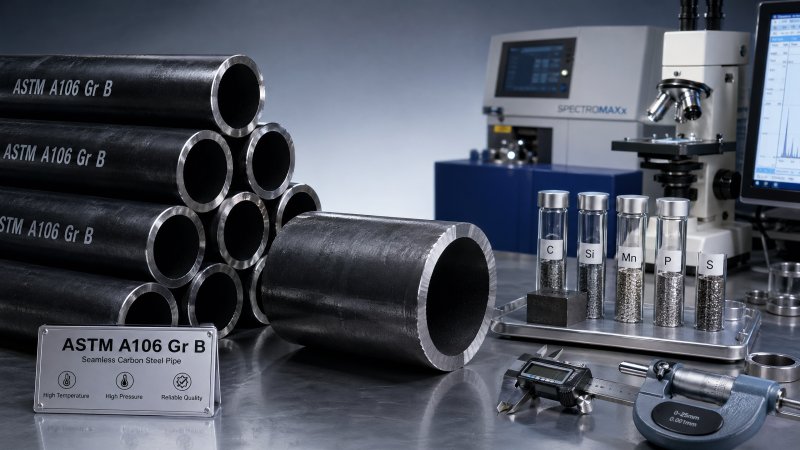
For steel buyers and technical teams, ASTM A106 Gr B is not just a pipe grade name. Its chemical composition directly affects weldability, strength retention, high-temperature service behavior, fabrication risk, and long-term reliability. In power plants, refineries, boiler systems, and process lines, even small variations in carbon, manganese, phosphorus, sulfur, silicon, or residual elements can influence whether the pipe performs steadily over a long operating cycle.
In practical procurement, many disputes come from focusing only on price, outer diameter, and wall thickness while overlooking chemistry control. ASTM A106 Gr B seamless carbon steel pipe is commonly selected for elevated temperature service, but the right decision depends on matching specification limits with the actual working range, such as medium-pressure utility lines, high-temperature transport sections, or systems that run continuously for 8–24 hours per day.
For quality managers, the chemical composition is also the first checkpoint before reviewing mechanical properties and test certificates. If the heat analysis is near the upper limit for carbon or sulfur, downstream risks may increase during bending, welding, hydrostatic testing, or field installation. That is why technical evaluation usually follows 3 core stages: specification confirmation, chemistry and testing review, and production plus delivery control.
For distributors and project owners comparing suppliers from different countries, chemistry consistency often matters more than one-time low pricing. A stable exporter can reduce the chance of mixed heats, inconsistent documentation, or repeat inspection costs. This is especially relevant when one project includes 2–4 pipe schedules, several diameter ranges, and a compressed delivery target.
What is the ASTM A106 Gr.B specification and which elements are critical?
ASTM A106 Gr.B specification covers seamless carbon steel pipe for high-temperature service. In most purchasing discussions, Grade B is the most frequently referenced option because it balances strength, availability, and processing practicality. However, the value of the grade comes from controlled composition rather than grade name alone. The chemistry sets the baseline for tensile response, weld performance, heat resistance, and quality consistency across batches.
The exact limits should always be checked against the latest applicable standard and mill test certificate, but the following table shows the commonly referenced maximum or typical control framework used in market evaluation. This is useful for procurement teams, inspectors, and engineers who need a fast screening tool before ordering or approving material.
This ASTM A106 Gr.B specification overview shows that the chemistry is a balance, not a single-number target. Carbon helps strength, but high carbon can complicate field welding. Manganese supports strength and toughness, but poor heat control during manufacturing can still affect consistency. Phosphorus and sulfur are usually kept low because they increase processing and service risk. Silicon contributes to deoxidation and supports steel quality during production.
How each element affects sourcing and fabrication decisions
Carbon is often the first number engineers check because it influences hardness and weld response. If your project requires extensive shop welding, repeated branch connections, or site-fit modifications, a lower and more stable carbon level generally makes fabrication easier. For project teams handling 20–200 tons of mixed steel materials, this can reduce repair work and requalification pressure.
Manganese is equally important because it helps the steel achieve the required strength while maintaining practical workability. In seamless pipe production, manganese supports mechanical balance and toughness. For operating personnel, this matters when the line is exposed to temperature swings, start-stop cycles, or vibration from pumps and compressors.
Phosphorus and sulfur are usually viewed as control elements. Procurement teams sometimes underestimate them because the values look small, but in steelmaking, small percentages can cause meaningful changes in cracking sensitivity, formability, and impact behavior. When the project includes third-party inspection, these two elements often become part of the first-pass acceptance review.
Silicon is not always the most discussed item in a buyer meeting, yet it plays a useful role in deoxidation and chemical stability. This contributes to overall steel cleanliness and processing quality. For users comparing mills, stable control of silicon together with carbon and manganese is usually more meaningful than chasing a single low price per ton.
How ASTM A106 Gr B compares with equivalent options
When buyers search for ASTM A106 Gr.B equivalent materials, the goal is usually one of three things: reduce cost, solve delivery pressure, or match regional standards. Equivalent does not mean identical in every chemical, mechanical, or testing detail. It means the alternative may serve a similar application under controlled engineering review. That review should include pressure class, service temperature, wall thickness, inspection level, and local code acceptance.
A common mistake is assuming that any carbon steel pipe with similar tensile strength can replace ASTM A106 Gr B. In reality, differences in seamless versus welded production, heat treatment route, chemistry limits, and standard scope can affect qualification. For budget holders and commercial reviewers, this distinction prevents hidden cost transfer from purchasing to installation, testing, or approval stages.
The table below gives a practical comparison framework. It is not a substitution approval sheet, but it helps technical and sourcing teams identify where additional review is needed before confirming an ASTM A106 Gr.B equivalent option.
In many projects, ASTM A53 Gr B or API 5L Gr B may appear close on paper, yet the correct choice depends on the design code and service conditions. If the line is expected to operate under elevated temperature conditions for long cycles, ASTM A106 Gr B is often preferred. If the requirement is more general fluid transport, another option may be acceptable after review. This decision can affect both direct material cost and downstream compliance effort over a 2–6 week procurement window.
Where structural steel sourcing connects to pipe project execution
Large industrial and construction projects rarely buy pipe in isolation. Pipe racks, support frames, skids, bridges, and equipment bases often require coordinated structural steel supply. In these cases, buyers benefit from working with a supplier that understands both specification-driven steel products and project delivery coordination. That reduces communication gaps between pipe, beam, and fabricated support procurement.
For example, projects involving utility corridors, mechanical workshops, shipbuilding, or bridging work may also require H Section Beam supply together with other steel components. Typical specifications include flange thickness of 8–64mm, web thickness of 5–36.5mm, flange width of 50–400mm, web width of 100–900mm, and lengths from 1m to 12m or as required, with grades such as Q235B, Q345B, S275JR, S355JR, A572, and A992.
This kind of mid-project integration matters to procurement managers and project leaders. Instead of managing multiple disconnected vendors, they can align steel sections, fabricated components, and documentation under one review flow. Hongteng Fengda supports this model through structural steel manufacturing, OEM capability, and export coordination for North America, Europe, the Middle East, and Southeast Asia.
The commercial advantage is not only price comparison. It also includes lead-time predictability, standard compliance, and reduced handling complexity when one project package contains 3–5 steel product categories. For finance reviewers, that can mean fewer approval cycles and better cost visibility from production to shipment.
What should buyers, QC teams, and engineers check before ordering?
A reliable purchase decision for ASTM A106 Gr B should not stop at the grade name. Buyers should review at least 5 key points before issuing a purchase order: standard edition, size range, chemistry limits, required testing, and document package. If the project is export-based or owner-audited, add a sixth point: destination-specific compliance requirements. This simple structure helps avoid mismatches between quote, production, and site acceptance.
For quality control teams, the mill test certificate should be checked line by line rather than only stamped and filed. Heat number traceability, chemical analysis, tensile properties, flattening or bend requirements where applicable, hydrostatic test or NDT status, and marking details all affect acceptance. On projects with 2–3 inspection parties, incomplete paperwork can delay release even when the material itself is usable.
A practical procurement checklist
- Confirm whether the service is truly high-temperature process piping or general fluid transport, because this changes whether ASTM A106 Gr B is necessary.
- Verify size details including nominal pipe size, wall thickness or schedule, length requirement, and end condition such as plain end or beveled end.
- Request chemistry and mechanical property confirmation before mass production, especially when multiple heats or split shipments are involved.
- Define the inspection scope clearly, including third-party witness needs, hydro test, NDT, marking, packing, and traceability expectations.
- Align shipment timing with project milestones, because typical export preparation, document review, and logistics booking may take 2–4 weeks depending on destination and order complexity.
The next table is useful for procurement, engineering, and commercial teams that need a shared review format. It converts technical concerns into decision points that can be evaluated during supplier comparison, tender review, or internal approval.
This checklist-based approach helps different stakeholders speak the same language. Engineers focus on chemistry and service fit, purchasing checks delivery and quote terms, finance checks cost exposure, and QC confirms acceptance records. When these 4 views align early, project execution is smoother and claim risk is lower.
Common mistakes that create avoidable cost
One common mistake is treating ASTM A106 Gr B and ASTM A106 Gr.B equivalent options as fully interchangeable without checking design code acceptance. Another is accepting broad statements like “same as Grade B” without reviewing heat chemistry and testing scope. A third mistake is confirming price first and technical review later, which often results in change orders, delayed approval, or replacement purchases.
In steel procurement, hidden costs usually appear in three places: re-inspection, delivery disruption, and installation rework. Even if unit price savings look attractive at the quotation stage, a missed requirement on chemistry, documentation, or testing can quickly erase that benefit. This is why experienced buyers compare total sourcing risk, not only the ex-works number.
FAQ: practical questions about ASTM A106 Gr B chemical composition
The following questions reflect common search intent from engineers, purchasing teams, distributors, and end users. They also help clarify where ASTM A106 Gr B adds value and where comparison or substitution requires careful review.
Is higher carbon always better for ASTM A106 Gr B pipe?
No. Higher carbon can increase strength and hardness, but it may also reduce weldability and ductility. In field conditions that require multiple weld joints, fit-up adjustment, or thermal cycling, overly high carbon is not automatically beneficial. The better approach is balanced chemistry within ASTM A106 Gr.B specification limits and matched to the actual service condition.
Can ASTM A53 Gr B replace ASTM A106 Gr B?
Sometimes, but not by default. The answer depends on service temperature, design code, owner requirement, and whether seamless construction is mandatory. For general pressure or structural-related fluid applications, substitution may be considered. For elevated temperature process service, ASTM A106 Gr B is often preferred. Always confirm with engineering review before procurement.
What documents should be requested from the supplier?
At minimum, request the mill test certificate, heat analysis, mechanical properties, size and quantity list, marking details, and inspection status. For stricter projects, add third-party inspection arrangement, packing list format, and destination-specific documentation. If delivery is time-sensitive, ask for a schedule covering production, inspection, and shipment in 3 separate milestones.
How long does a typical export order take?
Lead time varies by size range, quantity, testing scope, and shipping route. For standard steel export projects, buyers often plan around 2–4 weeks for production and preparation, plus logistics time based on port and destination. Custom packing, third-party inspection, or mixed-product sourcing can extend the schedule, so confirmation should happen before final purchase approval.
Why work with Hongteng Fengda for steel sourcing and project support
For global buyers, the real challenge is not only finding a product that meets a standard. It is finding a supply partner that can support specification review, stable production, quality control, and delivery coordination across different steel categories. Hongteng Fengda operates as a structural steel manufacturer and exporter from China, supplying angle steel, channel steel, steel beams, cold formed steel profiles, and customized structural steel components for construction, industrial, and manufacturing projects.
This matters when your procurement team must balance 4 pressures at once: technical compliance, budget control, shipment timing, and supplier reliability. With modern manufacturing facilities and strict quality control, Hongteng Fengda supports buyers who need products aligned with major international standards such as ASTM, EN, JIS, and GB. That helps reduce sourcing uncertainty and improve communication efficiency from inquiry to shipment.
If your project includes ASTM-related steel demand, structural sections, or OEM-based fabrication support, you can consult on several specific topics before ordering: parameter confirmation, grade and standard matching, product selection, delivery cycle planning, customized solutions, certification requirements, sample support, and quotation coordination. This is especially useful for projects with mixed steel packages, multi-country delivery, or phased installation schedules.
Contact Hongteng Fengda when you need practical support rather than generic sales language. Share your specification, size list, application scenario, target market, and delivery window. The team can help review technical fit, suggest matching steel products, clarify documentation needs, and organize a more controlled sourcing plan for your next project.
Please give us a message


Please enter what you want to find