For engineers and technical evaluators selecting materials for elevated-temperature systems, ASTM A106 Gr B pipe remains a widely trusted choice for pressure and heat service.
Its balanced mechanical properties, reliable weldability, and broad standards compliance support boilers, refineries, power plants, and industrial piping projects.
In steel supply decisions, ASTM A106 Gr B pipe is valued not only for performance, but also for inspection consistency, fabrication convenience, and sourcing stability.
Basic Overview of ASTM A106 Gr B Pipe
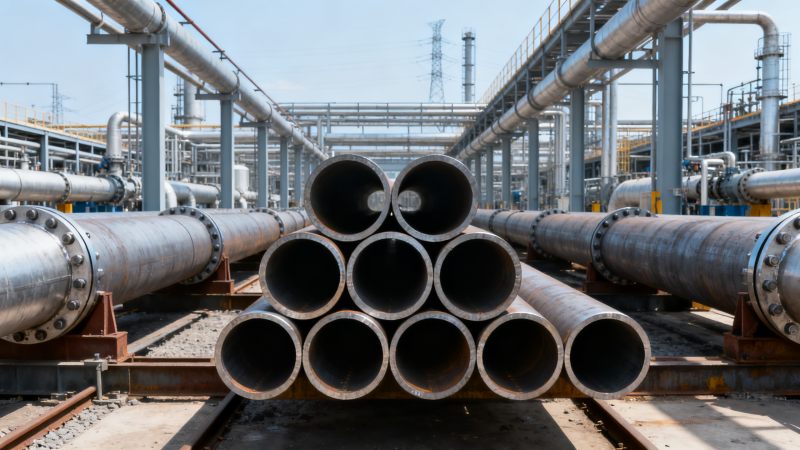
ASTM A106 Gr B pipe is a seamless carbon steel pipe specified for high-temperature service and pressure applications.
It is commonly selected when process media, steam, hot water, and hydrocarbons require dependable strength under heat.
Compared with general structural tubing, ASTM A106 Gr B pipe is designed around pressure integrity and elevated-temperature reliability.
Its seamless construction reduces concerns linked to longitudinal weld seams in demanding service lines.
The material is widely recognized across ASTM and ASME based projects, which helps specification alignment in international engineering work.
Key Material Characteristics
- Seamless carbon steel construction for pressure service.
- Good weldability for shop and field fabrication.
- Reliable strength retention in elevated-temperature systems.
- Broad availability in common nominal sizes and wall thicknesses.
- Compatibility with standard fittings, flanges, and support systems.
Industry Context and Current Selection Priorities
Industrial steel buyers increasingly focus on operating temperature, pressure class, quality documentation, and fabrication efficiency.
In this context, ASTM A106 Gr B pipe remains relevant because it fits many conventional thermal process systems.
The following table highlights practical concerns often linked to ASTM A106 Gr B pipe selection.
Another practical consideration is support material around the piping system, including brackets, bearing plates, and base structures.
For these supporting components, Carbon Steel Plate Manufacturer solutions are often used together with hot-service pipe systems.
Typical grades such as A36, Q235, and S235JR offer balanced mechanical properties, weldability, and easy formability for pipe supports and industrial steel assemblies.
With carbon content at or below 0.22%, yield strength around 235 MPa, and tensile strength of 375 to 500 MPa, such plates suit frames, brackets, tanks, and support bases.
Application Value in High-Temperature Service
The practical value of ASTM A106 Gr B pipe comes from dependable use in thermal and pressure-intensive operations.
It supports system designers seeking a balance between performance, availability, and fabrication economy.
Why It Is Commonly Specified
- Suitable for steam, hot fluids, and process piping under sustained heat.
- Seamless design helps reduce leakage concerns in critical lines.
- Works well with standard fabrication methods, including cutting, beveling, and welding.
- Often available with material test reports and traceable inspection documentation.
- Provides a familiar specification base for multinational project coordination.
For many projects, ASTM A106 Gr B pipe also reduces engineering friction because design teams already understand its service behavior.
That familiarity can improve approval speed, shorten substitution review cycles, and simplify maintenance planning.
Typical Service Scenarios and Use Categories
ASTM A106 Gr B pipe appears across multiple sectors where hot process transport is routine.
The table below summarizes representative application paths.
Related Steel Components Around the System
A complete hot-service line rarely depends on pipe alone.
It usually includes supports, platforms, channels, beams, and plates manufactured under recognized international standards.
This is where a structural steel partner with export experience can help align piping materials with support steel and customized fabrication needs.
Practical Evaluation and Specification Considerations
When evaluating ASTM A106 Gr B pipe, material selection should move beyond grade name alone.
Actual service conditions, fabrication methods, and documentation requirements all deserve review.
Important Checkpoints
- Confirm operating temperature and pressure against design code requirements.
- Verify wall thickness, schedule, and dimensional tolerances.
- Review heat treatment, chemical composition, and mechanical test records.
- Check end finish, length requirements, and welding procedure compatibility.
- Request traceability, inspection reports, and relevant export packing details.
- Coordinate related support steel, especially where load transfer is significant.
ASTM A106 Gr B pipe is versatile, but it should still be matched carefully to corrosion environment, insulation design, and maintenance access.
In some systems, additional coating, insulation, or corrosion allowance may be required for long service life.
Supply Reliability and Integrated Steel Support
Consistent project execution depends on more than a compliant pipe specification.
Stable lead times, repeatable quality, and coordinated steel supply reduce installation delays and downstream risk.
Hongteng Fengda, as a structural steel manufacturer and exporter from China, supports international projects with standard and customized steel solutions.
Its manufacturing scope includes angle steel, channel steel, steel beams, cold formed steel profiles, and custom structural components.
Products comply with major standards such as ASTM, EN, JIS, and GB, supporting construction, industrial, and manufacturing applications worldwide.
For projects using ASTM A106 Gr B pipe, coordinated supply of support steel can improve procurement efficiency and reduce interface issues.
Next-Step Guidance for Material Planning
ASTM A106 Gr B pipe remains a practical and trusted option for high-temperature service where pressure integrity and fabrication reliability are essential.
Its continued use across power, refining, and industrial systems reflects a strong balance of technical suitability and market availability.
Before final specification, compare service conditions, schedule requirements, inspection expectations, and related support steel needs.
Where integrated sourcing matters, prepare a complete material list covering pipe, supports, plates, beams, and custom fabricated items.
That approach helps turn ASTM A106 Gr B pipe selection into a more efficient, lower-risk, and standards-aligned project outcome.
Please give us a message


Please enter what you want to find