Understanding ASTM A106 Gr B mechanical properties is essential as steel pipe evaluation becomes more performance-driven across pressure, temperature, and structural applications.
Tensile strength, yield strength, elongation, hardness, and impact behavior now influence compliance decisions, cost control, and long-term operating safety.
This trend reflects stricter engineering reviews, more transparent sourcing, and growing demand for carbon steel products with verifiable performance data.
ASTM A106 Gr B Mechanical Properties Are Becoming a Core Selection Signal
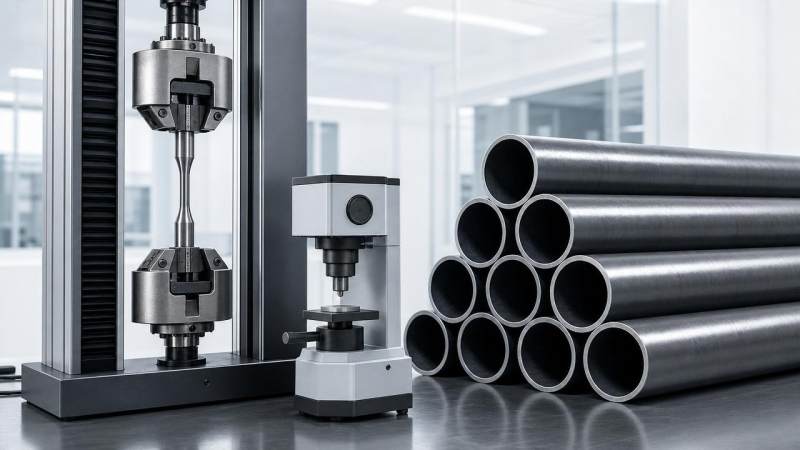
ASTM A106 Grade B is a seamless carbon steel pipe grade used for high-temperature service and pressure-related systems.
Its mechanical performance helps determine whether pipe can resist internal pressure, thermal stress, installation loads, and service deformation.
ASTM A106 Gr B mechanical properties are therefore not only specification data, but also engineering risk indicators.
In many projects, the focus has shifted from simple dimensional matching to strength consistency, traceability, and documented test results.
This shift is especially clear in energy facilities, process piping, industrial plants, and structural support systems exposed to heat.
Current Market Signals Show Stronger Attention to Verified Performance
Global steel sourcing is becoming more controlled as project teams compare materials across ASTM, EN, JIS, and GB standards.
Mechanical certificates, heat numbers, chemical composition, and inspection reports are now reviewed earlier in procurement cycles.
ASTM A106 Gr B mechanical properties often become the baseline for confirming safe use before price negotiation is finalized.
This creates pressure on suppliers to maintain stable production, consistent testing, and clear documentation for every shipment.
It also encourages comparison between seamless pipe grades and related structural steel products used in connected systems.
Key Mechanical Values Behind ASTM A106 Grade B Decisions
ASTM A106 Gr B mechanical properties are usually evaluated through minimum tensile strength, minimum yield strength, elongation, and hardness control.
Tensile strength shows how much stress the pipe can withstand before breaking under controlled testing conditions.
Yield strength indicates the point where deformation becomes permanent, which is critical for pressure and support design.
Elongation reflects ductility, helping engineers judge whether the material can tolerate strain without sudden failure.
Hardness is not always the headline value, yet it helps identify abnormal processing, heat treatment issues, or inconsistent batches.
Why These Requirements Are Gaining More Weight
The stronger focus on ASTM A106 Gr B mechanical properties is driven by several technical and commercial factors.
- Higher operating temperatures increase demand for predictable carbon steel behavior.
- Pressure system reviews require clear proof of minimum strength values.
- International projects need comparable documentation across supply chains.
- Quality disputes are reduced when test data and standards are aligned.
- Longer service expectations make ductility and deformation control more important.
These drivers explain why mechanical testing is now closely linked with supplier qualification and project approval.
When values are unstable, additional inspection, replacement risk, and schedule delays may follow.
How Mechanical Properties Affect Application Choices
ASTM A106 Gr B mechanical properties directly influence pipe selection for boilers, refineries, chemical plants, and heat transfer systems.
A pipe with adequate tensile strength can better resist rupture risks under pressure and axial loading.
A suitable yield strength helps prevent permanent deformation during installation, operation, and thermal expansion cycles.
Good elongation supports safer fabrication, bending, and alignment where controlled plastic deformation may occur.
For structural steel connections, these values also help evaluate compatibility with beams, channels, and custom steel components.
Related Steel Products Reflect the Same Performance-Based Trend
Performance verification is also expanding beyond seamless pipe into coated, formed, and structural steel materials.
For example, Coil Coated Galvanized Steel supports corrosion-resistant applications where coating weight and base steel strength matter.
Available in G90 galvanized steel, it offers thickness from 0.12mm to 3.5mm and width from 600mm to 1500mm.
Its zinc layer range includes 60-275g/m² for hot galvanizing and 80-275g/m² for pre-galvanized material.
Mechanical ranges include yield strength of at least 240-380 MPa, tensile strength of at least 270-500 MPa, and elongation of at least 22%.
This comparison shows how strength, ductility, coating protection, and international standards increasingly shape material selection.
Impact on Sourcing, Inspection, and Project Execution
Clear ASTM A106 Gr B mechanical properties reduce uncertainty during technical approval and incoming material inspection.
They also help align drawings, pressure calculations, welding procedures, and site acceptance standards.
If documentation is incomplete, even compliant material may face delays because verification cannot be completed efficiently.
For export shipments, stable properties support smoother third-party inspection, customs documentation, and final acceptance.
Key Points to Verify Before Confirming Material
ASTM A106 Gr B mechanical properties should be checked together with chemical composition, dimensions, and manufacturing method.
- Confirm the pipe is seamless and marked according to ASTM A106 requirements.
- Review tensile strength, yield strength, elongation, and test temperature details.
- Check heat number consistency between pipe body, bundle tags, and certificates.
- Confirm outside diameter, wall thickness, length, and tolerance requirements.
- Request third-party inspection if project risk or contract terms require it.
These checks are practical because mechanical performance depends on both metallurgy and process control.
Reliable manufacturers maintain testing discipline, calibrated equipment, and documented quality procedures.
Judging Future Supply Quality Through Mechanical Stability
The next stage of steel sourcing will likely place more value on consistency than on single-batch compliance.
ASTM A106 Gr B mechanical properties will remain important because repeated stability indicates mature production control.
A supplier with consistent tensile, yield, and elongation data can support long-term projects more effectively.
Hongteng Fengda supports this direction through structural steel manufacturing, export service, and customized steel solutions from China.
Its product scope includes angle steel, channel steel, steel beams, cold formed profiles, and customized structural components.
With production aligned to ASTM, EN, JIS, and GB standards, documentation can be matched to international project requirements.
Practical Response Strategy for Safer Material Decisions
A structured approach helps turn ASTM A106 Gr B mechanical properties into usable selection criteria.
This method also works when comparing related carbon steel and structural steel materials for integrated project supply.
The goal is not only to meet a standard, but to avoid uncertainty during fabrication and operation.
Moving From Specification Reading to Reliable Execution
ASTM A106 Gr B mechanical properties explain how the material is expected to perform under demanding service conditions.
They help connect design assumptions with real steel behavior, documented testing, and supply reliability.
For the next sourcing decision, review the mechanical values, certificate traceability, dimensional tolerances, and applicable inspection plan together.
Hongteng Fengda can support global steel projects with standard products, customized structural components, and export-ready quality documentation.
Please give us a message


Please enter what you want to find