Understanding ASTM A106 Gr B mechanical properties is essential for technical evaluators comparing seamless carbon steel pipe performance in pressure and high-temperature applications. This overview explains key strength, elongation, and toughness indicators while helping buyers assess material compliance, project suitability, and sourcing reliability from an experienced China-based structural steel manufacturer.
For engineers, QA teams, and sourcing specialists, the challenge is rarely limited to reading one value on a mill test certificate. Real evaluation usually involves 4 linked questions: whether the pipe meets the specified strength level, whether it can tolerate service temperature and pressure, whether dimensional and manufacturing quality are consistent, and whether the supplier can maintain stable compliance across repeated orders.
In projects such as boilers, refineries, power stations, process piping, and general industrial systems, ASTM A106 Grade B remains one of the most frequently compared seamless carbon steel pipe materials. Its mechanical profile sits in a practical middle range, giving buyers a balance between strength, fabrication convenience, and broad market availability.
What ASTM A106 Grade B Mechanical Properties Mean in Practical Evaluation
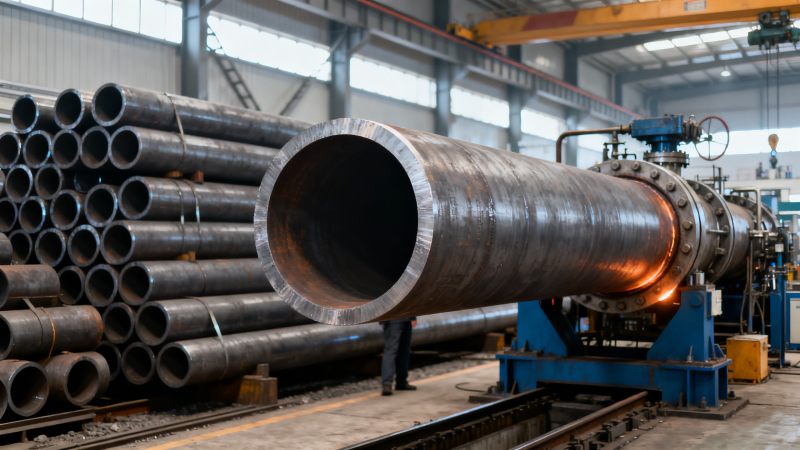
When technical evaluators review ASTM A106 Gr B mechanical properties, they are usually confirming whether the material can safely support pressure loads, thermal stress, and fabrication operations such as bending, welding, threading, or flanging. The most critical values are tensile strength, yield strength, and elongation, but the decision should always include manufacturing route, heat treatment condition, and service environment.
ASTM A106 Grade B is a seamless carbon steel pipe grade intended for high-temperature service. In many procurement documents, it is compared with A53, API grades, or equivalent regional materials. The reason is simple: buyers need to know not only nominal compliance, but also how the pipe behaves under real stress, repeated loading, and installation conditions over 10, 20, or even 30 years of service life.
Core strength indicators
The standard baseline for ASTM A106 Gr B mechanical properties typically includes a minimum tensile strength of 415 MPa and a minimum yield strength of 240 MPa. These numbers matter because tensile strength indicates the maximum stress before fracture, while yield strength marks the point at which permanent deformation begins. For pressure piping, that difference directly affects design margin and deformation control.
Elongation is also essential. It reflects ductility, or how much the material can stretch before failure. The exact minimum elongation requirement depends on specimen geometry, but in practical review, higher ductility generally supports safer forming and a lower risk of brittle cracking during installation. For technical teams, this is especially important when pipes require cold bending, beveling, or field welding.
Why yield and tensile values should be read together
A pipe with acceptable tensile strength but weak yield performance may still deform too early under sustained loads. Conversely, strong yield without adequate elongation can create fabrication difficulties. That is why technical assessment should not isolate one number. A practical review uses at least 3 checkpoints: minimum strength compliance, ductility level, and consistency across heat numbers or production lots.
The table below gives a compact view of the primary mechanical values often referenced during procurement and engineering review.
The key point is that ASTM A106 Gr B mechanical properties are not extreme in one direction. Instead, they form a balanced package suitable for many pressure and elevated-temperature uses. That balance is one reason the grade continues to be specified across industrial piping systems in North America, the Middle East, Europe, and Southeast Asia.
How temperature and seamless processing affect evaluation
Because ASTM A106 Grade B is designed for high-temperature service, technical review should include more than room-temperature strength values. In operating environments above 200°C, and especially in ranges approaching 400°C or higher depending on system design, strength retention, oxidation exposure, and thermal expansion behavior become increasingly important.
The seamless manufacturing route also matters. Compared with welded pipe, seamless pipe eliminates weld seam variables and is often preferred where internal pressure, thermal cycling, or stricter code requirements are involved. For technical evaluators, this can reduce one layer of risk, especially in systems where inspection access after installation is limited.
- Check minimum tensile and yield values against project specification, not only against the base standard.
- Review elongation together with wall thickness, forming method, and welding procedure.
- Confirm heat treatment and test documentation for each batch or heat number.
- Assess service temperature range, pressure class, and corrosion allowance as a package.
How Buyers Compare ASTM A106 Gr B Mechanical Properties with Project Requirements
In B2B steel purchasing, material selection is rarely made on mechanical values alone. The more useful method is to compare ASTM A106 Gr B mechanical properties against 5 practical filters: design code compatibility, operating pressure, operating temperature, fabrication route, and supply consistency. This approach helps technical evaluators avoid a common problem—material that passes the standard but does not fit the application.
For example, a seamless carbon steel pipe may satisfy minimum strength requirements, yet still introduce project risk if dimensional tolerances fluctuate, traceability is incomplete, or lead time extends from 2 weeks to 8 weeks during a shutdown project. In industrial procurement, mechanical performance and supply reliability are closely connected.
Typical decision factors for technical evaluators
A sound material comparison often combines document review with application-specific checks. Technical evaluators generally look for measurable evidence rather than broad quality claims.
- Verify mechanical test results against ASTM minimum values and purchase order requirements.
- Confirm pipe size range, wall thickness, and dimensional tolerance for installation fit-up.
- Review chemistry, especially carbon, manganese, phosphorus, sulfur, and silicon ranges.
- Check NDT, hydrostatic, or supplementary test scope if the system is high risk.
- Assess packaging, marking, and export protection for transit periods of 15–45 days.
A related steel sourcing consideration
Although ASTM A106 Grade B is a pipe material, many buyers involved in plant, tower, infrastructure, and fabrication projects source multiple steel categories from the same supply base. In such cases, it is useful to work with manufacturers that can coordinate structural items and corrosion-protected steel products under international standards.
One example is Galvanized Round Steel, which is widely used in electric power towers, communication towers, railway and highway protection systems, street light poles, marine components, and building steel structure components. Available in diameter ranges such as 16–250 mm or customized lengths, it offers hot galvanizing for long anti-corrosion life and tensile strength in the 570–820 MPa range, depending on specification and processing route.
For technical buyers managing both pressure systems and external support structures, combining pipe evaluation with corrosion-resistant round steel procurement can reduce coordination time across 2 or more vendor categories. It also helps standardize documentation review for ASTM, EN, JIS, GB, and other commonly requested frameworks.
The next table shows how ASTM A106 Gr B mechanical properties should be interpreted at project level rather than as isolated laboratory values.
This comparison method makes purchasing decisions more reliable. Instead of asking whether the pipe is simply “qualified,” evaluators can ask whether the mechanical performance is sufficient for the actual operating window, fabrication plan, and inspection level required by the project.
Common Risks When Reviewing Test Data and Supplier Offers
One of the most common mistakes in ASTM A106 Gr B mechanical properties evaluation is relying only on nominal grade description. A quotation that says “A106 Gr B seamless pipe” is not a full technical answer. Buyers should request at least 6 types of supporting information: chemical composition, mechanical test values, pipe dimensions, manufacturing process, inspection scope, and marking or traceability details.
Another risk is assuming that all compliant pipes perform equally in downstream fabrication. In reality, variation in surface condition, end preparation, straightness, ovality, and wall thickness consistency can affect welding speed, reject rate, and field installation cost. Even a 1–2 mm dimensional deviation may create problems in spool alignment for larger diameters.
Frequent review gaps
- Mechanical properties are checked, but no attention is paid to lot-to-lot consistency.
- Pressure use is confirmed, but service temperature range is not clearly defined.
- Mill test certificates are collected, but traceability to heat number or bundle marking is weak.
- Lead time is accepted, but export packaging for sea shipment is not reviewed.
How an experienced manufacturer supports risk control
For global buyers, the supplier’s process discipline is as important as the product data sheet. A professional China-based structural steel manufacturer and exporter can support risk reduction through stable production scheduling, clear pre-shipment checks, specification matching, and practical communication across quality, logistics, and documentation stages.
Hongteng Fengda serves international industrial and construction buyers with structural steel products, cold formed profiles, steel beams, channels, angle steel, and customized steel components produced under strict quality control. For buyers sourcing across ASTM, EN, JIS, and GB frameworks, that broader standards familiarity can shorten technical clarification cycles and reduce avoidable delays during evaluation and order execution.
Best Practices for Technical Evaluation and Sourcing Decisions
The most effective way to assess ASTM A106 Gr B mechanical properties is to use a repeatable evaluation checklist. This is especially useful when comparing 3 or more suppliers, mixed origin offers, or urgent replacement orders. A structured method improves internal approval speed and reduces the chance of choosing a technically acceptable but commercially risky source.
Recommended 5-step review process
- Match the grade, size, and service condition to the project specification and code.
- Review tensile strength, yield strength, and elongation against required minimums.
- Confirm dimensional tolerance, end condition, and any supplementary inspections.
- Check production lead time, packaging method, and export documentation readiness.
- Compare supplier responsiveness, consistency, and ability to support repeat orders.
What strong sourcing support looks like
A reliable steel partner should be able to answer technical questions quickly, usually within 24–48 hours for standard items, and provide realistic delivery estimates rather than aggressive promises. For OEM or customized structural components, clear drawing review and tolerance confirmation before production are often more valuable than a low initial unit price.
For buyers managing industrial facilities, infrastructure packages, or fabrication projects, the best supplier relationship is built on consistent quality, stable lead times, and transparency in standard compliance. Those factors directly influence total project cost through reduced rework, fewer documentation disputes, and smoother installation planning.
ASTM A106 Gr B mechanical properties provide a dependable benchmark for evaluating seamless carbon steel pipe in pressure and elevated-temperature service. The real value of those properties emerges when they are reviewed alongside dimensional control, fabrication needs, inspection scope, and supply reliability. If you are comparing pipe materials or coordinating broader steel procurement for industrial and structural applications, Hongteng Fengda can support your team with standardized products, customized solutions, and practical export experience. Contact us now to discuss specifications, request technical details, or get a tailored sourcing solution for your next project.
Please give us a message


Please enter what you want to find