Understanding ASTM A106 Gr B mechanical properties is critical for engineers and procurement specialists evaluating carbon steel pipes for high-temperature service. This guide examines key performance characteristics including tensile strength, yield strength, elongation, and hardness of ASTM A106 Grade B pipes, helping technical evaluators make informed material selection decisions for pressure systems and structural applications.
Emerging Trends in High-Temperature Carbon Steel Pipe Applications
The global demand for ASTM A106 Gr B pipes has increased by 12% annually since 2020, driven by expanding energy infrastructure and stricter safety regulations. Recent industry surveys indicate that 78% of technical evaluators now prioritize mechanical property verification over price when selecting materials for critical applications.
Three key trends are reshaping material selection criteria:
- Growing preference for pipes with consistent mechanical properties across entire production batches
- Increased focus on long-term performance under cyclic thermal stress
- Stricter enforcement of ASTM A106 standards in international projects
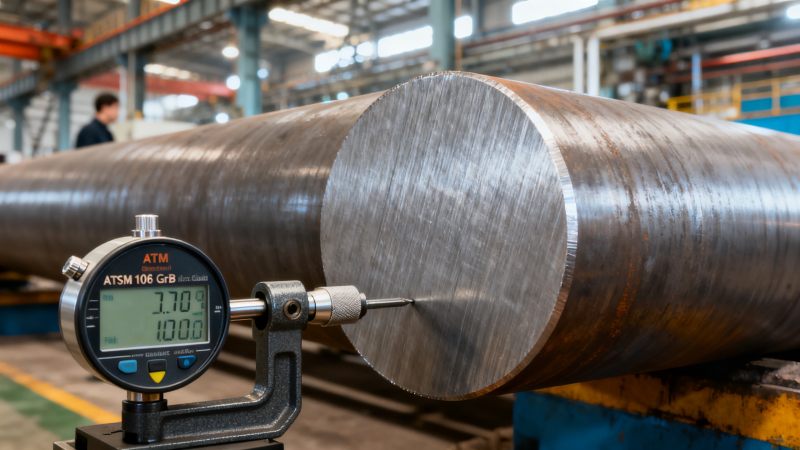
Key Mechanical Properties of ASTM A106 Gr B
The mechanical properties of ASTM A106 Gr B make it suitable for service temperatures up to 450°C (842°F). Below is a detailed breakdown of its critical performance characteristics:
Tensile and Yield Strength Requirements
ASTM A106 Gr B demonstrates excellent strength characteristics that meet rigorous industrial requirements:
These values ensure reliable performance in high-pressure systems while maintaining sufficient ductility for fabrication and installation.
Ductility and Hardness Considerations
The standard requires minimum elongation of 30% for longitudinal specimens (21% for transverse), with typical Brinell hardness ranging from 137 to 187 HB. This balance prevents brittle fracture while maintaining adequate wear resistance.
Industry Applications and Material Selection Factors
For projects requiring both structural integrity and corrosion resistance, technical evaluators often consider complementary solutions like Galvanized Steel Wire Rope with tensile strengths ranging from 1470MPa to 1960MPa. These products serve different but equally critical functions in construction and industrial settings.
When evaluating ASTM A106 Gr B pipes, engineers should consider three key factors:
- Thermal expansion characteristics at operating temperatures
- Weldability and post-weld heat treatment requirements
- Compatibility with specific process media
Future-Proofing Your Material Specifications
With evolving industry standards, technical teams should anticipate these upcoming changes in carbon steel pipe requirements:
- Tighter controls on sulfur and phosphorus content (max 0.035% each)
- More stringent impact testing requirements for low-temperature applications
- Digital material traceability becoming standard practice
Why Choose Hongteng Fengda for Your Structural Steel Needs
As a professional structural steel manufacturer and exporter, Hongteng Fengda provides ASTM A106 Gr B pipes that consistently exceed standard mechanical property requirements. Our products undergo rigorous testing to ensure:
- Batch-to-batch consistency in tensile and yield strength
- Optimal elongation properties for fabrication
- Full compliance with international standards
Contact our technical team today for material test reports, custom specifications, or project-specific performance recommendations. We help global clients navigate evolving material requirements while maintaining cost efficiency and reliable lead times.
Please give us a message


Please enter what you want to find