Understanding ASTM A106 Gr B chemical composition is essential when evaluating seamless carbon steel pipe for heat, pressure, and long service cycles.
In steel projects, composition is not only a laboratory number. It directly affects strength, weldability, corrosion behavior, inspection acceptance, and long-term operating risk.
This article explains how ASTM A106 Gr B chemical composition supports practical selection across different service scenarios, and how to verify compliance more confidently.
Why ASTM A106 Gr B Chemical Composition Matters in Real Service Conditions
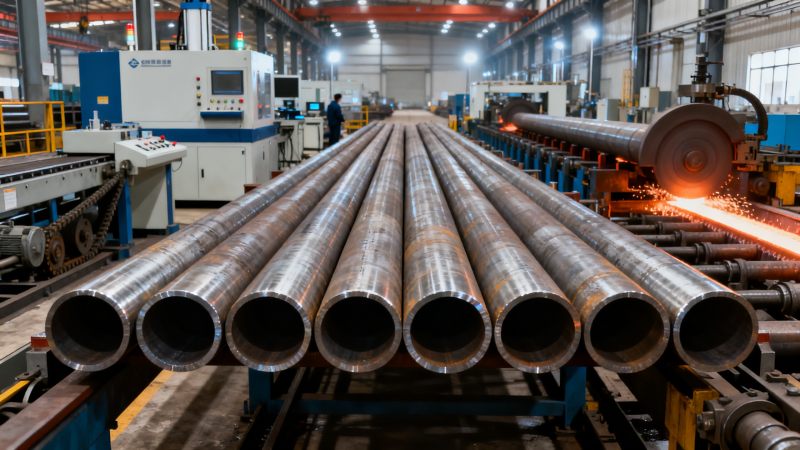
ASTM A106 Gr B pipe is widely used in refineries, power plants, process lines, and heated fluid systems.
These environments demand more than dimensional accuracy. They require stable chemistry that supports mechanical performance under pressure and temperature fluctuation.
ASTM A106 Gr B chemical composition usually includes carbon, manganese, phosphorus, sulfur, silicon, copper, chromium, molybdenum, nickel, vanadium, and other residual elements within controlled limits.
Each element influences a different risk point. Carbon changes hardness and weld response. Manganese affects strength and toughness. Phosphorus and sulfur influence brittleness and hot work quality.
Because of this, ASTM A106 Gr B chemical composition should be reviewed according to service conditions, not treated as a simple pass-or-fail checklist.
How to Judge Composition Needs in High-Temperature Pressure Piping
Scenario 1: Steam lines and heat transfer systems
In steam service, stable carbon and manganese balance is important for tensile strength and process consistency.
If carbon is too high, welding becomes less forgiving. Heat-affected zones may harden, increasing cracking risk during fabrication or maintenance.
If carbon is too low, strength margins may narrow, especially where design pressure and thermal cycling are both demanding.
For this reason, ASTM A106 Gr B chemical composition should be checked together with heat treatment records and mill test reports.
Scenario 2: Oil, gas, and petrochemical process piping
Process piping often faces internal media variation, shutdown cycles, and corrosion concerns.
In these cases, sulfur and phosphorus limits become especially important. Excess sulfur may reduce ductility and worsen weld soundness.
Higher phosphorus can increase brittleness, which is undesirable where vibration, pressure pulses, or low-temperature start-up conditions exist.
A careful review of ASTM A106 Gr B chemical composition helps reduce avoidable field repair and inspection rejection.
Scenario 3: Fabricated steel systems with downstream forming or welding
Not every project uses pipe as a final untouched product. Some systems include cutting, bending, beveling, and repeated welding.
In such fabrication-heavy environments, chemistry control becomes part of manufacturability, not only part of standard compliance.
For projects also requiring carbon steel bars or forming materials, compatible processing behavior matters across categories.
A useful reference is Wire Rod, supplied in carbon steel grades with excellent formability and weldability.
It supports applications such as auto manufacturing, shipbuilding, petrochemical plants, metallurgical machinery, precision tools, and building material production.
When comparing fabricated systems, consistent carbon control and recognized standards such as ASTM, GB, EN, DIN, and JIS can improve process alignment.
Key Elements in ASTM A106 Gr B Chemical Composition and Their Impact
The practical value of ASTM A106 Gr B chemical composition becomes clearer when each element is linked to service behavior.
- Carbon: raises strength, but excessive levels may reduce weldability and increase hardness after welding.
- Manganese: supports strength and toughness, and can help offset lower carbon designs.
- Silicon: contributes to deoxidation and can influence overall steel cleanliness.
- Phosphorus: should remain low because it can increase brittleness and reduce reliability.
- Sulfur: low sulfur is preferred for better ductility, weld quality, and reduced hot-shortness concerns.
- Residual alloying elements: copper, nickel, chromium, molybdenum, and vanadium must remain within specification limits.
When reviewing ASTM A106 Gr B chemical composition, the goal is not to chase the highest strength number.
The better goal is balanced chemistry that supports welding, inspection, fabrication, and in-service durability.
Different Service Scenarios Require Different Composition Priorities
A single chemical report can look acceptable on paper, yet still be a poor fit for a specific operating environment.
This scenario-based approach makes ASTM A106 Gr B chemical composition more useful for actual project control.
How to Verify ASTM A106 Gr B Chemical Composition Before Approval
Verification should combine documentation review, sample testing, and application logic.
- Check the mill test certificate for full heat analysis and standard reference.
- Confirm that carbon, manganese, phosphorus, and sulfur are within required limits.
- Review residual elements if the project has special welding or service restrictions.
- Compare chemistry consistency across different heats and shipment batches.
- Use third-party testing when traceability or risk exposure is high.
- Link composition review with mechanical tests, NDT plans, and welding procedure requirements.
This method helps turn ASTM A106 Gr B chemical composition from a paperwork item into a reliable engineering checkpoint.
Common Misjudgments When Evaluating Composition
Several mistakes appear repeatedly during material review and can create avoidable project delays.
- Assuming a compliant certificate automatically means suitable field performance.
- Focusing only on carbon while ignoring sulfur, phosphorus, and residual elements.
- Overlooking batch variation in mixed procurement programs.
- Separating chemistry review from welding procedures and heat input control.
- Ignoring application differences between high-temperature and cyclic service conditions.
These issues show why ASTM A106 Gr B chemical composition should always be interpreted in context.
Practical Selection Advice for Lower Risk and Better Steel Performance
A practical evaluation framework can improve quality control and reduce downstream uncertainty.
- Match chemistry priorities to operating temperature, pressure, and fabrication intensity.
- Prefer stable, repeatable heat analysis across long-term supply.
- Review composition with welding, inspection, and corrosion expectations together.
- Use internationally compliant suppliers with strong quality traceability.
- For broader carbon steel sourcing, compare processing behavior across complementary products.
Hongteng Fengda, a structural steel manufacturer and exporter from China, supports global projects with stable production, strict quality control, and standards-based supply.
Its experience across structural steel categories helps improve sourcing consistency, cost control, and delivery reliability for industrial and construction applications.
Conclusion: Use ASTM A106 Gr B Chemical Composition as a Decision Tool
ASTM A106 Gr B chemical composition is more than a technical specification line. It is a direct indicator of fabrication behavior, service reliability, and compliance confidence.
By linking composition review to actual operating scenarios, it becomes easier to select suitable steel, verify quality, and reduce project-level risk.
For the next step, compare chemical reports against temperature, welding, and inspection requirements before confirming material approval.
That approach makes ASTM A106 Gr B chemical composition a practical foundation for safer, more efficient steel application decisions.
Please give us a message


Please enter what you want to find