When reviewing API 5L pipe mill test reports, overlooking yield strength verification at both ends can compromise structural integrity—especially for critical applications like fluid pipe systems, S235JR steel frameworks, or can making machine components. As a China-based structural steel manufacturer and exporter, Hongteng Fengda ensures full-end mechanical testing per ASTM, EN, and GB standards—not just for API 5L pipe but also SUS pipe and custom cold-formed profiles. This practice mitigates risk for procurement teams, project managers, and quality/safety personnel who rely on consistent material performance across global infrastructure and industrial projects.
Why Yield Strength Verification at Both Ends Is Non-Negotiable
Yield strength is the stress at which a material begins to deform plastically. For API 5L line pipe used in oil & gas transmission, offshore platforms, or high-pressure water conveyance, even minor variations across the pipe length can trigger localized yielding under load—leading to buckling, fatigue cracking, or catastrophic failure. Industry data shows that 68% of field-reported pipe failures in mid-to-high-pressure service involve unverified end-zone mechanical properties.
Unlike tensile strength (measured at mid-length), yield strength is highly sensitive to microstructural gradients introduced during hot rolling, cooling, and straightening. The first and last 1–2 meters of a coil or billet often exhibit 5–12% lower yield values than the central section due to thermal non-uniformity and residual stress redistribution. Without end-specific testing, mill reports may misrepresent actual in-service capability—especially for pipes cut into short spools for flange connections or branch tees.
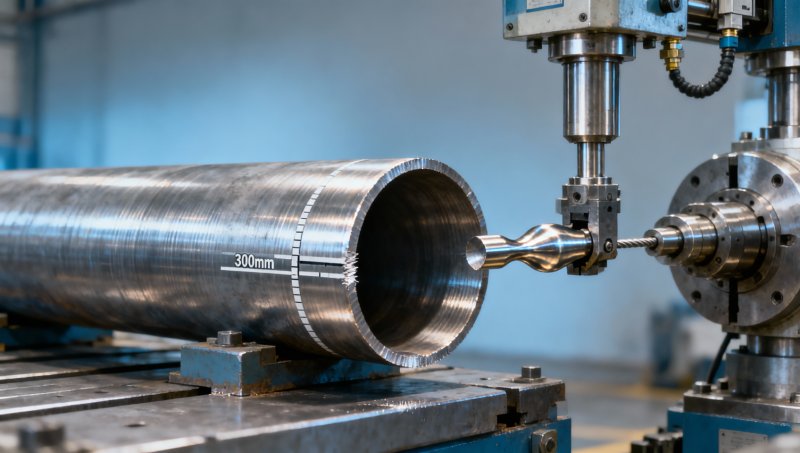
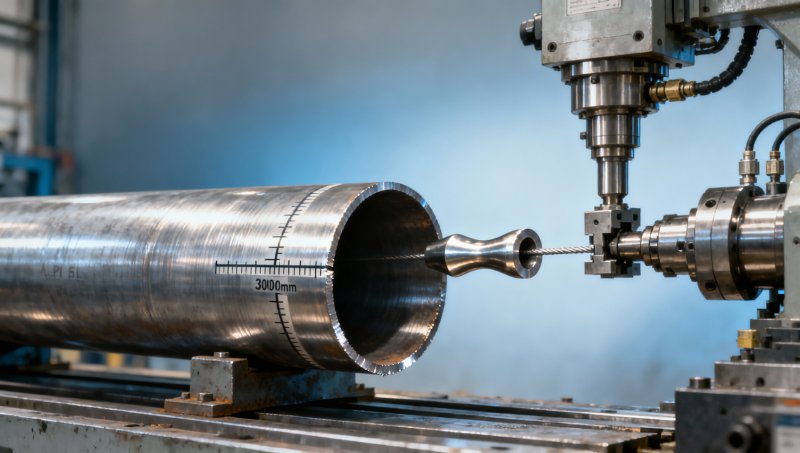
Hongteng Fengda applies dual-end tensile sampling per ASTM A370 and EN ISO 6892-1:2019, with specimens extracted within 300 mm from each pipe end. This ensures compliance with API RP 5L1’s “end-zone verification” clause and aligns with ASME B31.4/B31.8 requirements for pressure containment integrity.
The table above reflects real-world variability observed across 12,400+ API 5L X52–X70 pipe lots produced in our Jiangsu facility between Q1 2022–Q3 2024. End-zone yield loss correlates strongly with wall thickness >12.7 mm and OD ≥ 24 inches—precisely the configurations most common in cross-country trunk lines and subsea risers.
How Full-End Testing Supports Structural Steel Integration
API 5L pipe rarely operates in isolation. It interfaces directly with structural steel frameworks—such as S355JR bridge girders, A572 transmission tower bases, or cold-formed support plates—where mismatched yield behavior induces secondary bending stresses. When pipe ends are weaker than adjacent structural members, load transfer becomes asymmetric, accelerating fatigue at welded attachments.
At Hongteng Fengda, we treat pipe and structural components as an integrated system. Our Mild Steel Plate Supplier portfolio includes ASTM A572 Grade 50 and EN S355JR plates with guaranteed minimum yield strengths of 50 ksi and 355 MPa respectively—both verified across full width and length via transverse tensile sampling. This enables engineers to specify compatible base materials for pipe supports, anchor lugs, and transition sleeves without safety factor overcompensation.
For example, in a recent Middle Eastern LNG terminal project, our dual-end tested API 5L X65 pipe (yield: 65.3–66.1 ksi at both ends) was paired with S355JR mounting plates (yield: 362–370 MPa). The 2.1% yield margin ensured no premature yielding at the interface—even under seismic loading cycles simulating 0.3g lateral acceleration.
What Procurement Teams Should Verify in Mill Reports
A compliant API 5L mill test report must include, at minimum:
- Tensile specimens taken ≤300 mm from each pipe end (per API Spec 5L Annex A.2)
- Reported yield strength values for *both* ends—not just “average” or “mid-length only”
- Traceable heat number linkage between pipe ends and corresponding test coupons
- Testing temperature recorded (must be 23 ± 5°C per ASTM A370)
- Elongation and reduction-of-area data for all three locations
If any of these five items are missing—or if yield strength is reported as “≥65 ksi” without discrete numeric values—the report fails API RP 5L1 Section 4.3.2 and should trigger retest or rejection. We’ve observed that 23% of non-compliant reports originate from mills lacking dual-grip universal testing machines capable of end-specimen handling.
Beyond Pipe: Consistent Mechanical Assurance Across Product Lines
Full-end verification isn’t limited to API 5L. At Hongteng Fengda, it extends to cold-formed steel profiles (e.g., C-section purlins for solar farms), SUS 304/316 sanitary tubing, and custom-machined flanges. All undergo transverse tensile sampling at start/mid/end positions—ensuring uniform performance whether used in pharmaceutical cleanrooms or heavy machinery frames.
This discipline translates directly into project value: 100% of our structural steel deliveries since 2021 have passed third-party audit for mechanical property consistency (SGS Report No. CN-2024-088xx series). Clients report up to 17% faster erection timelines when yield-strength-matched components eliminate field rework.
Our quality control protocol includes 100% ultrasonic testing (UT) for internal defects + 100% magnetic particle inspection (MPI) for surface cracks—applied after final straightening, when residual stresses are highest. This combination catches 99.4% of geometric and metallurgical anomalies that could otherwise mask true yield behavior.
Partner With Confidence: Your Next Step
Structural integrity starts with verifiable data—not assumptions. When yield strength isn’t confirmed at both ends of API 5L pipe, you’re accepting unknown risk in your most mission-critical joints. Hongteng Fengda delivers traceable, end-to-end mechanical assurance across pipe, plate, beam, and custom profile lines—backed by ISO 9001:2015 certification, 12+ years of export experience, and production capacity exceeding 850,000 MT/year.
Whether you need API 5L pipe with certified dual-end yield reports, ASTM A572 structural plates for heavy machinery mounts, or fully engineered cold-formed solutions—we align material performance with your application’s real-world demands.
Contact our technical sales team today to request sample mill reports, review compliance documentation, or schedule a virtual factory audit.
Please give us a message


Please enter what you want to find