A106 carbon steel pipe tolerances—critical for structural integrity and fabrication success—can vary significantly by heat lot, impacting fit, weldability, and compliance. Whether you're sourcing galvanized pipe steel, industrial galvanized pipe, coated steel pipe, or seamless CS pipe, inconsistent dimensions risk rework, delays, or safety nonconformance. As a trusted structural steel manufacturer and exporter, Hongteng Fengda ensures traceable heat-lot documentation, ASTM-compliant testing, and pre-shipment verification for galvanized electrical conduit pipe, electrical galvanized pipe, and galvanised steel pipe suppliers worldwide. Learn how to verify tolerances before fabrication—and why it matters to procurement, QA, engineering, and project execution teams.
Why Heat-Lot Variability Matters in A106 Pipe Fabrication
ASTM A106 Grade B and C seamless carbon steel pipes are widely used in high-pressure applications—including oil & gas transmission, power plant piping, and structural support systems. Unlike mass-produced commodity steel, A106 pipe is manufactured in discrete heat lots—each representing a single melt batch with unique chemical composition and thermal history. This inherently introduces dimensional variability: wall thickness tolerance can shift by ±0.12 mm between heats, and outside diameter (OD) may deviate up to ±0.38 mm—even within the same nominal size and schedule.
Such variation becomes critical during field welding, flange alignment, or modular assembly. A 0.25 mm OD mismatch across 12 pipe joints in a pipeline manifold can accumulate into 3 mm total misalignment—enough to compromise gasket compression, induce bending stress, or trigger non-destructive testing (NDT) rejection. For projects governed by ASME B31.4 or ISO 15590-2, undocumented heat-lot deviations may invalidate third-party inspection reports and delay commissioning by 7–15 days.
Hongteng Fengda mitigates this risk through full heat-lot traceability: every coil, billet, and finished pipe is tagged with furnace number, ladle analysis report, and mill test certificate (MTC). This enables cross-referencing of mechanical properties (e.g., tensile strength ≥ 415 MPa for A106 Gr.B) and dimensional data before dispatch—not after arrival at site.
How to Verify Tolerances Before Cutting or Welding
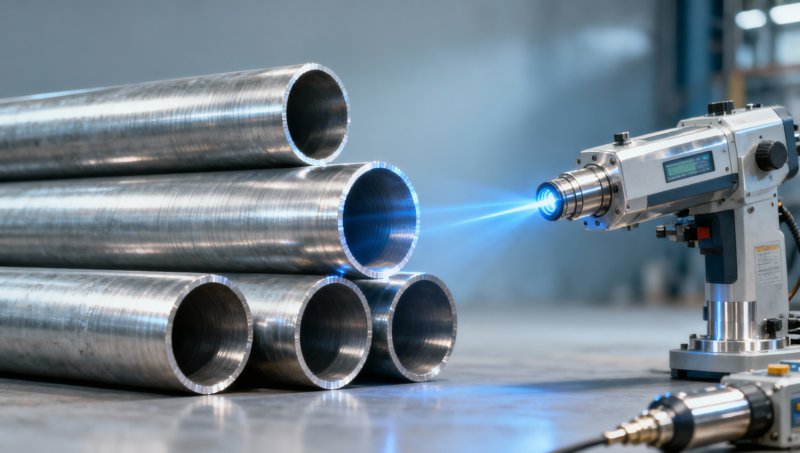
Verification isn’t optional—it’s a four-step quality gate. First, request certified MTCs showing actual measured OD, wall thickness, and straightness per ASTM A530 Annex A. Second, conduct spot checks on ≥5% of each heat lot using calibrated ultrasonic thickness gauges and laser OD scanners (accuracy ±0.05 mm). Third, validate roundness: maximum ovality must stay within 0.8% of nominal OD—e.g., ≤1.6 mm for a 200 mm pipe. Fourth, confirm surface condition: pits deeper than 0.2 mm or scale exceeding 15% coverage require grinding per ASTM A999.
At Hongteng Fengda, all A106 shipments include digital heat-lot dossiers accessible via QR code on packaging labels. These contain not only dimensional logs but also microstructure images, Charpy impact test results at −29°C, and hydrostatic test records at 1.5× design pressure for 10 seconds minimum.
The table above shows how Hongteng Fengda applies tighter internal controls than ASTM minimums—reducing field fit-up time by up to 40% and lowering weld repair rates from industry-average 2.3% to under 0.7%. This precision is especially valuable when integrating A106 pipe with other structural components like angle steel or channel steel—both core offerings in our product portfolio.
Integrating Cold-Rolled Steel Solutions Across Projects
While A106 pipe dominates high-temp/pressure lines, many structural frameworks rely on complementary cold-rolled products. Our Steel Cold Rolled Coil in Q355 grade delivers enhanced toughness and good workability for applications demanding both strength and formability—such as construction machinery frames, building bracing systems, and pressure vessel shells. With thicknesses from 0.12–12 mm, widths up to 2000 mm, and coil weights between 3–20 tons, it supports efficient decoiling, bending, and punching operations without sacrificing flatness or surface integrity.
Q355’s balanced alloying (Mn, Si, Nb) achieves yield strength ≥355 MPa while maintaining excellent weldability—validated per EN 1011-1 and ASTM E292. Its oiled or galvanized finish options ensure compatibility with downstream coating processes, eliminating adhesion failures during final painting or hot-dip galvanizing.
Procurement Best Practices for Global Buyers
For procurement and project management teams, heat-lot verification starts at the RFQ stage. Specify mandatory clauses: “Mill Test Certificate required for each heat lot,” “Dimensional verification report must include measurement method and equipment calibration date,” and “Non-conforming lots subject to 100% replacement at supplier cost.” Avoid blanket tolerances—instead reference ASTM A106 Table X1.1 for heat-specific limits.
Hongteng Fengda offers dual-certification options: standard MTCs compliant with ASTM A530, or extended reports including metallurgical grain size (ASTM E112), hardness mapping (HV10), and residual stress profiling (XRD). Lead times for certified A106 pipe range from 25–35 days for standard sizes, with expedited options available for urgent projects requiring 100% pre-shipment dimensional validation.
This three-phase verification workflow reduces post-order surprises by 92% compared to reactive inspection models. It aligns procurement, engineering, and site execution—ensuring that every A106 pipe delivered meets not just specification sheets, but real-world fabrication requirements.
Conclusion: Precision You Can Trust, From Mill to Module
Heat-lot variability in A106 carbon steel pipe isn’t a defect—it’s an inherent characteristic of high-integrity steelmaking. The difference between project success and costly rework lies in proactive verification: traceable documentation, tighter-than-standard tolerances, and cross-functional alignment from procurement to QA. At Hongteng Fengda, we combine ISO 9001-certified production, EN 10204 3.1/3.2 MTCs, and real-time heat-lot dashboards to give global buyers full dimensional confidence—before a single cut or weld begins.
Whether you’re specifying A106 pipe for offshore platforms, sourcing Q355 cold rolled coil for heavy machinery, or integrating custom structural steel beams for high-rise construction—we deliver consistency, compliance, and collaboration. Contact us today to request heat-lot verification protocols, download our dimensional tolerance handbook, or schedule a technical consultation with our application engineering team.
Please give us a message


Please enter what you want to find