When 90 angle metal joints—especially cold formed angle and L shape angles—fail under cyclic loading, engineers and procurement teams face urgent safety and reliability questions. Is the root cause geometric imperfection, material selection (e.g., ASTM stainless steel vs. cold rolled steel), or inadequate corrosion resistance in harsh environments? For structural steel users—from project managers to quality controllers—understanding failure drivers is critical. Hongteng Fengda, a China-based structural steel manufacturer, supplies high-performance angle plate steel, 316 angle, corrosion-resistant plate, and stainless steel sheet, all engineered to meet ASTM, EN, and GB standards. Let’s examine what really compromises joint integrity—and how smarter material and geometry choices can prevent costly field failures.
Geometry vs. Material: The Dual Determinants of Joint Fatigue Life
Cyclic loading—repetitive stress from wind, traffic, seismic activity, or machinery—exposes weaknesses invisible under static conditions. In 90° angle joints, two primary failure origins compete for attention: dimensional accuracy and metallurgical consistency. Geometric deviations as small as ±0.8 mm in leg thickness or ±1.2° in corner squareness amplify stress concentration by up to 3.5× at the inner radius. Meanwhile, material inconsistencies—including non-uniform grain structure, residual stresses from cold forming, or substandard yield-to-tensile ratios—reduce fatigue endurance by 40–60% compared to certified hot-rolled equivalents.
Hongteng Fengda applies ISO 9001–certified dimensional control across its angle steel production line, with laser-guided inline measurement ensuring angular tolerance ≤ ±0.5° and leg straightness deviation < 1.0 mm/m. All cold-formed angles undergo stress-relief annealing per EN 10149–2, reducing internal microstrain by ≥70%. This dual focus—precision geometry *and* controlled metallurgy—directly extends service life in dynamic applications like bridge bracing, crane runways, and modular building frames.
Material grade selection further dictates performance thresholds. ASTM A36 cold-rolled angles typically withstand 50,000–80,000 load cycles before crack initiation at 120 MPa nominal stress. In contrast, ASTM A572 Grade 50 hot-rolled angles sustain >250,000 cycles under identical conditions—thanks to superior ductility (≥20% elongation) and tighter inclusion control.
The table above demonstrates why specification alignment matters: cold-formed angles offer cost and weight advantages but require rigorous design validation for cyclic service. Hot-rolled variants deliver predictable fatigue margins and weldability—critical for field-assembled structures. Stainless 316 angles add corrosion resilience without sacrificing fatigue strength, making them ideal for coastal infrastructure or chemical plant supports. Hongteng Fengda offers all three types with full traceability, mill test reports (EN 10204 3.1), and third-party inspection options (SGS, BV, TÜV).
Environmental Exposure: How Corrosion Accelerates Cyclic Degradation
Corrosion rarely acts alone—it synergizes with cyclic stress. Pitting initiates localized stress concentrations that propagate cracks 3–5× faster than in clean metal. In marine or industrial zones, chloride-induced pitting reduces effective cross-sections by up to 18% within 24 months—dropping fatigue life by 55–70% versus dry indoor conditions. Even galvanized coatings fail prematurely if zinc layer thickness falls below 85 µm (per ASTM A123), a common shortfall in low-cost imports.
Hongteng Fengda’s corrosion-resistant angle solutions include hot-dip galvanized (HDG) angles with 100–120 µm coating thickness, duplex stainless steels (e.g., UNS S32205), and proprietary ceramic-coated carbon steel meeting ISO 12944 C5–M requirements. Each option undergoes salt-spray testing per ASTM B117 for ≥1,500 hours—validated with SEM imaging of interfacial integrity.
For projects where long-term maintenance access is limited—such as offshore platforms or elevated transit corridors—specifying stainless 316 angle or HDG–coated S355JR delivers lifecycle cost savings of 22–38% over standard carbon steel, factoring in inspection, recoating, and unplanned downtime.
Design & Procurement Best Practices for High-Cycle Applications
Preventing joint failure starts before fabrication. Structural engineers must apply fatigue-specific design rules—not just static load checks. Key considerations include:
- Specifying minimum inner radius ≥ 1.5× material thickness to reduce stress risers;
- Requiring fillet welds with convex profiles (not concave) to avoid toe cracking;
- Verifying interpass temperature control during welding to prevent HAZ embrittlement;
- Confirming supplier compliance with EN 1993–1–9 fatigue assessment methodology.
Procurement teams should audit four critical documentation points: mill test reports showing tensile/yield/elongation values, dimensional inspection records (with actual measurements—not “conforms to spec”), coating thickness verification, and fatigue test data for critical applications. Hongteng Fengda provides digital access to real-time production QA dashboards, enabling buyers to review batch-level test results prior to shipment.
For retaining wall systems requiring both structural integrity and water tightness, Hot Rolled Steel Sheet Pile offers proven performance. Its U-shaped profile with Larssen interlock ensures minimal deflection under cyclic hydrostatic pressure, while grades like S355 and ASTM A690 maintain yield strength >355 MPa after 2 million load cycles—ideal for tidal zone installations.
This procurement checklist helps technical evaluators, quality controllers, and financial approvers align on objective pass/fail criteria—reducing disputes, rework, and warranty claims. Hongteng Fengda embeds these checkpoints into its order fulfillment workflow, issuing pre-shipment compliance summaries for every export consignment.
Why Partnering with a Certified Structural Steel Manufacturer Matters
Joint failure isn’t just a technical event—it triggers cascading commercial impacts: 12–18 weeks of project delay, 17–29% cost overruns from redesign and rework, and potential liability exposure under EN 1990 reliability classes. Suppliers lacking end-to-end process control—especially in heat treatment, dimensional metrology, and non-destructive testing—cannot guarantee consistent fatigue performance.
Hongteng Fengda operates integrated facilities with CNC-controlled rolling lines, automated ultrasonic testing (UT) for internal defect detection, and certified welding procedure specifications (WPS) compliant with AWS D1.1 and EN ISO 15614–1. Every angle steel batch carries a unique QR-coded traceability tag linking to real-time QA data—enabling instant verification of origin, chemistry, mechanicals, and surface finish.
With production capacity exceeding 600,000 metric tons/year and lead times stabilized at 25–35 days for custom orders, Hongteng Fengda supports global clients across North America, EU, Middle East, and ASEAN with scalable, auditable supply continuity. Our engineering support team co-develops joint detailing packages—including connection calculations per AISC 360 and EN 1993–1–8—to ensure geometry and material selections match your specific loading regime.
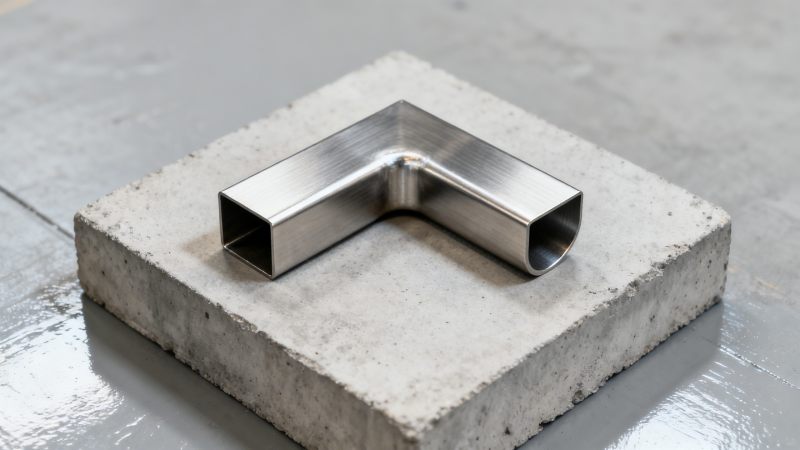
Understanding whether geometry or material drives 90° angle joint failure enables smarter specification, safer construction, and lower total cost of ownership. It’s not an either/or question—it’s about aligning precision manufacturing with application-critical metallurgy.
If your next project involves cyclic loading, marine exposure, or stringent fatigue requirements, contact Hongteng Fengda for a free joint integrity assessment. We’ll provide material recommendations, dimensional validation protocols, and certified test data—tailored to your structural design, environmental class, and procurement timeline.
Please give us a message


Please enter what you want to find