When corrosion resistance and magnetic response are both critical, 430 stainless steel coil becomes a practical choice for industrial and construction applications. Compared with 430 stainless steel plate and other steel coil for construction options, it offers cost-effective performance for buyers evaluating material properties, processing suitability, and long-term value in global sourcing projects.
Why do magnetic properties matter in 430 stainless steel coil selection?
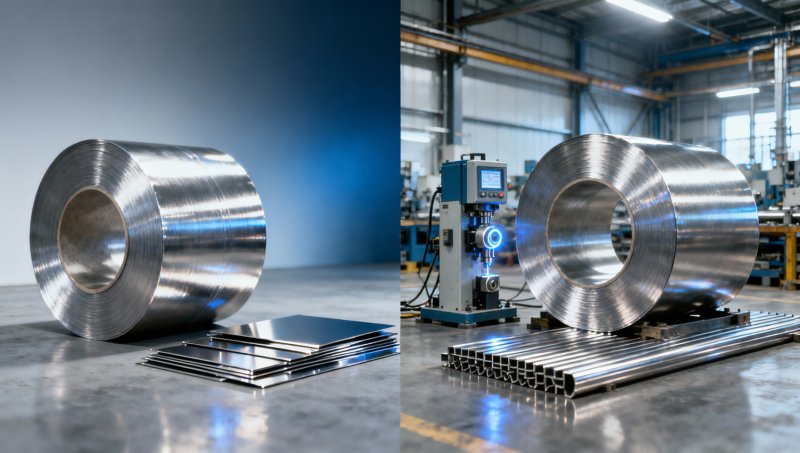
For many buyers, stainless steel is first associated with corrosion resistance. In real projects, however, magnetism can be equally important. 430 stainless steel coil is a ferritic stainless steel grade, which means it is naturally magnetic. This property matters in applications where components must respond to magnetic fixing systems, magnetic separation equipment, appliance assemblies, or specific fabrication and inspection methods used on production lines.
In the steel industry, material decisions are rarely based on one property alone. Engineers usually compare 3 core dimensions at the same time: corrosion resistance, mechanical workability, and cost control. Procurement teams then add 2 more concerns: stable lead time and specification consistency. This is why 430 stainless steel coil often appears in sourcing discussions for panels, trims, housings, and construction-related stainless parts where moderate corrosion resistance and magnetic response are both required.
Compared with austenitic grades such as 304, 430 stainless steel coil generally offers a lower alloy cost because it contains no nickel in the standard composition family. That cost advantage can become meaningful in medium-volume and large-volume purchasing, especially when buyers are ordering coils for slitting, roll forming, stamping, or repeated batch processing over 2–4 production cycles each quarter.
For technical evaluators and quality teams, the key is not simply whether 430 is magnetic, but whether its full profile matches the environment. It performs well in indoor, mildly corrosive, and appearance-sensitive applications. It is less suitable for harsh chloride exposure, marine splash zones, or aggressive chemical service. Good sourcing starts with this distinction, not with price alone.
Typical reasons buyers choose 430 stainless steel coil
- They need magnetic stainless steel for assembly, handling, or end-use response.
- They want a balance between corrosion resistance and budget in standard industrial environments.
- They process material through bending, profiling, slitting, or stamping and need stable coil supply.
- They are comparing steel coil for construction and want a stainless option for visible or semi-exposed parts.
What different stakeholders usually care about
Operators focus on how the coil behaves during cutting, forming, and surface protection. Technical teams examine thickness tolerance, flatness, surface finish, and weldability. Purchasing departments compare coil price, minimum order quantity, and delivery windows such as 15–30 days for standard sizes or longer for special finishes. Decision-makers and finance teams want to know whether the grade can reduce total project cost without increasing complaint risk later.
How does 430 stainless steel coil compare with other common options?
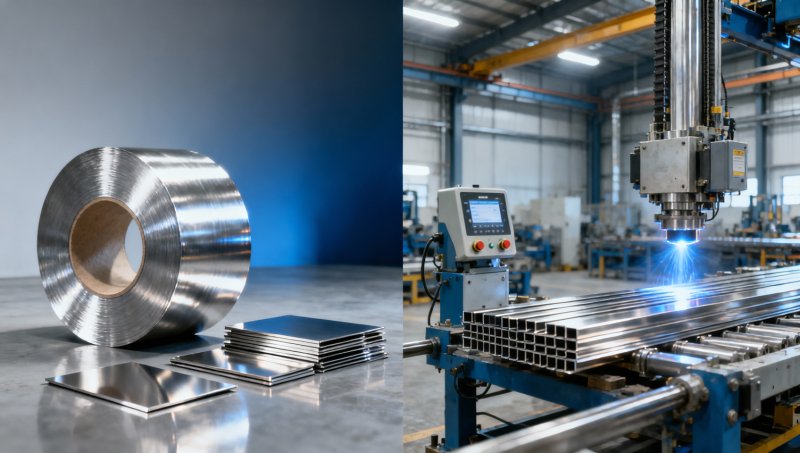
Material comparison is where many sourcing mistakes happen. A buyer may compare only the initial price per ton, while the engineering team is evaluating magnetic behavior, corrosion exposure, or post-processing yield. A better method is to compare at least 5 decision factors: magnetism, corrosion resistance, formability, appearance requirements, and total acquisition cost. This gives a more realistic picture for industrial and construction use.
430 stainless steel coil is often compared with 304 stainless steel coil, galvanized steel coil, and 430 stainless steel plate. The right answer depends on the process route. If a project needs continuous roll forming, tight batch consistency, and efficient downstream cutting, coil is usually the more practical format. If a project needs flat fabricated parts in lower volume, plate or sheet may be more convenient.
For buyers in construction supply chains, the comparison with carbon steel or coated steel also matters. Carbon steel may offer lower initial cost, but it needs additional corrosion protection. Galvanized options perform well in many environments, yet they are not stainless and do not offer the same surface identity. 430 stainless steel coil sits in a middle position: better corrosion resistance than ordinary carbon steel and lower cost than many nickel-bearing stainless grades.
The table below gives a practical comparison framework for information researchers, specifiers, and purchasing teams reviewing common steel material choices for equipment panels, trims, enclosures, and architectural metal parts.
This comparison shows why 430 stainless steel coil is not a universal replacement for every stainless product, but a strong targeted option. If your process needs magnetic behavior, repeatable coil feeding, and controlled budget, it can be a more efficient choice than moving directly to higher-cost grades.
Coil or plate: which format is better?
Choose coil when your production includes slitting, decoiling, roll forming, or recurring batch manufacture. Choose plate or sheet when part geometry is simple, lot sizes are smaller, or manual fabrication dominates. In many factories, this format decision affects scrap rate, storage method, and handling efficiency as much as the grade itself.
Which technical points should engineers and buyers verify before ordering?
A sound procurement process for 430 stainless steel coil should verify more than nominal grade name. In practice, 6 checkpoints matter most: thickness range, width, surface finish, edge condition, coil weight, and applicable standard requirement. If any of these are unclear before production, downstream users may face forming problems, appearance mismatch, or extra trimming loss at the workshop stage.
Tolerance control is especially important for automated lines. Even a small variation can affect roll forming stability or fit-up consistency when parts are assembled in repeated series. Buyers should ask suppliers to confirm target tolerance ranges according to the requested specification and intended application. For international sourcing, it is also practical to align order documents with ASTM, EN, JIS, or GB references where applicable.
Surface condition should also match end use. Decorative visible parts may require more attention to finish uniformity and packaging protection. Functional internal components may prioritize flatness and processability over cosmetic appearance. This distinction helps avoid overspecification, which often increases cost without creating operational value.
For project teams working across different steel categories, it is often efficient to coordinate stainless sourcing with structural steel packages from the same experienced exporter. Hongteng Fengda supports global buyers with standard structural steel, customized sections, and application-based supply planning, which helps reduce communication gaps between engineering, procurement, and logistics teams.
A practical specification review table
Before releasing a purchase order, many technical teams use a short evaluation matrix. The table below can help align factory use, quality control, and commercial review in 1 document instead of spreading decisions across several emails.
Using this type of review table can shorten decision time from several internal rounds to a more manageable 1–2 approval cycles. It also helps finance and management teams understand why a lower quoted price is not always the lowest-risk option.
Mid-article sourcing note for cross-category projects
In mixed projects, buyers often source stainless coils together with other steel products for transport efficiency and supplier coordination. For rail infrastructure, access systems, or related fabricated assemblies, some customers also review Rail supply in parallel. Available models include U74, U71Mn, PD2, PD3, BNbRE, Q235, 55Q, 50Q, U71, and 45Mn, with common applications such as railway rail, bridge railings, and deck handrails.
Typical parameters cover lengths from 12m to 30m, thickness from 3mm to 24mm, rail height from 134mm to 170mm, head width from 68mm to 73mm, bottom width from 114mm to 150mm, and tolerance around ±1%. For distributors and project managers, this kind of coordinated steel sourcing can simplify container planning, quality review, and delivery scheduling over 2–3 shipment stages.
Where is 430 stainless steel coil most suitable, and where should you be careful?
The most suitable uses for 430 stainless steel coil are applications where magnetic property is helpful, corrosion exposure is moderate, and cost sensitivity is real. This includes appliance panels, trim parts, elevator decoration components, indoor equipment covers, kitchen-related non-severe environments, and selected building accessories. In these areas, the grade often provides an effective balance between appearance, processability, and purchasing efficiency.
In construction-related sourcing, 430 stainless steel coil can also support fabricated profiles, decorative cladding details, casing parts, and non-coastal architectural accessories when design conditions are appropriate. Buyers should still classify the project environment carefully into at least 3 levels: dry indoor, humid sheltered, and aggressive outdoor exposure. That classification will guide whether 430 remains suitable or whether a higher alloy stainless solution is safer.
Caution is required in chloride-rich, marine, and strongly acidic environments. If the project is within a coastal zone, exposed to deicing salts, or subject to regular chemical cleaning, 430 stainless steel coil may not provide enough corrosion margin for long-term appearance or service reliability. In such cases, the apparent initial savings can be offset by earlier replacement, surface complaints, or maintenance cost.
This is where supplier consultation becomes valuable. Hongteng Fengda works with global buyers on steel product selection across construction and industrial use, helping teams compare specification options, standard requirements, and practical supply arrangements before final order confirmation.
Quick suitability checklist
- Suitable when the service environment is indoor or mildly corrosive and magnetic response is desired.
- Suitable for repeat processing lines that benefit from coil feeding and batch consistency.
- Use with caution in coastal, salt-laden, or chemically aggressive conditions.
- Re-check finish, packaging, and handling if the part is visible to end users.
Common mistakes that increase sourcing risk
One common mistake is assuming all stainless steel grades perform similarly outdoors. Another is ordering based only on price without confirming finish and tolerance. A third is using a plate-based sample to approve a coil-based production order without discussing process differences. These gaps can create complaints after only 1 installation cycle or the first batch run.
How should procurement teams evaluate cost, lead time, and supplier capability?
For B2B buyers, material price is only one part of the decision. Total sourcing value usually includes at least 5 cost elements: base material, processing, packaging, logistics, and quality risk. A lower nominal quotation may become more expensive if it leads to unstable tolerance, delayed shipment, or extra production downtime. This is why procurement teams should compare complete order execution, not just the ex-works number.
Lead time should also be reviewed in practical ranges. Standard steel items may move faster, while customized dimensions, special surface finishes, or mixed-container export orders usually need more planning. For many export projects, buyers should allow enough time for production, inspection, and shipment booking, especially when the project has 2–3 internal approval stages before payment release.
Supplier capability matters because consistent execution reduces hidden cost. A manufacturer and exporter with modern facilities, quality control discipline, and familiarity with ASTM, EN, JIS, and GB requirements can support smoother communication between engineers, quality teams, and commercial departments. This is particularly useful when the order includes both standard steel products and customized structural components.
Hongteng Fengda serves buyers across North America, Europe, the Middle East, and Southeast Asia with structural steel products and customized solutions. For customers balancing budget pressure, project timing, and specification control, this kind of export coordination can help lower sourcing risk and improve delivery predictability.
A 4-step procurement review process
- Confirm application condition, magnetic requirement, and service environment before asking for quotation.
- Lock key specifications such as size, finish, tolerance expectation, and quantity band.
- Review delivery plan, packing method, inspection documents, and applicable standards.
- Compare suppliers on execution reliability, not only on unit price.
Questions finance and management teams should ask
Will the selected grade reduce total cost over the service period? Are there hidden quality risks that could create rework? Is the lead time compatible with project milestones? Can the supplier support standard documents, packaging clarity, and sample confirmation? These questions help approval teams make faster and more defensible decisions.
FAQ and next-step guidance for serious buyers
Many searches about 430 stainless steel coil come from buyers who are already comparing suppliers or preparing technical confirmation. The following questions address the most common decision points and can help narrow the next step in your sourcing process.
Is 430 stainless steel coil always a better value than 304?
Not always. It can be better value when magnetic response is useful and the environment is not highly corrosive. If the project involves chloride exposure, outdoor coastal service, or strict corrosion life expectations, 304 or another grade may be the safer choice despite the higher initial cost. Value depends on service condition, not only purchase price.
What should I confirm before requesting a quotation?
At minimum, confirm 5 items: thickness, width, finish, quantity, and application environment. It also helps to mention whether magnetism is required, whether the material will be bent or stamped, and whether the final parts are visible to end users. This allows the supplier to respond with a more usable offer and a more realistic delivery schedule.
How long does international sourcing usually take?
The timeline varies by specification, quantity, and shipping route. Standard items are generally faster than customized orders, while mixed-product export planning often needs additional coordination. Buyers should also include time for sample review, document approval, and freight booking. For project procurement, early confirmation usually saves more cost than urgent changes later.
Why work with a structural steel manufacturer and exporter for this type of order?
Because many real projects involve more than one steel category. A supplier with structural steel manufacturing experience can support coordinated purchasing, specification communication, and export execution across related products. This is valuable for project managers, distributors, and commercial buyers who want fewer handoffs and clearer accountability.
Why choose us for your steel sourcing plan?
Hongteng Fengda provides structural steel manufacturing and export support from China for global construction, industrial, and manufacturing projects. Our strength is not only product supply, but also coordinated execution: standard specifications, OEM-oriented support, quality control, and practical communication around ASTM, EN, JIS, and GB-related requirements.
If you are evaluating 430 stainless steel coil or related steel products, you can contact us for parameter confirmation, application-based grade selection, delivery cycle discussion, packaging and inspection requirements, custom solution planning, sample support, and quotation comparison. This helps your engineering, purchasing, and management teams move from general inquiry to an actionable sourcing decision with fewer blind spots.
Please give us a message


Please enter what you want to find