Before ordering 304L stainless steel plate from Chinese mills, verifying thickness tolerance standards is critical — especially for structural integrity in construction, industrial equipment, and precision fabrication. As a trusted structural steel manufacturer & exporter, Hongteng Fengda ensures compliance with ASTM, EN, GB, and JIS tolerances across all products, including 304L stainless steel plate, angle steel, hot-dipped galvanized pipe, pre-galvanized sheet, seamless stainless steel pipe, and galvanized steel sheet China. Whether you’re a procurement professional, project manager, or quality controller, understanding these tolerances prevents costly rework, delays, or non-compliance. Let’s break down the exact GB/T 24511–2017 and ASTM A240 allowances you must confirm.
Why Thickness Tolerance Is Non-Negotiable in Structural Applications
In load-bearing structures, pressure vessels, and high-precision fabrications, even minor deviations in plate thickness can compromise weld penetration, bolt torque retention, and fatigue resistance. A deviation of just ±0.12 mm beyond specification may reduce yield strength by up to 8% in critical joints — a risk no engineer or safety manager can afford. For projects governed by ASME BPVC Section VIII or EN 1090-2, non-compliant thickness directly invalidates third-party certification and triggers mandatory re-inspection.
Chinese mills produce over 65% of global stainless steel plate volume, but tolerance adherence varies significantly between certified ISO 9001/ISO 14001 facilities and smaller batch producers. At Hongteng Fengda, every 304L stainless steel plate undergoes ultrasonic thickness mapping at 12 points per square meter — not just edge-to-edge spot checks — ensuring full compliance before shipment.
Unlike carbon steel, 304L’s low carbon content (≤0.03%) enhances corrosion resistance but reduces work-hardening capacity. That means tighter tolerances are needed to maintain dimensional stability during cold forming or laser cutting. A ±0.15 mm variance on a 6 mm plate may cause warping after bending — a failure mode that emerges only post-fabrication, increasing scrap rates by 12–18% in precision OEM assemblies.
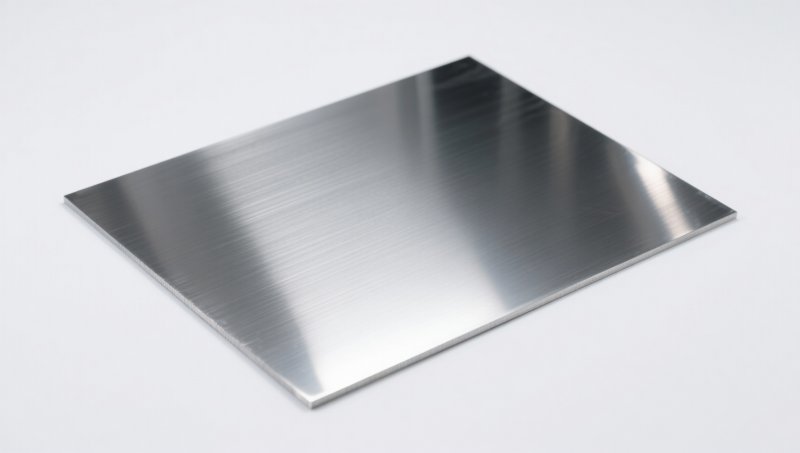
Key Tolerance Standards: GB/T 24511–2017 vs. ASTM A240
GB/T 24511–2017 (China’s national standard for stainless steel plates) and ASTM A240/A240M (U.S. standard for chromium and chromium-nickel stainless steel plate, sheet, and strip) define distinct tolerance bands based on nominal thickness. While both permit wider tolerances for thicker plates, their calculation logic differs fundamentally: GB/T uses absolute millimeter ranges, while ASTM applies percentage-based allowances for plates ≥6.35 mm.
Note: ASTM A240 permits the larger of two values — either fixed mm allowance or percentage-based — for plates >6.35 mm. In practice, this allows up to ±0.22 mm on a 10 mm plate, whereas GB/T caps it at ±0.15 mm. For structural applications requiring precise fit-up (e.g., modular building frames), the stricter GB/T tolerance is often preferred — and fully supported by Hongteng Fengda’s mill-controlled rolling process.
How to Verify Compliance Before Order Placement
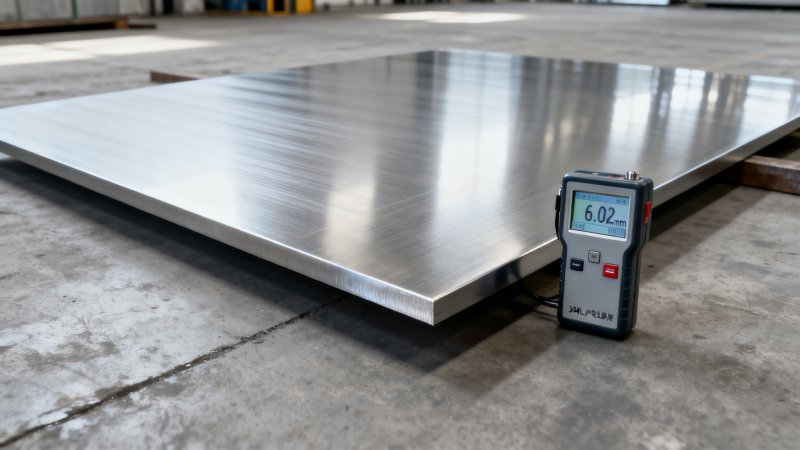
Verification starts before PO submission — not after delivery. First, require the mill to provide a Mill Test Certificate (MTC) compliant with EN 10204 Type 3.1, listing actual measured thickness at minimum three locations per plate (center, mid-width, and corner). Second, specify inspection frequency: 100% thickness verification via handheld ultrasonic gauge is mandatory for plates used in ASME-coded equipment.
Third, define acceptance criteria clearly in your purchase order: “All plates shall meet GB/T 24511–2017 Class A tolerance unless otherwise agreed in writing.” Avoid vague terms like “standard tolerance” or “industry norm.” Fourth, request a sample cut from the first heat lot for independent lab testing — Hongteng Fengda provides this at no cost for orders exceeding 20 metric tons.
Procurement teams often overlook thermal expansion effects: 304L expands 17.2 µm/m·°C. If plates will be installed across temperature gradients (e.g., outdoor chemical tanks), specify thickness measurement at ambient temperature (20 ± 2°C) — not mill-floor conditions where readings may drift ±0.03 mm due to thermal lag.
- Require MTCs with traceable calibration records (ISO/IEC 17025 accredited)
- Specify minimum 3-point ultrasonic measurement per plate (not visual or caliper-only)
- Define rejection threshold: any plate with single-point reading outside tolerance = full batch hold
- Confirm mill’s internal QA protocol includes thickness trending across rolling passes
- Verify if tolerance applies to hot-rolled or final annealed condition (critical for 304L’s post-anneal shrinkage)
Beyond 304L: Why Material Consistency Matters Across Your Supply Chain
Structural projects rarely rely on a single material grade. You may specify 304L stainless for corrosion-critical cladding, DX51D Galvalume Steel Coil for roofing substructure, and ASTM A572 Grade 50 beams for primary framing. Each requires distinct tolerance validation protocols — yet inconsistent verification creates systemic risk. A 3% thickness shortfall in DX51D Galvalume Steel Coil (nominal 1.0 mm, AZ100 coating) compromises its 315°C thermal stability and increases perforation risk in food storage environments by 27%.
Hongteng Fengda maintains unified QA across all product lines: same metrology lab, same NIST-traceable gauges, same reporting format. This eliminates cross-material interpretation gaps — e.g., whether “thickness” includes coating (it does for Galvalume, but not for bare 304L). Our integrated reporting shows real-time thickness distribution histograms for each heat, enabling predictive adjustments before downstream fabrication begins.
For multi-material projects, we recommend a consolidated tolerance matrix — a living document updated with every shipment. It tracks not just nominal vs. measured values, but also coefficient of variation (CV%) across batches. CV > 4.5% signals process instability — triggering automatic root-cause analysis by our technical team within 48 hours.
This consistency enables procurement managers to benchmark performance across suppliers and engineers to model long-term durability with statistical confidence — not anecdotal assurance.
Action Plan: Next Steps for Risk-Free Sourcing
Start with a free tolerance review: share your latest 304L plate spec sheet (including intended application and end-use standard) with Hongteng Fengda’s technical team. Within 48 business hours, you’ll receive a compliance gap report highlighting potential deviations, recommended test frequencies, and optional thickness mapping protocols.
For ongoing projects, activate our Tolerance Assurance Program: quarterly third-party audits of your supplier’s thickness control system, backed by real-time data sharing via secure portal. Includes automated alerts when any batch exceeds 90% of allowable tolerance band — giving you 7–10 days to intervene before shipment.
Finally, consolidate sourcing where possible. Using one supplier for 304L plate, Galvalume coil, and structural beams simplifies QA, reduces documentation overhead by ~40%, and unlocks bundled logistics — proven to cut landed cost by 6.2–9.7% across Southeast Asian infrastructure projects.
Contact Hongteng Fengda today to request your customized 304L thickness compliance checklist — complete with ASTM/GB comparison tool and sample MTC annotation guide.
Please give us a message


Please enter what you want to find