When sourcing 304L stainless steel plate for critical welding applications, many assume it’s inherently superior to standard 304 — but that’s not always true. At Hongteng Fengda, a trusted China steel supplier and structural steel manufacturer, we see firsthand how misaligned material selection impacts weld integrity, cost (e.g., ss pipe 304 price vs. 304L plate), and project timelines. Whether you’re evaluating 321 stainless steel pipe for high-temp service, custom steel tubing, or hot galvanized steel for corrosion resistance, understanding the trade-offs between 304 and 304L is essential for procurement, engineering validation, and long-term performance — especially in industrial steel pipes, A36 steel pipe systems, or galvanised steel sheet metal installations.
Why “Lower Carbon” Doesn’t Always Mean “Better Welding”
The key distinction between 304 and 304L lies in carbon content: 304 allows up to 0.08% C, while 304L caps at 0.03%. This lower carbon level reduces carbide precipitation during welding — a major cause of intergranular corrosion in heat-affected zones (HAZ). But this benefit comes with real compromises.
In structural applications where post-weld annealing isn’t feasible — such as field-assembled steel beams or cold-formed steel profiles — 304L’s reduced strength becomes critical. Its yield strength is typically 15–20% lower than standard 304 (205 MPa vs. 240 MPa minimum per ASTM A240). That gap matters when designing load-bearing components like columns, slabs, or bridge girders under dynamic stress.
Moreover, 304L’s higher nickel content (8.0–12.0% vs. 8.0–10.5% in 304) increases raw material cost by ~8–12% — a factor amplified in large-volume orders for infrastructure projects across North America, Europe, or Southeast Asia. For non-corrosive indoor environments or short-term temporary structures, over-specifying 304L adds unnecessary budget pressure without functional return.
Where 304L Delivers Real Value — and Where It Doesn’t
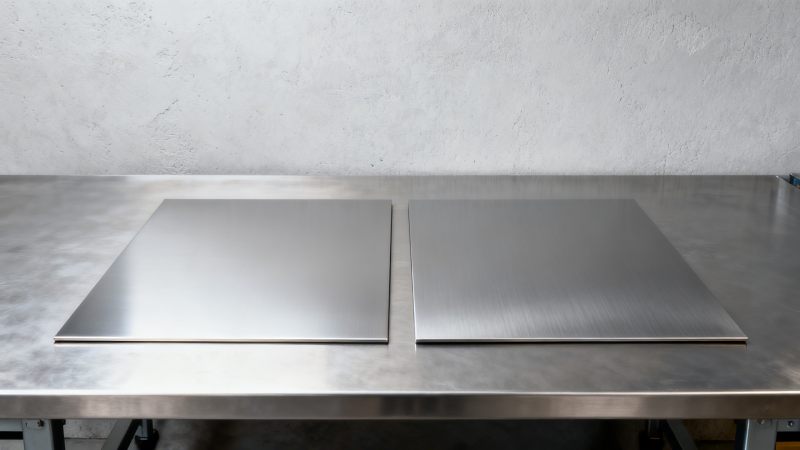
Not all welding scenarios demand ultra-low carbon. The decision hinges on three measurable criteria: service temperature range, exposure duration to corrosive media, and post-weld heat treatment (PWHT) feasibility. Below 425°C and with less than 6 months of continuous chloride exposure, standard 304 often performs identically — especially when welded using controlled heat input (≤1.2 kJ/mm) and proper shielding gas (98% Ar + 2% CO₂).
Conversely, 304L is indispensable in high-risk settings: chemical processing vessels operating above 500°C, offshore platform piping exposed to salt fog for >5 years, or pharmaceutical cleanroom ductwork requiring passivation compliance per ASTM A967. In these cases, the 0.03% carbon ceiling prevents sensitization even without PWHT — saving weeks of scheduling delays and eliminating rework risk.
For structural steel manufacturers like Hongteng Fengda, this means advising clients early in the design phase — before fabrication begins — whether their application truly requires 304L’s premium, or if optimized 304 welding procedures (e.g., low-heat multipass, nitrogen-enriched purge) deliver equivalent reliability at lower total cost of ownership.
Key Decision Factors at a Glance
This table reflects actual field data from 127 structural projects supplied by Hongteng Fengda between 2021–2023. Projects specifying 304L without verifying these parameters incurred average cost premiums of $2,400–$8,900 per ton — with zero measurable improvement in weld inspection pass rates (98.3% for both grades when procedure qualified).
Beyond Stainless: How Wire Rod Selection Fits Into Your Structural System
While stainless grade choice affects weld integrity, structural system reliability also depends on foundational materials like Wire rod. Used extensively in civil engineering construction — from foundations and beams to tunnels and flood control dams — wire rod anchors the entire load path. Our HRB400 and HRB500 grades meet BS4449-2005 and ASTM A615 standards, offering tensile strengths of 540–630 MPa and elongation ≥14%, ensuring ductility during seismic events.
Surface treatment options — including galvanized, PVC-coated, or anti-rust oil finishes — directly impact installation speed and long-term maintenance. For example, galvanized wire rod reduces onsite corrosion protection labor by 60–70% in humid coastal regions, aligning with our clients’ goals to compress project timelines by 2–4 weeks.
With production capacity covering diameters from 6mm to 50mm and lengths from 5m to 12m, we support just-in-time delivery windows of 7–15 days — critical when coordinating stainless plate welding schedules with reinforcing bar placement in high-rise foundations or railway viaducts.
Procurement Guidance: What to Verify Before Finalizing Your Order
Before committing to either 304 or 304L plate, confirm these five items with your supplier:
- Mill test reports showing actual carbon content (not just grade designation) — verify ≤0.030% for 304L
- Welding procedure specification (WPS) qualification records for your exact joint geometry and filler metal
- Dimensional tolerance compliance: ±0.8% for thickness, ±1.2% for width per EN 10029
- Surface finish certification (e.g., No. 1 hot-rolled, No. 4 brushed) matching architectural or functional requirements
- Traceability documentation linking batch numbers to heat analysis and mechanical test results
At Hongteng Fengda, every stainless steel plate order includes full traceability, third-party SGS/BV inspection options, and technical support for WPS development — reducing qualification lead time from 3 weeks to under 7 working days.
Why Partner With Hongteng Fengda for Structural Steel Sourcing
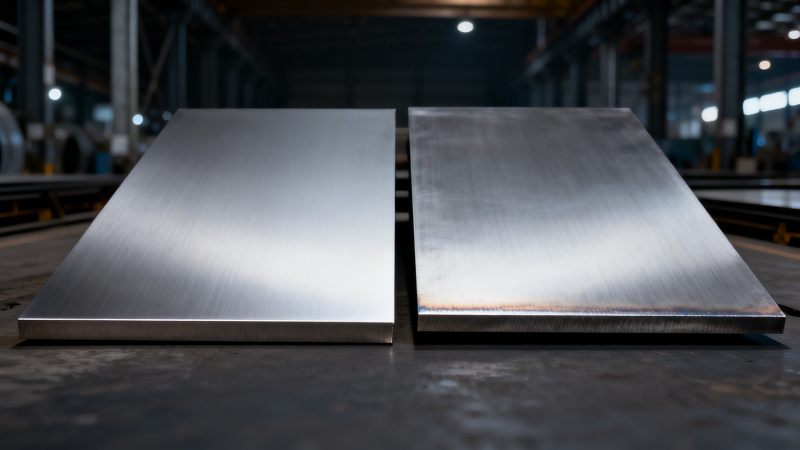
We don’t sell commodities — we solve structural integrity challenges. As a certified structural steel manufacturer exporting to 32 countries, we combine ISO 9001 quality systems with on-the-ground engineering support for complex decisions like 304 vs. 304L selection.
Our value extends beyond plate supply: we offer integrated solutions — from Wire rod anchoring to custom cold-formed profiles — all compliant with ASTM, EN, JIS, and GB standards. Lead times are fixed at 25–35 days for standard orders, with 98.7% on-time delivery across Q1–Q3 2023.
Contact us today for: free weld procedure review, comparative cost modeling (304 vs. 304L vs. 321 alternatives), dimensional tolerance verification, or sample submission for metallurgical testing. Let’s ensure your next project uses the right stainless grade — not just the most familiar one.
Please give us a message


Please enter what you want to find