201 stainless steel plate is a cost-effective option for projects that need good formability, moderate corrosion resistance, and reliable performance in dry or indoor environments. Widely used in industrial steel plate applications, decorative panels, kitchen equipment, and light structural components, it helps buyers balance quality and budget. For importers, engineers, and sourcing teams comparing Q235 steel plate and other materials, understanding where 201 stainless steel plate works best is essential.
What Is 201 Stainless Steel Plate and Why Is It Chosen?
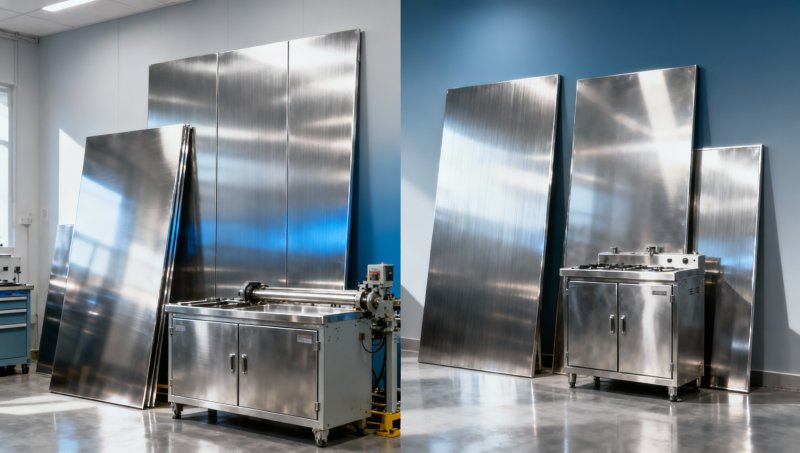
201 stainless steel plate is an austenitic stainless steel material commonly selected when buyers need a lower-cost alternative to higher nickel stainless grades. In practical steel procurement, it is often considered for indoor fabrication, decorative use, equipment covers, and light-duty formed parts. Its value is not that it fits every project, but that it can meet the needs of many controlled-environment applications at a more manageable material cost.
For purchasing teams and technical evaluators, the main decision point is simple: does the project require high corrosion resistance, or mainly good appearance, formability, and moderate service life? When the environment is dry, mildly humid, or non-aggressive, 201 stainless steel plate can be a practical choice. In many projects, that decision affects not only material price but also fabrication efficiency, lead-time planning, and total sourcing risk over 2–4 procurement stages.
Compared with carbon steel plate such as Q235, 201 stainless steel plate offers better surface cleanliness and better resistance to rust in indoor conditions, while reducing or eliminating the need for repeated painting in some applications. However, compared with 304 stainless steel, it has narrower corrosion tolerance. That is why correct application matching matters more than headline price alone.
For importers, distributors, project managers, and cost controllers, this material becomes attractive when the project has 3 clear targets: acceptable appearance, moderate corrosion performance, and controlled budget. If the installation site includes chloride exposure, coastal air, chemical splashing, or long-term outdoor wet conditions, the selection process should be more cautious and usually requires an upgrade review.
Core characteristics buyers usually evaluate
- Good formability for bending, cutting, rolling, and fabrication of panels, covers, and light components.
- Moderate corrosion resistance suitable for indoor, decorative, and relatively dry service environments.
- Lower raw material cost than higher nickel stainless grades, helping with budget-sensitive projects.
- Surface finish options that can support polished, brushed, or industrial-use requirements depending on processing route.
Which Application Scenarios Are Suitable for 201 Stainless Steel Plate?
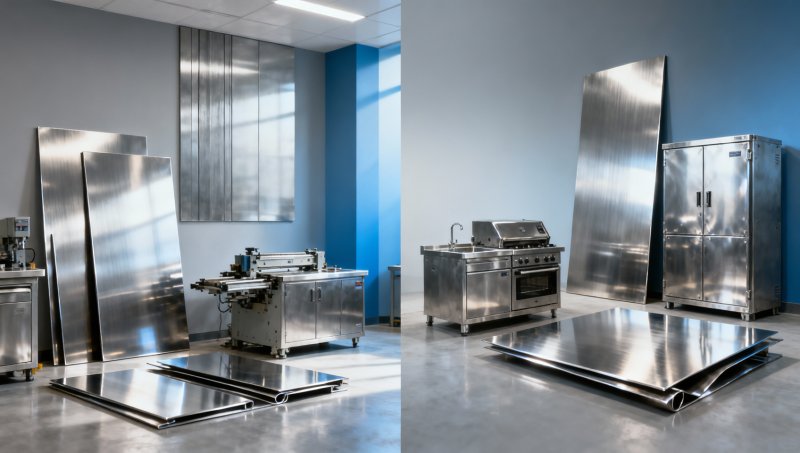
The most suitable use of 201 stainless steel plate is not defined by one industry alone. It is defined by exposure level, required service life, and fabrication needs. In many factories, commercial buildings, and equipment projects, the environment is not highly corrosive. In those cases, this grade can serve well for decorative cladding, machine covers, storage units, kitchen-related non-severe applications, elevator panels, and formed sheet components.
For operators and end users, the key practical question is whether the plate will face continuous moisture, salt, cleaning chemicals, or outdoor weather cycling. If the answer is limited or occasional exposure, 201 stainless steel plate may remain a reasonable option. If exposure becomes frequent, especially in coastal or industrial chemical environments, buyers should carefully reassess performance risk before confirming a purchase order.
Project managers often divide applications into 3 groups: decorative use, indoor industrial use, and structural or semi-structural support use. The first 2 groups are usually where 201 stainless steel plate performs best. In the third group, load requirement, welding demands, thickness tolerance, and long-term environment must be reviewed together rather than assuming one material can solve all issues.
A related sourcing point is that many buyers combine stainless plates with other steel products in one shipment to reduce logistics complexity. For example, projects that use stainless sheet components may also need low-carbon steel products for wire processing, packaging support, fences, or auxiliary fabrication. In such mixed orders, Mild Steel Wire Rod can be relevant for construction, wire mesh, packaging, handicrafts, and barrier isolation where stainless material is not necessary.
Typical use cases by environment
The table below helps procurement teams, engineers, and quality staff quickly identify where 201 stainless steel plate is generally suitable, conditionally suitable, or not preferred. Final confirmation should still consider thickness, finish, processing method, and real exposure conditions over the intended service period.
This comparison shows why application matching matters more than simple material naming. In indoor and cost-controlled projects, 201 stainless steel plate can offer practical value. In outdoor, chloride-rich, or heavily cleaned environments, the savings at purchase stage may be offset by earlier maintenance, appearance issues, or replacement risk.
201 Stainless Steel Plate vs Q235 Steel Plate and 304 Stainless Steel
Many buyers do not compare 201 stainless steel plate in isolation. They usually compare it against Q235 steel plate because of budget pressure, and against 304 stainless steel because of durability expectations. This three-way decision is common in industrial procurement, building components, furniture manufacturing, and equipment fabrication, especially when the sourcing team needs to justify both technical performance and total project cost.
Q235 steel plate is widely used in structural and general fabrication because it is economical and mechanically practical. However, it normally requires protective treatment such as painting, galvanizing, or coating if rust prevention matters. 201 stainless steel plate may reduce finishing steps in indoor visible parts. 304 stainless steel, in turn, usually provides better corrosion resistance than 201, but at a higher material cost, which can be significant in medium or large volume orders.
For decision-makers, the right question is not which material is universally better. The right question is which material fits the service environment, fabrication route, appearance target, and life-cycle budget. A project with 500 indoor equipment covers has different priorities from a coastal installation exposed every day to salt-laden air and washdown cleaning.
This is also where experienced suppliers add value. A structural steel manufacturer and exporter with modern production management, international standard familiarity, and stable export handling can help customers avoid overspecifying or underspecifying materials. That reduces sourcing errors, rework, and downstream approval delays across engineering, procurement, and finance teams.
Quick material comparison for common decisions
The following table summarizes how these materials are commonly evaluated in B2B purchasing. It is intended as a practical screening tool for the first 3 decision steps: environment review, cost review, and fabrication review.
If a project is cost-sensitive and installed indoors, 201 stainless steel plate often sits in the middle ground between carbon steel and higher-grade stainless steel. That middle position is exactly why it remains popular. It is not a replacement for every stainless grade, but it can be the right answer for a large number of controlled-use applications.
A practical note on mixed-material sourcing
Some projects combine stainless plate with low-carbon wire products for packaging, barrier isolation, decoration, or mesh making. In those cases, buyers may also evaluate Mild Steel Wire Rod in Q195 or Q235 grades. Typical wire diameter ranges from 0.25 mm to 5.0 mm, tensile strength commonly falls within 350–550 MPa, and zinc coating options such as 8–25 g/m2 may be considered when corrosion protection is needed for secondary applications.
How to Evaluate Technical Fit, Procurement Risk, and Compliance
Selecting 201 stainless steel plate should not stop at grade name. Technical teams usually review at least 5 factors before approval: service environment, thickness requirement, surface finish, forming or welding demand, and applicable standards. This step is especially important for global buyers working across ASTM, EN, JIS, or GB-based specifications, because the same project may involve multiple drawings, inspection methods, and approval departments.
Quality control and safety managers also need to confirm whether the plate will be exposed to abrasion, repeated cleaning, or visible appearance standards. A decorative panel project may prioritize finish consistency and scratch control. A light industrial enclosure may focus more on flatness, cut quality, and fabrication tolerance. A mismatch at this stage can cause rejection after delivery even if the material grade itself is technically correct.
For procurement officers and commercial reviewers, risk usually appears in 4 places: unclear specification, inconsistent supply quality, delayed lead time, and unsuitable packing for export transit. Working with a supplier that has modern manufacturing facilities, stable quality control, and export experience helps reduce these risks. That is particularly useful when orders include standard sizes plus OEM processing or customized structural steel components in one project schedule.
Typical review timing follows 3 phases: pre-quotation confirmation, pre-production technical check, and pre-shipment inspection. Depending on processing scope, common lead-time discussions may range from 7–15 days for simpler orders to several weeks for customized or mixed-product shipments. Buyers who confirm finish, tolerance, and packaging early usually avoid the most expensive delays.
A practical 6-point procurement checklist
- Confirm whether the use environment is indoor, sheltered, damp, outdoor, or chemical-exposed.
- Define the plate thickness range, tolerance requirement, and surface finish expectation before quotation comparison.
- Review whether fabrication includes bending, punching, welding, polishing, or visible surface protection.
- Check which standard system the project documents reference, such as ASTM, EN, JIS, or GB.
- Ask about packing method, inspection point, and shipment schedule, especially for export or multi-item containers.
- Compare total delivered cost, not only plate price, including rework risk, coating needs, and maintenance expectations.
Where supplier capability changes the outcome
Hongteng Fengda supports global steel buyers with stable production capacity, strict quality control, and customized solutions for construction, industrial, and manufacturing projects. For customers managing multiple steel categories, this matters because consistent communication and coordinated supply reduce time loss across engineering review, purchasing approval, and logistics planning. That is often more valuable than chasing the lowest unit price from fragmented sources.
As a structural steel manufacturer and exporter from China, the company works with international standards including ASTM, EN, JIS, and GB, and serves customers across North America, Europe, the Middle East, and Southeast Asia. For buyers, that means a stronger basis for discussing specification alignment, OEM needs, and dependable delivery windows without adding unnecessary complexity to cross-border projects.
Common Mistakes, FAQ, and When to Contact a Supplier
A common mistake in stainless steel purchasing is treating all stainless grades as interchangeable. Another is comparing only price per ton or sheet without evaluating environment and maintenance cost. A third is using 201 stainless steel plate outdoors near coastlines or in chloride cleaning conditions because the initial quotation looked attractive. These errors are avoidable when the project team aligns on service conditions before ordering.
The best purchasing decisions usually come from combining 4 perspectives: engineering fit, operational use, procurement cost, and inspection requirements. When those perspectives are reviewed together, 201 stainless steel plate often proves either clearly suitable or clearly worth upgrading from. That is faster and more reliable than discovering material mismatch after fabrication or installation.
Below are several practical questions that buyers, distributors, and project teams frequently ask during material selection. These answers are not a substitute for final specification review, but they help narrow the decision and reduce back-and-forth during RFQ and approval stages.
Is 201 stainless steel plate good for outdoor use?
It can be used in some sheltered outdoor situations with limited moisture exposure, but it is generally not the first choice for harsh outdoor conditions. If the location includes rain retention, coastal air, de-icing salts, or frequent washing, buyers should review higher corrosion-resistant alternatives. For long-term outdoor appearance retention, a cautious material upgrade is often the safer decision.
Can it replace Q235 steel plate?
Not in every case. Q235 steel plate is often selected for structural strength, welded frames, and cost-focused fabrication with protective coating. 201 stainless steel plate may be better for visible indoor parts, equipment panels, or projects where reduced painting is beneficial. The choice depends on whether the priority is structural economy, corrosion behavior, appearance, or processing route.
What should buyers confirm before placing an order?
At minimum, confirm 5 items: use environment, plate dimensions, thickness tolerance, surface finish, and applicable standard. If the order includes fabrication, also confirm hole positions, bending radius, protective film, and packing details. These points often determine whether delivery goes smoothly within the planned 7–15 day or 2–4 week schedule.
Why do many global buyers work with integrated steel suppliers?
Because sourcing risk is not only about product price. It also includes consistency, communication speed, inspection coordination, export packing, and delivery reliability. A supplier that can support standard specifications, OEM processing, and multiple steel product categories helps project teams reduce vendor management effort and improve schedule control, especially for international construction and manufacturing projects.
Why Choose Us for Steel Sourcing and Project Support?
If you are evaluating where to use 201 stainless steel plate, the next step should be a practical specification review rather than a generic quote request. Hongteng Fengda supports buyers who need clear answers on material selection, application matching, delivery planning, and export execution. This is especially useful when your project includes structural steel, formed profiles, beams, channels, angle steel, or customized steel components in addition to plate products.
Our team can help you confirm whether 201 stainless steel plate is appropriate for your indoor, decorative, or light industrial application, and whether Q235 steel plate or another grade may be more economical for structural or coated-use scenarios. We can also discuss standard requirements under ASTM, EN, JIS, or GB, along with packing, OEM processing, and mixed-container supply planning.
For purchasing managers, engineers, distributors, and project owners, you can contact us for 6 practical topics: parameter confirmation, product selection, lead-time review, customized solutions, certification-related documentation scope, and sample or quotation communication. Early technical clarification usually saves both time and cost before production starts.
If you want a more reliable sourcing decision, send your application scenario, required size range, expected quantity, finish needs, and destination market. We will help you evaluate the right steel solution, reduce sourcing risk, and align quality, budget, and delivery with your actual project demands.
Please give us a message


Please enter what you want to find