201 stainless steel pipe is widely considered a cost-effective option, but is it the right choice for your project or a hidden risk over time? For buyers comparing 1 1 2 stainless steel pipe price, ss pipe 2 inch price, and broader steel tube specifications, understanding its corrosion resistance, strength, and application limits is essential before making a budget-driven decision.
In steel sourcing, the lowest initial price does not always mean the lowest total project cost. For procurement teams, engineers, quality inspectors, distributors, and project managers, 201 stainless steel pipe sits in a practical but sensitive position: affordable enough for cost control, yet limited enough to create service-life risks when used in the wrong environment.
This article explains where 201 stainless steel pipe performs well, where it should be avoided, how it compares with other common stainless grades, and what buyers should review before placing an order. For global industrial and construction buyers, clear material selection reduces rework, warranty issues, and avoidable replacement costs over a 3-year, 5-year, or 10-year operating cycle.
What 201 Stainless Steel Pipe Is and Why It Is Popular
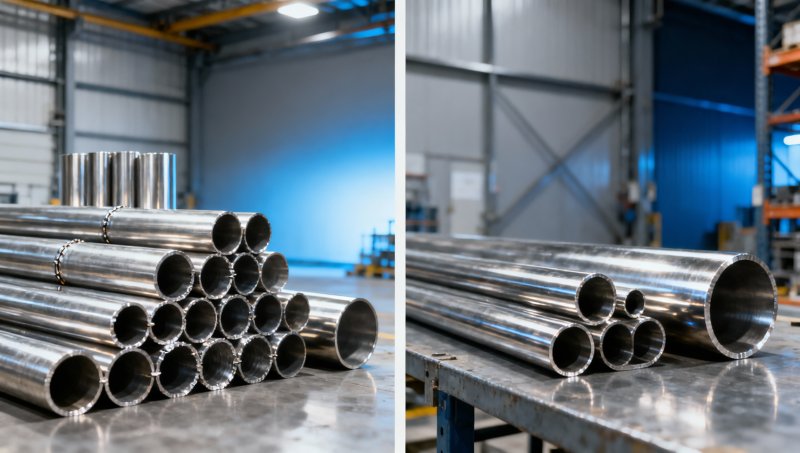
201 stainless steel pipe is an austenitic stainless grade developed as a more economical alternative to higher-nickel stainless steels. Its lower nickel content and higher manganese content help reduce raw material cost, which is one of the main reasons it is frequently selected for decorative tubing, indoor structures, furniture frames, light industrial fabrication, and non-critical transport or support systems.
For many buyers, the main attraction is simple: budget. In competitive projects, even a 10% to 25% difference in tube cost can affect the full procurement package, especially when the order includes multiple diameters such as 1 1/2 inch, 2 inch, and custom-length steel tubes. This is why 201 stainless steel pipe often enters the discussion when the project goal is balancing acceptable appearance, moderate strength, and manageable material cost.
However, popularity does not equal universal suitability. The grade performs differently depending on humidity, chloride exposure, cleaning chemicals, temperature variation, and fabrication method. A pipe used indoors in a dry warehouse may remain acceptable for years, while the same pipe installed near coastal air, wet processing zones, or aggressive industrial media may show staining, tea discoloration, or corrosion much earlier.
In practical B2B purchasing, buyers should look beyond simple dimensions and unit price. Wall thickness, surface finish, welding quality, passivation condition, and service environment all influence whether 201 stainless steel pipe becomes a smart budget choice or a maintenance burden. A lower material price can quickly lose value if replacement occurs within 12 to 24 months instead of a planned 5-year service interval.
Typical reasons buyers consider 201 pipe
- Lower purchase cost than common alternatives such as 304 in many market cycles.
- Good formability for bending, shaping, light fabrication, and decorative use.
- Suitable appearance for visible installations when polished or properly finished.
- Availability in multiple outside diameters, including common 1.5 inch and 2 inch tube sizes.
- Useful for indoor applications where chloride and moisture exposure stay limited.
The table below shows a practical view of where 201 stainless steel pipe tends to fit in real-world selection.
The key takeaway is that 201 stainless steel pipe is not inherently a bad material. It is a fit-for-purpose material. Problems usually come from selection mismatch, not from the grade name itself. When buyers match environment, finish, and performance expectations correctly, the grade can deliver efficient value.
Performance Limits: Corrosion, Strength, and Service Risk
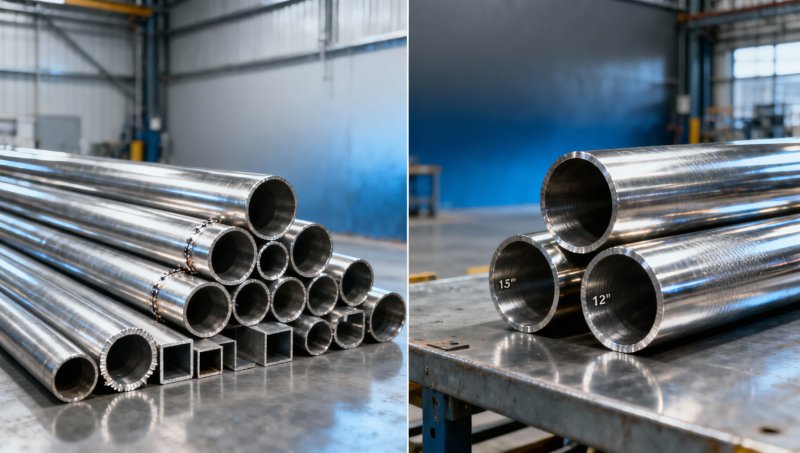
The biggest concern with 201 stainless steel pipe is corrosion resistance under demanding service conditions. In dry indoor environments, the material can remain visually acceptable and structurally usable for extended periods. In contrast, environments with salt, chlorides, acidic cleaning agents, frequent condensation, or polluted industrial air can accelerate staining and surface attack. For this reason, technical evaluation should always start with exposure level rather than price per meter.
From a mechanical perspective, 201 stainless steel pipe can offer reasonable strength for light structural applications, guards, handrails, frames, supports, and fabricated components. But strength alone does not solve corrosion-related service failure. A pipe that remains dimensionally strong can still create quality complaints if surface rust, discoloration, or pitting appears within 6 to 18 months after installation.
Another important factor is welding and post-fabrication treatment. Improper welding heat input, poor cleaning, or lack of surface treatment can reduce local corrosion resistance, especially near weld seams. This matters for pipe fabricators, OEM buyers, and project contractors working with customized lengths, bends, brackets, or assembled systems.
For safety managers and quality teams, the risk is not only material degradation but also miscommunication. Some end users hear “stainless” and assume all grades perform equally. In practice, the performance gap between grades becomes clear once the installation moves from a clean indoor area to an outdoor, marine, food-processing, or chemically exposed setting.
Risk indicators that should trigger a material review
- Outdoor installation with direct rain exposure for more than 6 months per year.
- Coastal or port-area projects within roughly 10 to 20 km of salt-laden air.
- Repeated washdown using alkaline or acidic cleaning chemicals.
- Process areas with standing water, steam, or high humidity above normal indoor levels.
- Visible architectural applications where appearance retention is a key acceptance criterion.
The comparison below helps decision-makers evaluate where 201 stainless steel pipe becomes a value option and where it becomes a risk.
This is why buyers should treat 201 stainless steel pipe as an application-based decision, not a default stainless option. A short technical review at the quotation stage can prevent expensive field replacement, re-polishing, customer complaints, and downtime later.
How to Compare 201 Pipe with Other Steel Options in Real Procurement
In many projects, 201 stainless steel pipe is not evaluated alone. It is compared against 304 stainless steel pipe, carbon steel tube with coating, and in some applications even galvanized flat or sheet products used in related support structures. The right decision depends on total system design, not just one line item in the bill of materials.
For example, if your project combines pipe, brackets, enclosure panels, and secondary supports, material coordination matters. Buyers sometimes reduce cost by selecting 201 stainless steel pipe for low-exposure tubing while using corrosion-protected carbon steel for surrounding panels or covers. In these cases, choosing the right companion material can improve overall value without forcing every component into a high-cost stainless grade.
A practical option for related construction and industrial applications is Galvanized Steel Sheet. Available in grades such as DX51D, SGCC, DX52D, S250GD, S350GD, and S550GD, it is commonly supplied in thicknesses from 0.12 mm to 6.00 mm, widths from 600 mm to 1500 mm, and lengths from 1 m to 12 m. With zinc coating ranges of 60–275 g/m² for hot galvanizing and 80–275 g/m² for pre-galvanized material, it is widely used in construction, transportation, agriculture, home appliances, energy, and light industry.
For project teams that need easy forming, welding, and resistance to atmospheric corrosion, this kind of sheet product can be a useful complement in non-tube sections of a system. Typical yield strength is listed at ≥240–380 MPa, tensile strength at ≥270–500 MPa, and elongation at ≥22%, with compliance options covering ASTM, EN, JIS, GB, DIN, and AISI-related specifications. In sourcing terms, combining the correct stainless pipe with the correct coated sheet can optimize both cost and durability.
Procurement comparison factors to review
- Material price versus expected maintenance cost over 3 to 5 years.
- Indoor or outdoor exposure and whether chloride contact is likely.
- Need for polished appearance, food-contact cleanliness, or decorative finish retention.
- Fabrication scope, including bending radius, weld count, and surface rework.
- Compatibility with nearby steel components such as supports, brackets, and panels.
The table below shows a simplified decision view used by many technical and commercial teams.
For buyers managing complete packages rather than single items, this mixed-material strategy often produces better cost control than upgrading every component to a premium grade. The main rule is simple: place each steel product where its performance level matches the actual operating demand.
A Practical Selection Checklist for Engineers, Buyers, and Project Teams
When evaluating 201 stainless steel pipe, a structured checklist helps prevent overbuying and under-specifying at the same time. This is especially important for international sourcing, where drawings, finish expectations, standards, and inspection criteria may differ between supplier, contractor, and end user. A disciplined review process can reduce approval cycles from weeks of rechecking to a faster 3-step technical confirmation.
For engineering teams, the first question is not “What is the cheapest size?” but “What does the service environment demand?” If the pipe will carry non-corrosive media indoors, or serve as a frame, trim, guard, or furniture tube in controlled conditions, 201 may be technically reasonable. If it will face outdoor condensation, food plant washdown, seawater mist, or harsh chemical cleaning, the answer may change immediately.
For procurement and commercial teams, supplier capability also matters. Stable production, dimensional consistency, documented inspection, and communication on standards such as ASTM, EN, JIS, or GB all reduce sourcing risk. A low quote becomes less attractive if the delivered wall thickness drifts beyond tolerance, the finish is inconsistent from batch to batch, or lead time slips from 2 weeks to 6 weeks during project execution.
For quality and safety managers, acceptance should include material verification, dimension checks, surface review, weld area inspection where relevant, and packaging protection during export or site transport. Even a suitable grade can fail in use if handling damage or contamination occurs before installation.
4-step selection process
- Define environment: indoor, outdoor, coastal, humid, washdown, chemical, or decorative.
- Confirm technical needs: outside diameter, wall thickness, finish, weld type, tolerance, and standard.
- Evaluate lifecycle cost: purchase price, expected maintenance, replacement interval, and appearance retention.
- Verify supplier execution: production capacity, quality control, lead time, and export packaging.
Checklist items often missed in budget-driven purchases
- Whether the quoted pipe is for decorative use or pressure-related use.
- Whether the surface is mill finish, polished, or protected with film.
- Whether weld seam quality is acceptable for visible applications.
- Whether the material will contact chlorides, detergents, or dissimilar metals.
- Whether replacement access is easy or expensive once the system is installed.
For companies sourcing from China, working with an experienced structural steel manufacturer and exporter can simplify this process. Suppliers with modern manufacturing facilities, customized production ability, and familiarity with global standards can support not only individual pipe orders but also related structural steel needs such as angle steel, channel steel, steel beams, cold formed sections, and OEM fabricated components. This integrated sourcing model often helps distributors, project contractors, and industrial buyers reduce coordination cost and delivery uncertainty.
Common Buyer Questions and Final Decision Guidance
Even after technical review, buyers often still ask the same practical question: should we approve 201 stainless steel pipe or not? The best answer is conditional. If your project needs stainless appearance, moderate strength, and lower upfront spending in a relatively controlled environment, 201 can be a reasonable option. If your project demands strong corrosion resistance, long outdoor life, or low-maintenance performance in aggressive environments, using it only to save on unit price can create a false economy.
The decision becomes clearer when teams compare total cost over time. A 15% to 20% material saving at purchase may look attractive, but if the pipe requires early polishing, repaint-adjacent protection, frequent cleaning, or replacement after a short service period, the cost advantage may disappear. For commercial buyers and financial approvers, this lifecycle view is more useful than a simple quotation comparison.
Below are several common questions that appear in technical sourcing and bid evaluation.
Is 201 stainless steel pipe suitable for outdoor use?
It can be used outdoors in some lower-risk environments, but it is not usually the first choice for exposed, wet, coastal, or highly polluted conditions. If outdoor use is unavoidable, buyers should assess finish quality, drainage, cleaning schedule, and expected appearance retention period before approval.
Why is 201 pipe cheaper than some other stainless grades?
Its alloy design generally uses lower nickel content, which helps reduce raw material cost. That lower price is the main commercial advantage, but it comes with a narrower application window in corrosion-sensitive environments.
What should buyers check besides 1 1 2 stainless steel pipe price or ss pipe 2 inch price?
Check wall thickness tolerance, finish, standard, weld quality, packaging, quantity consistency, and intended application. Two pipes with the same nominal size can deliver very different field performance depending on processing quality and environment.
When is it better to choose another material?
Choose another material when the pipe will face chlorides, chemical washdown, high humidity, marine air, or strict hygiene and appearance requirements over a long service life. In mixed-material systems, it may also be more economical to optimize adjacent components with coated structural steel products while reserving higher-grade stainless only for the most exposed areas.
For global buyers, distributors, contractors, and manufacturers, the most reliable sourcing strategy is to match steel grade to the actual duty cycle, not to a general label. Hongteng Fengda supports this approach with stable production capacity, customized structural steel solutions, and quality control aligned with major international standards. If you are comparing stainless pipe options or planning a broader steel package for construction, industrial, or manufacturing use, contact us to get tailored product guidance, technical support, and a practical sourcing solution for your project.
Please give us a message


Please enter what you want to find