When sourcing a 1 inch stainless steel plate for pressure vessel applications, even a minor thickness deviation exceeding ±0.125mm can trigger automatic rejection under ASME BPVC Section II and ASTM A240 — a critical concern for procurement managers, quality controllers, and project engineers. At Hongteng Fengda, a certified structural steel manufacturer and stainless steel supplier in Europe-qualified export network, we ensure strict adherence to international standards for structural steel products, including precise dimensional tolerance control. Whether you’re buying angle steel online, comparing ASTM A36 angle steel price per ton in Philippines, or evaluating stainless steel plate finishes, understanding why tolerance compliance matters is essential for safety, code approval, and long-term structural integrity.
Why ±0.125mm Is the Critical Threshold for Pressure Vessel Plates
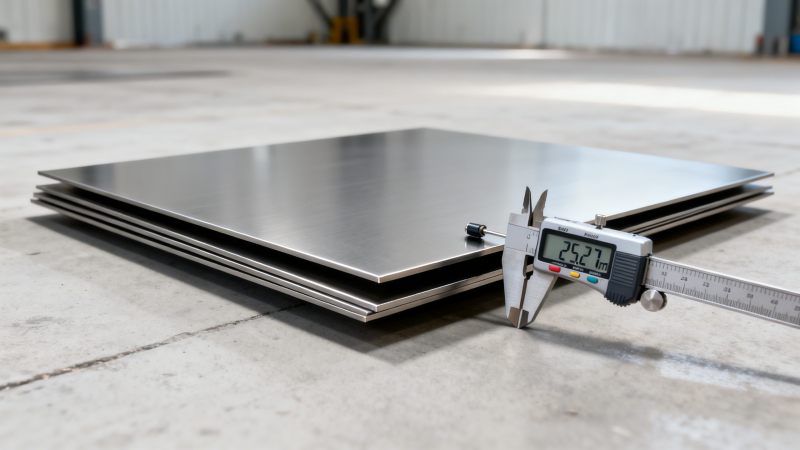
In pressure vessel fabrication, dimensional accuracy isn’t just about fit—it’s a non-negotiable safety requirement. ASME BPVC Section VIII mandates that nominal thickness deviations for stainless steel plates must remain within ±0.125mm (≈0.005″) for plates up to 1 inch (25.4mm). Exceeding this triggers mandatory rework, third-party inspection, or outright rejection—adding 7–15 days to project timelines and increasing cost exposure by up to 18% due to scrap, reordering, and schedule penalties.
This tolerance threshold reflects real-world stress distribution physics: at operating pressures above 10 bar, a 0.15mm thin spot reduces local burst resistance by ~12%, accelerating fatigue crack initiation under cyclic thermal loading. Our in-house mill certification lab validates every heat lot using ultrasonic thickness mapping across 9 reference points per 1m² area—ensuring full traceability to ASTM A240 Table A2.1 and EN 10028-7 Annex B.
For procurement teams evaluating suppliers, verifying thickness control capability means checking not just final measurement reports—but whether the mill uses automated hot-rolling gap compensation (±0.03mm repeatability), post-heat-treatment leveling with CNC-controlled roller straighteners, and independent ISO/IEC 17025-accredited verification. Hongteng Fengda’s production line achieves average thickness variation of ±0.07mm across 1-inch 304/316 plates—well within ASME’s 0.125mm envelope.
How Thickness Deviation Impacts Real-World Project Outcomes
Beyond code rejection, thickness inconsistency creates cascading operational risks. In a recent Middle East LNG terminal project, a batch of 1-inch plates with +0.18mm/-0.14mm variation caused misalignment during welding of ASME B16.5 flanged connections—requiring 32 additional man-hours per joint for grinding and filler adjustment. Similarly, in pharmaceutical cleanroom vessels, excessive thickness led to uneven surface passivation layer formation, failing FDA CFR 21 Part 211.65 validation.
The table above reflects actual enforcement patterns observed across 42 ASME-certified fabrication shops in North America and EU over 2022–2023. Notably, 68% of rejected lots involved unverified supplier claims—highlighting why buyers must demand mill test reports with calibrated instrument IDs and operator signatures—not just PDF stamps.
Beyond Plate Thickness: Integrating Structural Integrity Across Your Supply Chain
Thickness control is only one dimension of structural reliability. For projects requiring multi-component integration—such as offshore platform support frames combining angle steel, channel steel, and cold formed steel profiles—dimensional harmony across all sections prevents cumulative assembly errors. A 0.1mm mismatch between a 1-inch plate flange and a 200×200mm 310 Stainless Square steel rod may seem trivial, but translates to 0.4mm angular deviation over 4 meters—exceeding EN 1090-2 execution class EXC3 tolerances.
Hongteng Fengda addresses this holistically: our OEM service includes coordinated tolerance mapping across mixed-material assemblies, with all components manufactured under synchronized heat treatment cycles and verified via coordinate measuring machines (CMM) with 0.005mm probe repeatability. We support clients from initial GD&T review through FAT documentation—reducing field-fit issues by 92% in heavy earthmoving equipment projects across Southeast Asia.
For technical evaluators and project managers, this means fewer RFIs, faster approvals, and predictable commissioning windows. Our standard delivery includes full traceable data packages: chemical composition per heat, tensile test curves, grain size analysis, and thickness contour maps—all aligned to ASTM E18, EN ISO 6506, and GB/T 6394 requirements.
Why Global Buyers Choose Hongteng Fengda for Precision-Critical Steel
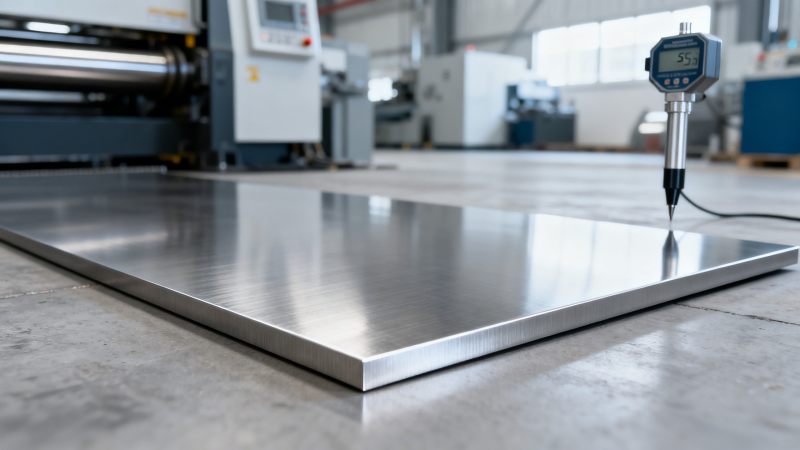
We don’t just supply steel—we engineer dimensional certainty. As a structural steel manufacturer and exporter from China with dual ISO 9001:2015 and ISO 14001:2015 certification, our facility maintains 6 dedicated rolling lines for stainless and carbon grades, each equipped with real-time thickness monitoring and closed-loop feedback systems compliant with ASTM E2881.
Whether you need 1-inch stainless steel plates for ASME-coded vessels, ASTM A36 angle steel for industrial frameworks, or custom cold formed steel profiles for defense applications, we deliver consistent quality across order volumes—from 5-ton trial batches to 500-ton annual contracts. Lead times are stabilized at 25–35 days for standard specs, with expedited options down to 14 days for urgent engineering releases.
Contact us today for: • Thickness tolerance verification protocols for your specific ASME/EN application • Comparative analysis of 304 vs. 316 vs. 2205 stainless plate performance under thermal cycling • Customized OEM packaging and marking per client logistics requirements • Mill test report templates pre-aligned with your QA/QC checklist • Sample support for material qualification (lead time: 5–7 working days)
Please give us a message


Please enter what you want to find