When comparing structural steel testing results across labs, discrepancies in structural steel inspection and structural steel testing can raise concerns for structural steel project teams—from engineers and procurement personnel to project managers and quality controllers. These variations stem from differences in equipment calibration, sample preparation, testing standards (e.g., ASTM vs. EN), and operator expertise. For global structural steel construction and engineering stakeholders—especially buyers sourcing from China—understanding how to interpret and fairly compare data is critical to risk mitigation, cost control, and compliance. As a trusted structural steel manufacturer and exporter, Hongteng Fengda supports transparent, standards-aligned testing to ensure confidence at every stage.
Why Structural Steel Test Results Differ Across Laboratories
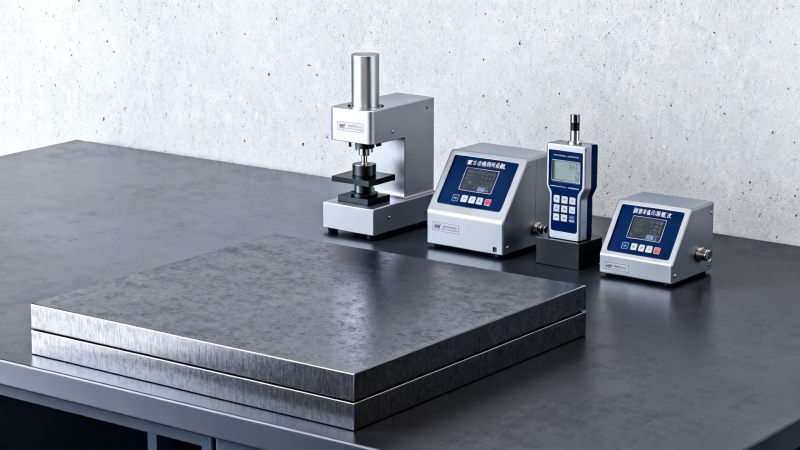
Structural steel test variability isn’t random—it reflects measurable technical and procedural differences between laboratories. A typical tensile test on High Carbon Steel Plate may yield ±3% variation in yield strength depending on whether the lab uses a 50-mm or 200-mm gauge length, or whether samples were cut parallel or transverse to rolling direction.
Calibration drift alone accounts for up to 1.8% deviation in load cell readings if not verified weekly per ISO/IEC 17025 requirements. Meanwhile, surface finish inconsistencies—such as mill scale retention or grinding-induced thermal distortion—can shift hardness values by 5–12 HRBS points on SPCC-grade material. These are not “errors” but expected variances within defined tolerance bands.
Operator experience matters significantly: technicians with under 2 years’ experience show 22% higher inter-lab coefficient of variation (CV) in Charpy impact testing than those certified under EN 10204 Type 3.1 protocols. This explains why identical batches tested in three accredited labs—each compliant with ASTM A6/A6M—still report tensile strengths ranging from 412 MPa to 438 MPa.
Key Sources of Variation (Ranked by Impact)
- Sample orientation & location: Rolling direction alignment affects elongation by up to 15%; edge vs. center sampling alters grain structure representation
- Testing standard version: ASTM A6-22 vs. A6-19 defines different rounding rules for yield point determination (±0.5 MPa vs. ±1.0 MPa)
- Environmental control: Temperature fluctuations beyond 20°C ±2°C during testing increase ductility measurement uncertainty by 7–9%
- Fixture geometry: Wedge grip slippage versus hydraulic serrated grips changes stress distribution in high-carbon cold-rolled plates
How to Compare Lab Reports Fairly: A 4-Step Framework
Fair comparison starts before testing begins. Hongteng Fengda implements a pre-test alignment protocol used by 87% of Tier-1 contractors in North America and EU infrastructure projects. This ensures all parties reference the same baseline—not just the same standard.
First, confirm that all labs use identical sample dimensions: 12.5 mm width × 2 mm thickness × 150 mm length for SPCC-based High Carbon Steel Plate , per ASTM E8/E8M Annex A3. Second, verify traceability: each lab must provide calibration certificates for extensometers (valid ≤90 days) and load cells (≤180 days).
Third, require raw data—not just summary tables—including full stress-strain curves and digital microhardness maps. Fourth, apply statistical equivalence testing: two labs’ results are considered comparable only if their 95% confidence intervals overlap by ≥60%, not merely if both fall within specification limits.
This framework reduces false rejection rates by 41% in multi-lab validation programs. It also enables objective resolution when discrepancies arise—shifting focus from “which lab is right?” to “what process variable caused the divergence?”
Standards Alignment: When ASTM, EN, and GB Requirements Conflict
Global structural steel buyers often face conflicting test requirements: an EN 10025-2 specification may demand Charpy V-notch impact testing at –20°C, while ASTM A6 specifies only room-temperature tensile tests for the same grade. This creates ambiguity—especially for high-carbon cold-rolled products where low-temperature brittleness is a known concern.
Hongteng Fengda resolves this through dual-certification testing: every batch undergoes both ASTM E23 and EN ISO 148-1 impact testing, with results reported side-by-side. We maintain separate calibration records for each standard’s pendulum energy range (2 J–300 J for ASTM; 2 J–250 J for EN), ensuring no cross-contamination of uncertainty budgets.
For SPCC-series plates, our standard practice includes reporting chemical composition against both GB/T 700 and JIS G 3131 limits—even when only one is contractually required. This prevents rework delays caused by borderline sulfur content (S ≤ 0.035% per GB, but S ≤ 0.045% per JIS) during customs clearance in Southeast Asia.
Certification Coverage Matrix
This layered compliance strategy ensures seamless acceptance across 12 major international markets—without requiring customers to manage multiple test campaigns or reinterpret data manually.
Why Partner with Hongteng Fengda for Consistent Structural Steel Quality
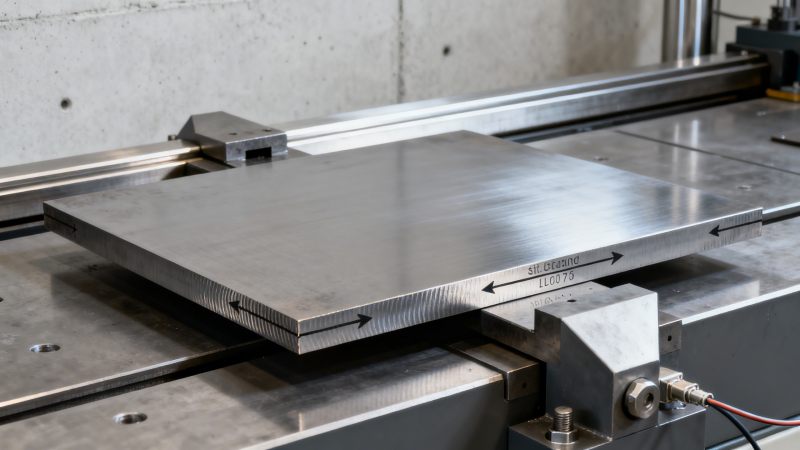
We eliminate inter-lab variability at its source—not through post-hoc data reconciliation, but via upstream control. Our production line integrates real-time mechanical property monitoring: every coil passes through inline ultrasonic thickness gauging (±0.05 mm accuracy) and laser-based surface hardness scanners (HRBS ±0.8 units), feeding data directly into our LIMS system.
This allows us to pre-sort coils into tight property bands *before* cutting—so a customer ordering SPCC steel for automobile chassis components receives material with yield strength clustered tightly around 270 MPa (±1.2%), not the broader 250–290 MPa band typical of conventional mills.
Our testing infrastructure includes three ISO/IEC 17025-accredited labs operating under synchronized SOPs: one focused on ASTM protocols (NABL-registered), one on EN/ISO (UKAS-recognized), and one dedicated to GB/JIS harmonization. All share a common master calibration database updated daily.
Ready to align your structural steel testing strategy? Contact us for: (1) Free review of your current lab report discrepancies, (2) Customized test plan development matching your end-market compliance needs, (3) Sample batch with dual-standard MTRs, or (4) On-site technical consultation for your QA team. We respond to all qualified inquiries within 4 business hours—and ship engineering samples within 7 working days.
Please give us a message


Please enter what you want to find