Why structural steel inspection is becoming a decisive handover checkpoint
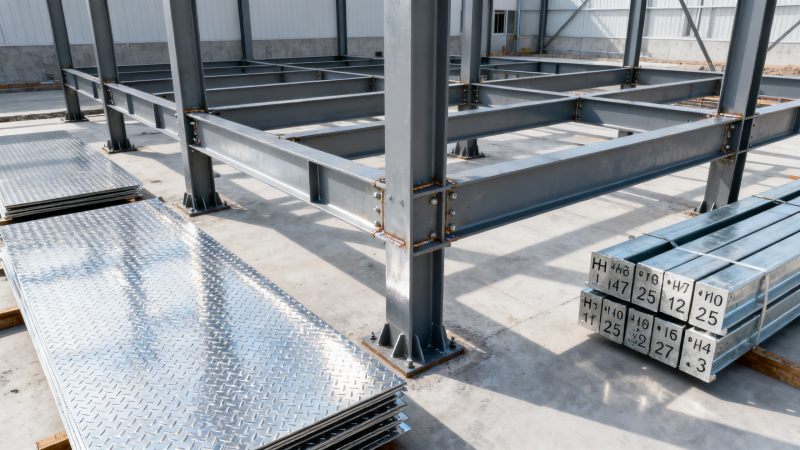
Before project handover, structural steel inspection protects quality, safety, and contractual compliance.
It confirms that fabricated and installed steel matches drawings, specifications, and international standards.
As projects become larger and more regulated, structural steel inspection carries greater commercial importance.
A missed defect can trigger delays, rework, disputes, or future structural performance problems.
That is why structural steel inspection now influences schedule certainty, payment release, and long-term asset reliability.
The handover stage is no longer a final formality. It is a risk control gate.
For global steel projects, verification must cover dimensions, welding, coatings, traceability, and load-bearing readiness.
Strong inspection practice helps ensure every beam, channel, plate, and custom component performs as expected.
Quality expectations are rising across global steel construction
Across construction and industrial sectors, acceptance standards are becoming tighter.
Owners now expect complete records for materials, fabrication, and installation quality.
This shift makes structural steel inspection more visible during pre-handover reviews.
International projects often combine ASTM, EN, JIS, and local regulatory requirements.
When documentation or workmanship does not align, approval can stop immediately.
Digital project management also changes expectations.
Inspection findings are now easier to compare against design models, test records, and supplier data.
As a result, hidden quality gaps are harder to ignore at handover.
Signals behind this change
- More complex steel structures with tighter tolerances
- Greater use of third-party verification and audit trails
- Higher liability for safety incidents after occupancy
- Cross-border sourcing that requires stronger traceability
- Demand for predictable maintenance and lifecycle performance
What drives structural steel inspection before handover
The reasons are technical, financial, and operational at the same time.
A disciplined structural steel inspection process reduces uncertainty before the asset changes status.
These drivers explain why structural steel inspection is not only a technical checklist.
It is a strategic control point for project completion.
Inspection gaps now affect more than quality reports
If inspection is rushed, the impact spreads beyond the steel package.
Mechanical installation, flooring, enclosure work, and commissioning can all be affected.
Even small dimensional deviations may disrupt equipment alignment or finishing work.
Surface quality also matters in many steel applications.
For example, anti-slip and patterned steel products used in platforms or industrial floors need close verification.
In such cases, SM400A Patterned steel plate can support transportation, construction, machinery, and shipbuilding uses.
Its thickness range is 2-8mm, with widths from 600mm to 1800mm.
It also offers anti-skid performance, decorative value, and compliance with standards such as ASTM, JIS, and ISO.
When these products are part of the scope, structural steel inspection should include surface pattern quality, tolerance checks, and application suitability.
Common consequences of weak pre-handover checks
- Delayed final approval and payment release
- Unexpected repair costs after installation is complete
- Disputes over responsibility for fabrication or erection defects
- Reduced confidence in long-term structural durability
- Operational interruptions after site turnover
The most important areas a structural steel inspection should verify
Not every issue is visible at a glance.
A useful structural steel inspection should focus on areas that directly affect performance and acceptance.
1. Material traceability
Mill certificates, heat numbers, and grade identification should match the approved material list.
This is essential for beams, channels, angle steel, and custom fabricated members.
2. Dimensional accuracy
Check length, width, thickness, hole positions, straightness, camber, and fit-up tolerance.
Minor dimensional errors can create major assembly problems later.
3. Welding quality
Inspect weld size, continuity, penetration, and visible defects.
Where required, non-destructive testing should support visual findings.
4. Surface treatment and corrosion protection
Coating thickness, galvanizing quality, and surface preparation must meet the specification.
Poor protection can shorten service life even if the steel is structurally sound.
5. Installation condition
Alignment, bolt torque, connection completeness, and support conditions should be verified on site.
Handover risk often comes from installation deviations, not fabrication alone.
How stronger inspection practice changes outcomes across the steel supply chain
Better structural steel inspection improves decisions at several stages.
It helps connect manufacturing quality with final site acceptance.
For exporters, this is especially important.
Cross-border buyers need stable production quality and reliable records before release.
Hongteng Fengda supports this need through modern manufacturing, customized steel solutions, and strict quality control.
Its structural steel products align with major standards including ASTM, EN, JIS, and GB.
What deserves closer attention before final acceptance
Several points deserve special attention during structural steel inspection before handover.
- Confirm all revisions are reflected in as-built conditions.
- Review weld repairs and confirm they were properly documented.
- Check critical connections and load path continuity.
- Verify coating damage from transport or site handling was corrected.
- Ensure inspection reports are complete and easy to audit.
- Compare material certificates with installed member identification.
- Inspect special-use steel products for application-specific performance.
These checks reduce the chance of unresolved issues moving into operation.
A practical direction for stronger handover readiness
The best response is to treat structural steel inspection as a staged system, not a last-minute task.
Begin with supplier qualification, continue through fabrication, and finish with coordinated site verification.
Use agreed standards, clear acceptance criteria, and complete records from the start.
For steel buyers and project teams, this approach improves predictability and lowers avoidable risk.
If your project requires dependable structural steel supply, customized components, or export-ready quality documentation, plan inspection requirements early.
A strong handover begins long before the final sign-off, and structural steel inspection is the proof point that turns production into confidence.
Please give us a message


Please enter what you want to find