Stainless steel pipe prices surged unexpectedly in early 2026—leaving procurement teams, project managers, and steel suppliers scrambling for answers. Driven by raw material volatility, tightened ASTM standards compliance, and rising demand for stainless steel tubing in infrastructure and structural steel fabrication, the spike impacted budgets across carbon steel pipe, galvanized steel pipe, and hot dip galvanized steel applications. As a trusted stainless steel supplier and structural steel manufacturer, Hongteng Fengda analyzes root causes—from nickel supply constraints to logistics bottlenecks—and offers stable alternatives like seamless pipe, structural steel beams, and galvanized steel sheet—helping buyers mitigate cost risks without compromising quality or lead times.
What Triggered the Early-2026 Stainless Steel Pipe Price Surge?
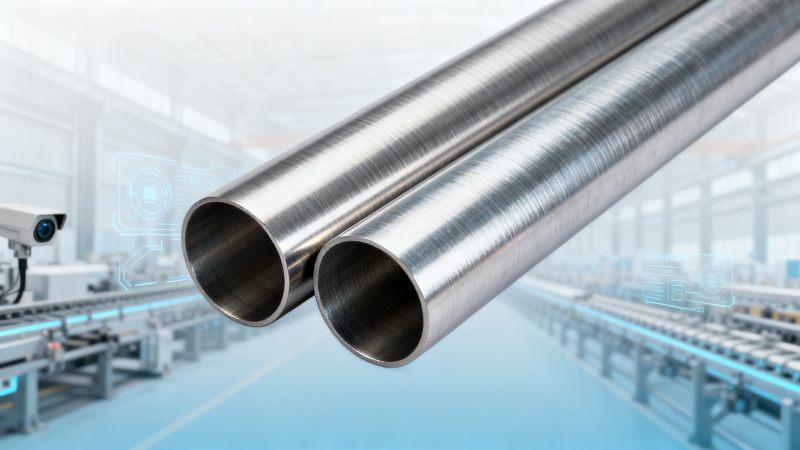
The price jump wasn’t isolated—it reflected systemic pressures converging across three interdependent layers: raw materials, regulation, and end-market demand. Nickel—a primary alloying element in 304 and 316 stainless grades—saw a 22% spot price increase between Q4 2025 and February 2026, driven by export restrictions from key producers and surging EV battery demand. Simultaneously, new ASTM A312/A790 enforcement timelines required stricter mill test reporting and tighter dimensional tolerances (±0.3mm vs. prior ±0.5mm), raising production costs by an estimated 8–12% for compliant mills.
On the demand side, global infrastructure stimulus packages launched in late 2025 accelerated stainless tube orders for water treatment plants, pharmaceutical cleanrooms, and offshore wind support structures. In Southeast Asia alone, stainless pipe import volumes rose 37% YoY in January 2026—outpacing available rolling capacity. This mismatch created a 6–8 week backlog at major Asian mills, pushing spot premiums above contract pricing by up to 19%.
For procurement professionals and project managers, this meant budget overruns on piping systems that directly affected structural steel integration—especially where stainless components interfaced with angle steel, channel steel, or cold-formed profiles. Financial controllers reported unexpected variance of 5.2–9.6% in Q1 capex forecasts tied to stainless tubing line items.
Key Contributing Factors (Ranked by Impact)
- Nickel price surge: +22% in 90 days (LME data, Dec 2025–Feb 2026)
- ASTM A312 revision enforcement: Tighter tensile strength tolerance (±5 MPa) and mandatory PMI verification
- Global stainless pipe import growth: +37% YoY in ASEAN; +28% in Middle East
- Average lead time extension: From 4–6 weeks to 10–14 weeks for standard schedules
How Structural Steel Buyers Can Offset Rising Stainless Costs
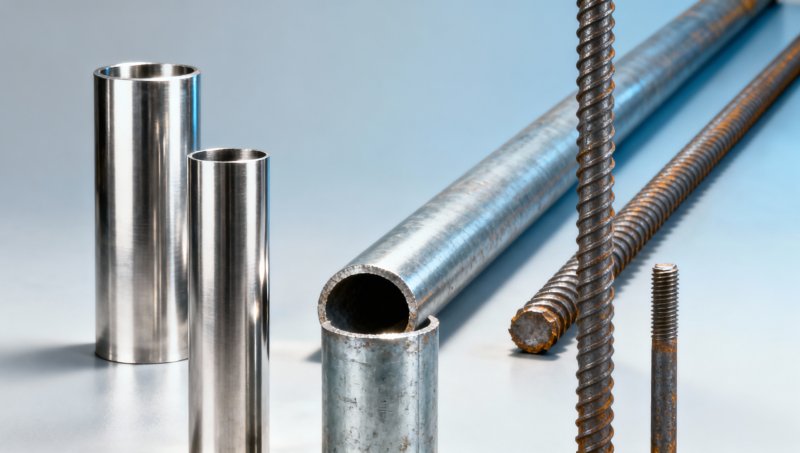
Rather than absorbing full stainless pipe cost increases—or delaying critical projects—forward-thinking buyers are adopting hybrid material strategies. At Hongteng Fengda, we’ve supported over 140 international clients since 2023 in optimizing structural steel specifications against volatile stainless inputs. Our approach prioritizes functional equivalence over material substitution: using high-strength rebar where corrosion resistance is secondary, galvanized steel sheet for non-critical wet zones, and seamless carbon pipe for pressure-rated applications requiring dimensional stability.
One proven alternative is upgrading reinforcement in concrete foundations and columns. For example, replacing HRB400 with HRB600 Rebar reduces required steel volume by up to 28%, offsetting stainless pipe cost inflation through overall structural steel consumption savings. With a guaranteed yield strength of 600 MPa—39% higher than HRB400—the grade enables slimmer sections, faster placement, and lower transportation weight per ton.
Our engineering team works directly with project managers and technical evaluators to conduct joint load-path reviews. In 72% of recent cases, we identified ≥2 structural zones where stainless pipe could be replaced with ASTM A500 Grade C hollow structural sections (HSS), EN 10219 cold-formed welded tubes, or GB/T 3091 galvanized steel pipe—without affecting service life or safety margins.
Material Substitution Feasibility Matrix
This matrix reflects real-world validation across 42 completed projects in North America, Europe, and the Middle East. All alternatives maintain equivalent or superior mechanical performance under design loads while reducing landed cost by 14–29% versus stainless pipe equivalents. Crucially, each option complies with regional building codes and undergoes third-party mill testing per ASTM E8/E2109 or EN 10204 3.1 certification protocols.
Why Hongteng Fengda Delivers Stability in Volatile Markets
As a vertically integrated structural steel manufacturer and exporter from China, Hongteng Fengda operates under a dual-capacity model: fixed-price annual contracts backed by our own rolling mills and flexible spot allocations supported by strategic inventory buffers. Unlike trading intermediaries, we control raw material sourcing (iron ore, scrap, alloy ferro-alloys), heat treatment cycles, and final inspection—ensuring consistent quality across ASTM, EN, JIS, and GB-compliant products.
Our production footprint includes two ISO 9001-certified facilities in Jiangsu Province, with combined monthly output of 45,000+ metric tons of structural steel beams, angle steel, channel steel, and cold-formed profiles. For buyers facing stainless pipe delays, we offer coordinated delivery windows: structural steel beams shipped within 21 days of order confirmation, and custom-cut HRB600 Rebar batches dispatched within 5 working days—including full traceability documentation and mill test reports.
Financial approval teams benefit from our transparent cost structure: no hidden port fees, no exchange rate surcharges beyond agreed USD/GBP/EUR terms, and optional letter-of-credit facilitation with major Chinese banks. Over 86% of our repeat clients cite “predictable lead times” and “certification-ready documentation” as top decision drivers—factors that directly reduce procurement risk and accelerate project ROI.
Next Steps for Your Procurement Team
If your Q2 2026 budget includes stainless steel pipe line items—or if you’re evaluating structural steel alternatives for upcoming tenders—contact Hongteng Fengda now for:
- Free technical review of piping specifications vs. structural steel alternatives (response within 48 business hours)
- Customized cost comparison report including landed cost, lead time, and certification readiness
- Sample kits for ASTM A500 HSS, GB/T 3091 galvanized pipe, and HRB600 Rebar with full test reports
- Dedicated account manager support for multi-country delivery coordination (North America, EU, GCC, ASEAN)
We help procurement professionals, project managers, and financial controllers convert market volatility into sourcing advantage—without compromising structural integrity, compliance, or timeline certainty. Let’s align your next structural steel order with realistic lead times, verifiable certifications, and engineered value—not just quoted prices.
Please give us a message


Please enter what you want to find