Why does stainless plate price rise so sharply when order volumes are small? For project planning, this is not only a buying issue. It affects cost control, delivery timing, stock strategy, and supplier selection.
In steel supply, small orders often carry hidden costs that are less visible in large contracts. Understanding these factors helps buyers compare quotes more accurately and avoid budget surprises.
This article explains the main drivers behind stainless plate price changes on low-volume orders, current market signals, practical business impacts, and effective ways to improve sourcing outcomes.
Basic cost structure behind stainless plate price
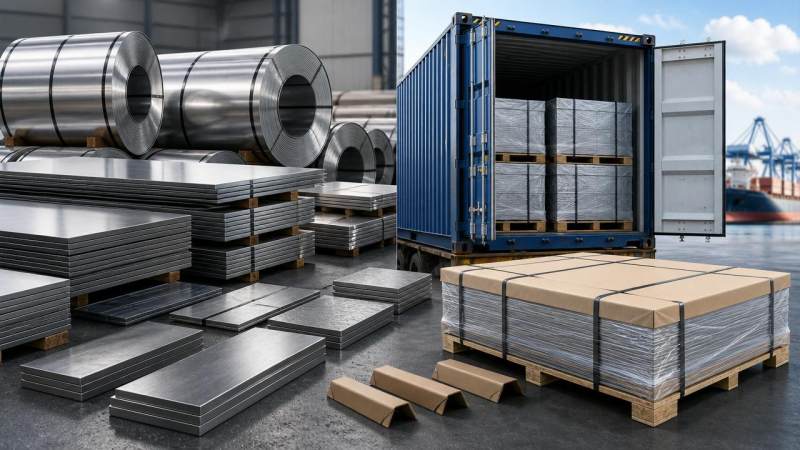
The stainless plate price is shaped by more than raw material value. Nickel, chromium, molybdenum, energy, processing, storage, packaging, and freight all influence the final quoted level.
For large orders, these costs are spread across many tons. For small orders, the same fixed costs are divided over fewer units. That pushes the stainless plate price upward.
Minimum production quantities also matter. Mills and service centers prefer batch efficiency. When order volume falls below efficient processing ranges, setup costs become proportionally much higher.
Key fixed-cost elements
- Slitting, cutting, leveling, and inspection preparation
- Machine changeover and labor scheduling
- Documentation, traceability, and quality certificates
- Packing, edge protection, and export handling
- Internal logistics and warehouse picking
Even before shipping, these items can create a noticeable premium. That is why small-volume quotes may appear inconsistent with public market prices for stainless steel sheets or coils.
Industry conditions that amplify small-order pricing
The steel market adds another layer. Stainless plate price often reacts to mill utilization, alloy surcharges, import policy changes, and freight volatility.
When the market is tight, suppliers prioritize larger and more predictable orders. Small inquiries may receive less favorable pricing because they interrupt production flow and consume the same administrative effort.
These conditions explain why stainless plate price for one project lot may differ from another, even when grade and thickness look similar on paper.
Why processing and customization increase stainless plate price
Small-volume orders often request custom widths, tight tolerances, special surface finishes, or mixed dimensions. Each variation adds handling time and lowers production efficiency.
For export projects, mixed steel sourcing is also common. A project may require stainless plate together with structural sections, bars, or fabricated components.
In such cases, integrated suppliers can improve total cost visibility. For example, standard structural items like 45# Carbon Steel Round Bar may be combined with broader project supply planning.
This does not directly reduce every stainless plate price quote. However, it can lower overall logistics fragmentation, simplify documentation, and reduce coordination losses across the order package.
Common customization items that add cost
- Non-standard thickness or width combinations
- Protective film, passivation, or special packaging
- Individual heat number management
- Cut-to-length requirements with low yield efficiency
- Additional ASTM, EN, JIS, or GB inspection reporting
When all these details appear in a small batch, stainless plate price naturally rises because the supplier absorbs more complexity without scale benefits.
Business impact across common steel project scenarios
A higher stainless plate price matters differently depending on project type. The cost effect is not only about tonnage. It also changes schedules, approvals, and inventory decisions.
This is why experienced steel exporters focus on total project value, not only the headline stainless plate price per ton.
Hongteng Fengda, a structural steel manufacturer and exporter from China, supports global projects with stable production, strict quality control, and customized supply coordination.
With products aligned to ASTM, EN, JIS, and GB standards, integrated supply planning can reduce sourcing risk and improve delivery consistency across multi-item steel orders.
Practical ways to reduce stainless plate price pressure
Although small orders usually cost more, several actions can improve the final result. The goal is to reduce avoidable complexity and increase quote comparability.
Specification planning
- Use standard thicknesses and common grades whenever possible
- Limit mixed dimensions in the same order
- Confirm whether cut pieces can be replaced by stock plate sizes
Commercial planning
- Combine demand from nearby projects into one release
- Ask for quote validity tied to alloy surcharge timing
- Compare ex-works, FOB, and CIF values separately
Supplier coordination
- Share annual usage estimates, not only immediate demand
- Clarify required test certificates before quotation
- Discuss alternative grades or surface options if technically acceptable
These steps can moderate stainless plate price pressure by improving mill compatibility, reducing handling waste, and lowering uncertainty for the supplier.
Points to review before confirming a small-volume order
A low quote is not always the best quote. The true stainless plate price should be evaluated together with yield, compliance, protection, and delivery reliability.
- Check whether the grade, finish, and tolerance exactly match the requirement.
- Confirm packaging method for moisture, edge, and surface protection.
- Verify certificate scope, inspection standard, and traceability details.
- Review freight assumptions and partial container impacts.
- Assess whether combined procurement lowers total landed cost.
The same principle applies to related materials. For structural projects using bars, sections, and plates together, coordinated sourcing often creates more savings than chasing one isolated unit price.
Next-step sourcing approach
Small-order premiums are normal in the steel trade. The important point is knowing why they happen and which parts of the stainless plate price are negotiable.
A practical approach is to standardize specifications, consolidate demand, and work with suppliers that understand both stainless products and broader structural steel coordination.
When quote reviews include processing, logistics, standards, and schedule impact, stainless plate price becomes easier to manage and easier to justify within the full project budget.
For international steel sourcing, stable capacity, dependable lead times, and professional communication often matter as much as the initial quoted number.
Please give us a message


Please enter what you want to find