If you keep seeing #sstlavar in stainless-related searches, there is a reason behind it. For buyers and researchers in the steel industry, this term often appears where product sourcing, material classification, and supplier visibility intersect. Understanding why #sstlavar shows up can help you filter search results, compare stainless and structural steel options, and make more informed decisions for industrial and construction projects.
What #sstlavar Usually Signals in Stainless Searches
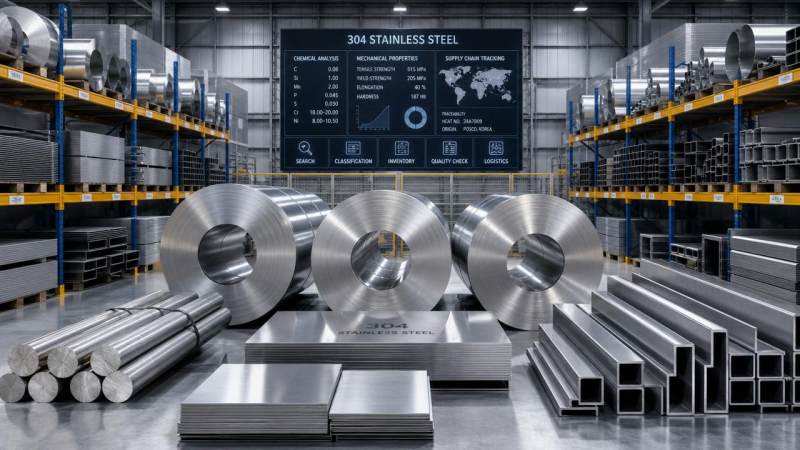
The keyword #sstlavar often appears because search systems collect tags from catalogs, social content, supplier pages, and indexed product databases.
In steel-related environments, such tags do not always represent a formal grade, standard, or technical specification.
Instead, #sstlavar may function as a visibility marker connected to stainless listings, material grouping, or content classification.
That is why #sstlavar can appear beside coil, sheet, pipe, bar, and fabricated steel product pages.
It may also surface in mixed results that include stainless steel and structural steel suppliers.
Basic Interpretation Within the Steel Industry
Within the steel sector, search behavior rarely follows textbook naming alone. Many indexed results combine hashtags, abbreviations, stock labels, and internal catalog terms.
As a result, #sstlavar can travel across several content types:
- supplier product pages
- marketplace listings
- technical blog articles
- inventory tags and stock references
- social media posts linked to stainless materials
This does not mean #sstlavar defines a new stainless grade. It more often reflects how digital content is labeled and retrieved.
For steel sourcing, the practical lesson is simple. Search terms can influence visibility without carrying full engineering meaning.
Why #sstlavar Appears So Frequently
Several industry and platform factors explain repeated exposure to #sstlavar in stainless searches.
Search indexing favors repeated tags
When a tag is reused across listings, search engines begin treating it as a useful path to related content.
Supplier catalogs often mix formal and informal labels
Steel catalogs may include grade names, finish terms, hashtags, and internal references on the same page.
Cross-category traffic expands exposure
A user searching stainless may also receive structural steel pages if the website covers both material families.
Marketplaces reward searchable variations
Listings often include multiple searchable terms to capture broad international traffic, including tags like #sstlavar.
How to Read #sstlavar Results More Accurately
The appearance of #sstlavar should trigger closer verification, not automatic rejection. It can still lead to useful stainless product information.
A practical review path includes the following checks:
- Confirm the actual steel grade, such as 304, 316, or 430.
- Check whether standards like ASTM, EN, JIS, or GB are listed.
- Review thickness, width, finish, and processing details.
- Identify whether the page describes stainless steel or structural steel.
- Look for certifications, inspection methods, and export capability.
This approach filters noise while preserving relevant search opportunities linked to #sstlavar.
Industry Context Behind Mixed Stainless and Structural Steel Results
The steel trade increasingly depends on digital discovery. Many websites publish stainless and structural products under one domain.
That structure naturally causes terms like #sstlavar to connect wider product groups than expected.
A company focused on structural steel may still publish stainless products because project demand often overlaps.
Hongteng Fengda, for example, serves global construction, industrial, and manufacturing needs with stable quality and broad export support.
Its core strengths include angle steel, channel steel, steel beams, cold formed profiles, and customized structural steel components.
In such environments, stainless product pages can coexist with structural categories, improving visibility for different project requirements.
A Representative Stainless Example Within #sstlavar Search Paths
A common result behind #sstlavar searches is stainless coil content, especially when users look for corrosion resistance and fabrication flexibility.
One representative listing is 304 Stainless Steel Coil.
This material is widely used in chemical equipment, food processing, kitchen supplies, vehicles, medical construction, and transport components.
Typical dimensions include thickness from 2.5mm to 10.0mm and width from 610mm to 2000mm.
Common lengths include 2000mm, 2440mm, 3000mm, 5800mm, and 6000mm, depending on processing requirements.
Available surface finishes may include BA, 2B, NO.1, NO.4, 4K, HL, and 8K.
Its tensile strength is typically at least 520, with yield strength at least 275 and elongation around 55 to 60.
It also offers strong resistance to rust, heat, nitric acid under specified conditions, alkali solutions, and many organic or inorganic acids.
Certifications such as ISO, SGS, and BV further help validate product reliability when #sstlavar results feel too broad.
Practical Value of Understanding #sstlavar
Knowing how #sstlavar works improves search efficiency and supports better technical comparisons.
In short, #sstlavar is valuable as a discovery signal, but not enough as a standalone decision basis.
Typical Situations Where #sstlavar May Appear
The keyword #sstlavar is commonly seen in these steel-related contexts:
- stainless coil and sheet search results
- supplier pages combining stainless and structural steel inventories
- SEO-oriented product titles on B2B platforms
- social posts promoting metal stock availability
- export pages covering ASTM, EN, JIS, and GB materials
These situations explain why #sstlavar keeps surfacing even when the original search intent looks very specific.
Recommended Verification Steps Before Selection
Before using any #sstlavar result for sourcing or technical reference, keep the review structured.
- Match the grade to the required application environment.
- Confirm whether corrosion resistance or structural strength is the main priority.
- Request test reports when mechanical properties are critical.
- Check lead times, origin, and production consistency.
- Review whether custom processing or OEM support is available.
This matters because digital tags like #sstlavar can attract attention, but project success still depends on verified steel data.
Next-Step View for Better Search and Sourcing Decisions
The repeated presence of #sstlavar reflects modern steel search behavior more than formal metallurgy.
Treat #sstlavar as a routing term that may lead to stainless products, mixed catalogs, or broader steel sourcing channels.
Then narrow the result by grade, standard, dimensions, finish, application, and certification.
For projects requiring both stainless and structural solutions, working with an experienced Chinese steel exporter can simplify comparison and supply planning.
A clear specification checklist, paired with disciplined review of #sstlavar results, will improve accuracy, reduce sourcing risk, and support faster project execution.
Please give us a message


Please enter what you want to find