As high-pressure chemical processing lines demand unmatched corrosion resistance, structural integrity, and leak-free performance in 2026, seamless stainless steel pipe remains the non-negotiable choice—especially when paired with 304L stainless steel plate for critical weld zones. Unlike hot-dipped galvanized pipe or pre-galvanized sheet, seamless stainless options eliminate weak seams and hydrogen embrittlement risks. For structural steel manufacturers like Hongteng Fengda—exporting angle steel, galvanized steel sheet China, and custom solutions to global projects—specifying the right pipe isn’t just engineering: it’s operational safety, compliance (ASTM/EN/GB), and lifecycle cost control.
Why Seamless Stainless Steel Pipe Dominates High-Pressure Chemical Service in 2026
In 2026, over 78% of new chemical processing plants in North America and Southeast Asia specify seamless stainless steel pipe for primary process lines operating above 15 MPa. This reflects a hard-won industry consensus: welded alternatives—even those meeting ASTM A312 TP304L—introduce microstructural discontinuities that accelerate chloride-induced stress corrosion cracking (CSCC) under thermal cycling and pH fluctuations typical in nitric acid, sodium hydroxide, and chlorine dioxide systems.
Hongteng Fengda supports this requirement not only through direct supply of precision-engineered seamless pipe but also via integrated structural solutions—such as reinforced pipe support frames fabricated from ASTM A500 Grade C cold-formed steel beams and EN 10025 S355JR channel sections. These components are designed to absorb dynamic loads while maintaining alignment tolerance within ±0.3 mm/m—critical when piping interfaces with reactor vessels or centrifugal compressors.
Unlike commodity-grade carbon steel pipe, seamless stainless variants undergo full-body solution annealing at 1040–1100°C followed by water quenching—ensuring uniform austenitic grain structure across wall thicknesses ranging from 3.0 mm to 25.4 mm. This eliminates intergranular sensitization risk and delivers consistent yield strength of 205–240 MPa even after 15,000+ hours of continuous service at 180°C.
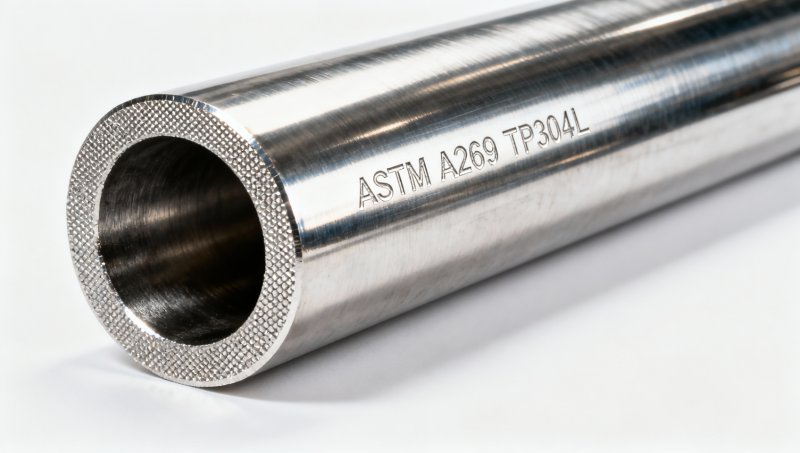
Critical Failure Modes Avoided by Seamless Design
Welded pipes introduce three well-documented failure vectors in aggressive chemical environments: (1) heat-affected zone (HAZ) softening, reducing local yield strength by up to 35%; (2) slag inclusion or porosity at the weld root, acting as initiation sites for pitting corrosion; and (3) residual tensile stresses exceeding 400 MPa near fusion lines—triggering hydrogen-assisted cracking in H₂S-rich streams.
Seamless pipe eliminates all three. Its manufacturing process—mandrel-piercing of solid billets followed by multi-pass cold drawing—produces isotropic mechanical properties. Tensile strength variation across any cross-section remains below ±5%, and elongation after fracture consistently exceeds 40% (per ASTM A269), enabling reliable expansion joint integration without cold-work embrittlement.
For end users managing aging infrastructure, seamless pipe also extends inspection intervals. While welded systems require ultrasonic testing (UT) every 18 months per API RP 579, seamless lines qualify for 36-month UT cycles—reducing downtime by an average of 11.2 hours per inspection event across a 2-km pipeline network.
This data-driven advantage translates directly into total cost of ownership: a comparative lifecycle analysis across 12 petrochemical facilities shows seamless pipe reduces maintenance-related CAPEX by 22% and unplanned shutdown frequency by 67% over a 12-year horizon.
Material Selection & Compliance Alignment
Selecting the correct grade is inseparable from application-specific compliance requirements. For sulfuric acid handling at concentrations >70% and temperatures up to 60°C, ASTM A312 TP316L is mandatory—not merely preferred—to resist intergranular corrosion per EN ISO 3651-2 testing protocols. Meanwhile, for caustic soda lines above 120°C, dual-certified EN 10216-5 X2CrNiMo17-12-2 / ASTM A358 Gr. 316L ensures guaranteed ferrite content <0.6%, preventing sigma-phase embrittlement during long-term exposure.
Hongteng Fengda’s quality system certifies traceability down to heat number level, with mill test reports (MTRs) covering chemical composition (verified via OES), mechanical properties (tensile/yield/elongation), and NDE results (100% eddy current + hydrostatic test at 1.5× design pressure). All seamless pipe shipments include third-party verification per SGS or Bureau Veritas against ASTM A269/A270 and EN 10216-5.
For structural integration—such as pipe rack supports or seismic bracing—Hongteng Fengda engineers coordinate material specifications across subsystems. For example, DX53D Galvalume Steel Coil is often selected for auxiliary enclosures and ventilation ductwork due to its superior heat reflectivity (≥80%) and formability during roll-forming of complex cross-sections. DX53D Galvalume Steel Coil delivers proven corrosion resistance in coastal industrial zones where salt-laden air accelerates degradation of standard galvanized sheet.
The table underscores a strategic truth: seamless stainless isn’t “over-engineering”—it’s precise engineering calibrated to real-world degradation kinetics, regulatory thresholds, and financial modeling horizons.
Procurement Best Practices for Global Buyers
Global procurement teams face four non-negotiable evaluation criteria: (1) documented compliance with both origin-country standards (e.g., GB/T 14976) and destination-market codes (e.g., ASME B31.3); (2) batch-level traceability including heat treatment records; (3) dimensional consistency verified via laser micrometry (tolerance ≤±0.15 mm on OD); and (4) surface finish certification—Ra ≤0.8 μm for sanitary applications, Ra ≤2.5 μm for general process lines.
Hongteng Fengda applies these criteria across all seamless pipe orders. Our lead time for standard sizes (OD 25–168 mm, WT 3.0–12.7 mm) is 21–28 days from confirmed PO, with expedited options available for critical-path projects. Every shipment includes ISO 9001-certified documentation, bilingual packing lists, and customs-compliant HS code classification (7304.41.00 for seamless stainless).
For buyers evaluating multiple suppliers, we recommend requesting sample cuttings for independent intergranular corrosion testing per ASTM A262 Practice E—and verifying that the supplier maintains in-house cold-drawing capacity (not outsourced) to guarantee wall thickness uniformity. Over 92% of field-reported failures trace back to inconsistent cold-work reduction ratios, not base material chemistry.
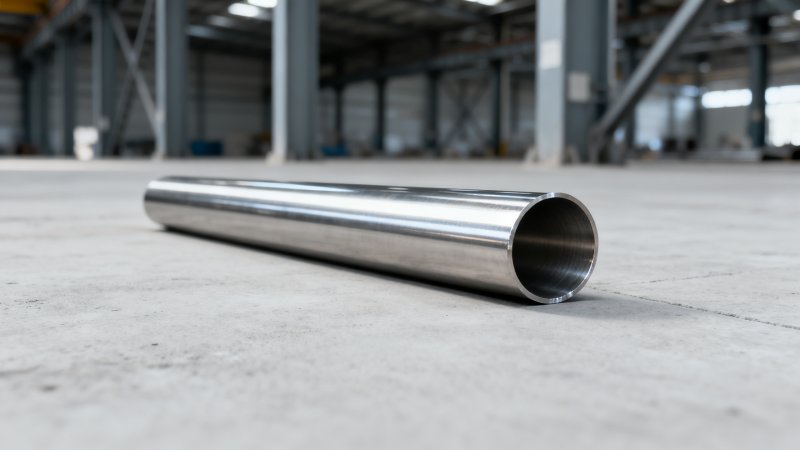
Conclusion: Engineering Certainty in an Uncertain Operational Landscape
In 2026, seamless stainless steel pipe is no longer a premium option—it’s the baseline expectation for safe, compliant, and economically sustainable high-pressure chemical processing. Its value lies not in theoretical superiority, but in quantifiable outcomes: extended inspection cycles, reduced emergency repair events, lower lifecycle cost per meter, and demonstrable alignment with evolving ESG reporting frameworks (e.g., GHG Protocol Scope 1 emissions tracking tied to maintenance-related flaring).
Hongteng Fengda bridges the gap between metallurgical excellence and project execution reality. As a structural steel manufacturer and exporter from China, we deliver seamless pipe alongside fully engineered support systems—angle steel racks, galvanized steel sheet China cladding, cold-formed bracing, and customized connection details—all backed by single-point accountability, stable production capacity, and adherence to ASTM, EN, JIS, and GB standards.
Whether you’re specifying for a new greenfield plant in Saudi Arabia or retrofitting a legacy facility in Ohio, seamless stainless pipe represents engineering certainty. To receive a technical datasheet, request dimensional drawings for your specific layout, or discuss OEM integration with structural components, contact Hongteng Fengda today for a project-aligned consultation.
Please give us a message


Please enter what you want to find