For business decision-makers in construction and industrial procurement, galvanized steel electrical conduit still matters because it combines mechanical strength, corrosion resistance, and long-term cost efficiency. In projects where safety, compliance, and dependable supply are critical, this proven solution continues to support reliable cable protection and stable project performance across demanding global markets.
Why a checklist matters before choosing galvanized conduit
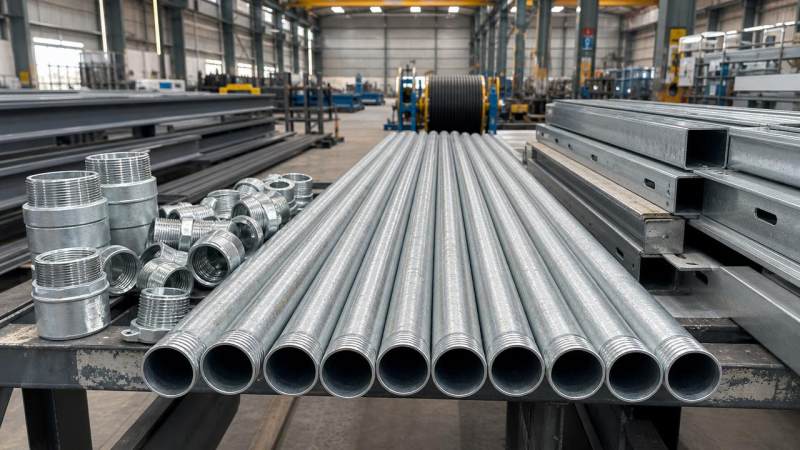
Selecting galvanized steel electrical conduit is rarely about one price line. It affects cable safety, installation speed, inspection results, maintenance exposure, and replacement cycles over many years.
A checklist approach reduces sourcing mistakes. It helps compare specification fit, coating quality, threading accuracy, standard compliance, and delivery reliability before site work begins.
In steel-intensive projects, conduit decisions also connect with broader structural choices. Material compatibility, corrosion environment, and fabrication sequencing all influence final performance.
Core checklist for evaluating galvanized steel electrical conduit
- Confirm the installation environment first. Review indoor, outdoor, humid, coastal, industrial, or mechanically exposed conditions before locking conduit grade, wall thickness, and protective expectations.
- Verify compliance with required standards. Check ASTM, EN, JIS, or local code alignment, plus documentation for dimensions, zinc coating, mechanical properties, and traceability.
- Inspect coating consistency carefully. Uniform galvanizing reduces premature rust points, supports longer service life, and improves confidence in exposed or semi-exposed installations.
- Check impact resistance and rigidity. Galvanized steel electrical conduit remains valuable where cables face crushing risk, accidental contact, vibration, or repeated maintenance access.
- Review thread quality and fitting compatibility. Poor threading slows installation, causes joint issues, and increases field rework, especially on large commercial or industrial jobs.
- Compare lifecycle cost instead of purchase cost only. Lower replacement frequency and stronger protection often offset a higher initial price against lighter alternatives.
- Assess supply stability early. Reliable production planning, packaging, and export experience matter when conduit must arrive with other structural steel materials on fixed schedules.
- Require clear inspection records. Mill certificates, coating reports, dimensional checks, and shipment identification make future audits and project closeout much easier.
What keeps galvanized conduit relevant in modern steel projects
The main reason galvanized steel electrical conduit still matters is practical performance. Steel conduit protects wiring against compression, impact, abrasion, and many forms of jobsite abuse.
Galvanizing adds a protective zinc layer. That coating helps slow corrosion in damp service areas, service corridors, equipment rooms, logistics facilities, and many outdoor transition points.
It also supports code-driven projects. Many engineers and contractors continue specifying steel conduit where fire behavior, grounding continuity, and mechanical security cannot be compromised.
For projects built around structural steel, material coordination matters. A supplier base familiar with steel processing, tolerance control, packaging, and export documentation often improves procurement efficiency.
That same coordination often extends to secondary members. For example, in steel workshops and roofing systems, Z-beam sections are widely used for purlins, wall beams, brackets, and lightweight roof support.
Typical options include perforated and non-perforated Z-shaped steel profiles in Q235B, Q345B, S275, S355, A36, and A572 grades, with 6-25mm thickness, 2~12m length, galvanized coating, and CE, SGS, BV, or ISO support.
Application notes by project scenario
Commercial buildings and public infrastructure
In commercial buildings, galvanized steel electrical conduit is often chosen for risers, service rooms, parking levels, and exposed utility zones. These spaces demand durable cable protection and straightforward inspections.
Where renovation is expected, steel conduit also helps future maintenance. It tolerates crowded service environments better than many lighter raceway choices.
Industrial plants and manufacturing lines
Factories expose electrical systems to vibration, equipment movement, dust, and accidental contact. Galvanized steel electrical conduit performs well where wiring must stay protected near machinery and structural frames.
In these environments, mechanical reliability often outweighs lowest upfront cost. Downtime from damaged circuits can quickly exceed any initial material savings.
Outdoor and semi-exposed steel structures
Canopies, warehouses, utility yards, and transfer areas frequently expose conduit to moisture, temperature swings, and incidental impact. Galvanized surfaces help extend service life under these changing conditions.
Site design should still address drainage, support spacing, sealing, and junction protection. Coating protection works best when installation details are equally disciplined.
Commonly overlooked risks
- Ignore coating damage after transport, and corrosion may begin before installation. Packaging quality and unloading method deserve the same attention as mill specification.
- Assume all conduit fittings match, and field crews may lose time correcting thread mismatch or connector incompatibility across mixed supply batches.
- Focus only on unit price, and long-term value becomes distorted. Lower-cost options can increase maintenance, replacement, and inspection concerns later.
- Overlook documentation, and approval delays may appear during inspection or export-controlled projects. Certification should move with the shipment, not arrive afterward.
- Treat environment classification too loosely, and the selected galvanized steel electrical conduit may underperform in coastal, chemical, or persistently wet service areas.
Practical execution steps for better sourcing and installation
- Map each installation zone by exposure level, access condition, and mechanical risk before sending inquiries or approving substitutions.
- Request technical details covering standard, wall thickness, finish, tolerances, accessories, and packing method in one comparable quotation sheet.
- Match conduit procurement with structural steel schedules so deliveries support installation sequence, storage space limits, and site lifting plans.
- Inspect random samples on arrival for thread quality, coating continuity, straightness, identification marks, and packaging-related damage.
- Record approved suppliers with proven export execution, consistent quality control, and familiarity with international steel standards.
Companies supplying wider steel systems can simplify this process. Hongteng Fengda, a China-based structural steel manufacturer and exporter, supports global construction and industrial projects with angle steel, channel steel, steel beams, cold formed profiles, and customized components produced under strict quality control.
With compliance experience across ASTM, EN, JIS, and GB standards, such support helps reduce sourcing risk, improve specification clarity, and maintain dependable lead times for international buyers.
Conclusion and next action
Galvanized steel electrical conduit still matters because it solves real project problems: cable protection, corrosion resistance, code confidence, and long-term operating value. Its relevance remains strong wherever steel construction meets demanding service conditions.
Use a checklist before confirming supply. Review environment, standards, coating, fittings, documentation, and delivery capability together. That approach leads to better technical fit and fewer surprises on site.
When conduit decisions align with broader structural steel procurement, project execution becomes more predictable. The next useful step is to compare compliant specifications, verify inspection records, and confirm supply readiness before purchase release.
Please give us a message


Please enter what you want to find