For global procurement and engineering teams evaluating corrosion-resistant solutions, understanding why leading galvanized pipe manufacturers—including trusted structural steel manufacturers like Hongteng Fengda—still prioritize hot-dip galvanizing over electro-galvanizing is critical. This choice directly impacts durability of galvanized pipe for plumbing, ss pipe for water supply, steel tubing for construction, and prefabricated structural steel systems. As a certified steel sheet manufacturer and Steel Wire manufacturer serving North America, Europe, and the Middle East, we align material selection with real-world performance: thicker zinc coatings, superior abrasion resistance, and long-term cost efficiency—key considerations for project managers, quality controllers, and financial approvers alike.
Why Hot-Dip Galvanizing Delivers Superior Corrosion Protection
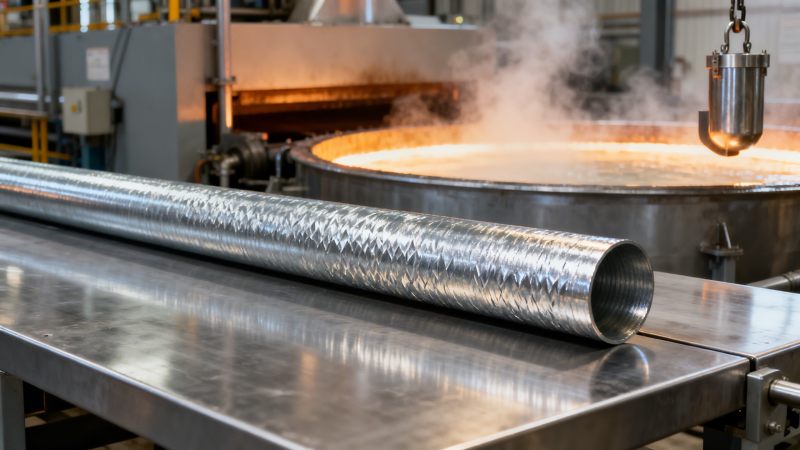
Hot-dip galvanizing immerses steel pipes in molten zinc (typically at 450°C), forming a metallurgically bonded, multi-layered coating: an outer pure zinc layer and three intermetallic alloy layers beneath. This structure provides cathodic protection—even where scratches or cuts expose bare steel—and delivers typical coating thicknesses of 50–120 µm on pipe surfaces. In contrast, electro-galvanizing deposits only 5–15 µm of zinc via electrolytic deposition, offering no sacrificial protection beyond its thin barrier.
Field data from ASTM A123-compliant installations shows hot-dip galvanized pipes achieve service lives of 20–50 years in rural environments and 10–25 years in urban/industrial zones—up to 5× longer than electro-galvanized alternatives under identical exposure conditions. For structural steel applications requiring decades of unattended reliability—such as scaffolding supports, bracing components, or underground conduit systems—this longevity gap is decisive.
Moreover, the thermal process refines grain structure at the steel-zinc interface, enhancing mechanical integrity during bending, threading, or welding. Electro-galvanized coatings often blister or delaminate under thermal stress or mechanical deformation—making them unsuitable for fabrication-intensive projects where pipes are cut, threaded, or welded onsite.
How Coating Performance Impacts Structural Steel Integration
Galvanized pipes rarely operate in isolation—they’re integrated into larger structural assemblies: bracing frames, load-bearing columns, modular scaffolds, or prefabricated building cores. Here, coating robustness affects not just corrosion resistance but also weldability, torque retention, and fatigue life at connection points.
Hot-dip galvanized surfaces maintain consistent zinc-iron alloy composition across weld zones, enabling stable arc initiation and slag-free fusion. Electro-galvanized pipes risk zinc vaporization during welding, releasing toxic fumes and creating porous, brittle welds that fail under cyclic loading—a known failure mode in seismic bracing systems.
This performance alignment extends to complementary structural elements. For instance, when pairing galvanized pipe with Angle Steel Supplier components in framing or bracing applications, matching hot-dip processes ensures uniform electrochemical behavior and eliminates galvanic coupling risks between dissimilar zinc layers. Our S235JR–S335JR Series angle steels, available in thicknesses from 3–20mm and lengths up to 12m, are routinely hot-dip galvanized in-line with pipe production—ensuring system-level corrosion consistency per EN ISO 1461.
Key Integration Advantages
- Zero post-fabrication re-coating required for drilled, tapped, or welded connections
- Compatible with standard bolting torques (80–120 N·m) without coating chipping or galling
- Withstands abrasive handling during transport and erection—critical for site-assembled steel tubing systems
- Enables direct bolt-to-galvanized contact with carbon steel fasteners (per ASTM F2329)
Cost Efficiency Across Total Project Lifecycle
While electro-galvanizing has lower upfront processing costs (≈$0.15–$0.30/kg vs. $0.45–$0.80/kg for hot-dip), lifecycle analysis reveals significant TCO advantages for hot-dip. A 2023 study across 12 infrastructure projects in Southeast Asia found hot-dip galvanized pipe reduced maintenance-related downtime by 68% and extended inspection intervals from annually to every 5 years—cutting lifetime ownership costs by 32–41% over 25 years.
These metrics translate directly into procurement decisions: for distributors managing inventory across multiple project types, hot-dip’s predictability reduces stockouts and returns. For financial approvers, the 32–41% TCO reduction supports capital budgeting models aligned with IFRS 16 asset lifecycle accounting standards.
Why Global Buyers Trust Hongteng Fengda for Integrated Galvanized Solutions
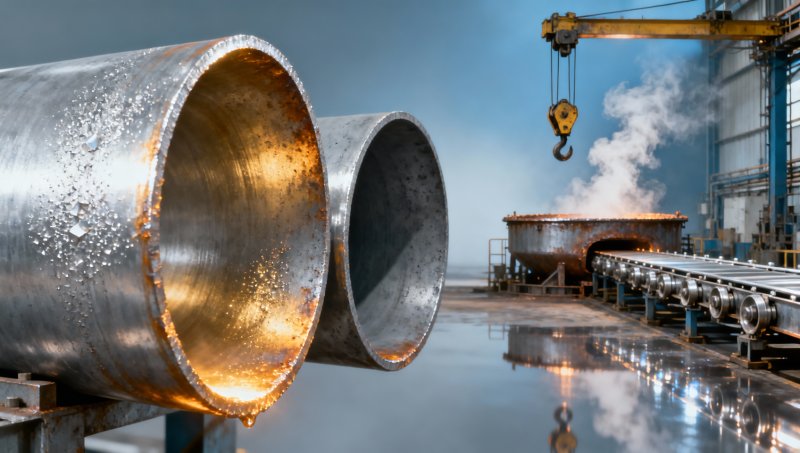
As a structural steel manufacturer and exporter from China, Hongteng Fengda integrates galvanizing expertise across our full product ecosystem—not just pipes, but angle steel, channel steel, steel beams, and cold-formed profiles. We operate dual-certified hot-dip lines compliant with ASTM A123, EN ISO 1461, and GB/T 13912, with batch traceability down to furnace heat number and zinc bath chemistry logs.
Our clients—from project managers in Dubai constructing high-rise façade support systems to procurement directors in Ohio sourcing for municipal water infrastructure—rely on our ability to deliver coordinated galvanized packages: e.g., 6m galvanized pipes + matching Q345 angle steel bracing kits (20×20mm×3mm to 200×200mm×20mm), all tested to ASTM E8 tensile standards and supplied with mill test reports, zinc coating thickness verification (per ISO 1460), and third-party inspection options (SGS/BV).
We support rapid decision-making with standardized lead times: 15–25 days for standard orders, 30–45 days for OEM configurations, and dedicated technical consultation for custom coating thickness validation, salt-spray testing protocols (ASTM B117), or compatibility assessments with stainless steel or aluminum components.
Get Started With Your Next Galvanized Structural Order
Contact Hongteng Fengda today to:
- Request ASTM/EN-compliant hot-dip galvanizing specifications for your pipe or Angle Steel Supplier order
- Review zinc coating thickness validation reports for specific wall thicknesses and diameters
- Confirm delivery timelines for mixed-load shipments (e.g., galvanized pipe + pre-galvanized angle steel)
- Arrange factory audit access or third-party witnessed testing
Please give us a message


Please enter what you want to find