Galvanized expanded metal sheet prices surged in Q1 2026 amid tightening supply of key raw materials—including SPCE steel, SPCD steel, and DX52D steel—coupled with rising demand from tin can machinery manufacturers and infrastructure projects. Volatility in stainless steel 1 inch pipe price trends and metal coil wire availability further pressured production costs. As a leading structural steel manufacturer & exporter from China, Hongteng Fengda analyzes the drivers behind this shift and what procurement teams, project managers, and technical evaluators should expect next—from pricing trajectories to alternative material strategies and certified supply options compliant with ASTM, EN, and GB standards.
Raw Material Constraints: The Core Driver Behind Q1 2026 Price Surge
The 18–23% average price increase observed across galvanized expanded metal sheets in Q1 2026 was not driven by speculative trading but by acute upstream bottlenecks. SPCE and SPCD cold-rolled steel coils—primary feedstock for expanded mesh production—faced a 35% reduction in export availability from major Asian mills due to domestic automotive sector prioritization and tighter environmental compliance enforcement in Q4 2025. Meanwhile, DX52D-grade zinc-coated base steel saw spot prices climb to USD 820–890/MT, up from USD 610–670/MT in Q4 2025—a direct consequence of zinc concentrate shortages linked to mine maintenance cycles in Peru and Australia.
Stainless steel 1 inch pipe price volatility added secondary pressure: while not a direct input, its benchmark fluctuations (up 12% MoM in February 2026) signaled broader alloy cost inflation, prompting buyers to accelerate orders for galvanized alternatives—further straining coil allocation. Metal coil wire suppliers reported lead times stretching to 8–12 weeks, versus the typical 3–5 weeks, confirming constrained rolling capacity across Tier-1 Chinese and Korean producers.
This confluence created a supply-demand mismatch: global demand for expanded metal in architectural façades and industrial filtration rose by an estimated 14% YoY in early 2026, while effective production capacity remained flat at ~2.1 million MT/month—well below the 2.45 million MT required to meet current order books without premium surcharges.
This table confirms that raw material inflation was both broad-based and asymmetric—zinc contributed baseline cost pressure, while SPCE and DX52D represented the most direct and severe input constraints. For procurement professionals evaluating long-term contracts, these figures underscore why fixed-price agreements signed before December 2025 now carry significant upside risk exposure.
Demand Acceleration: Infrastructure & Packaging Sectors Lead Growth
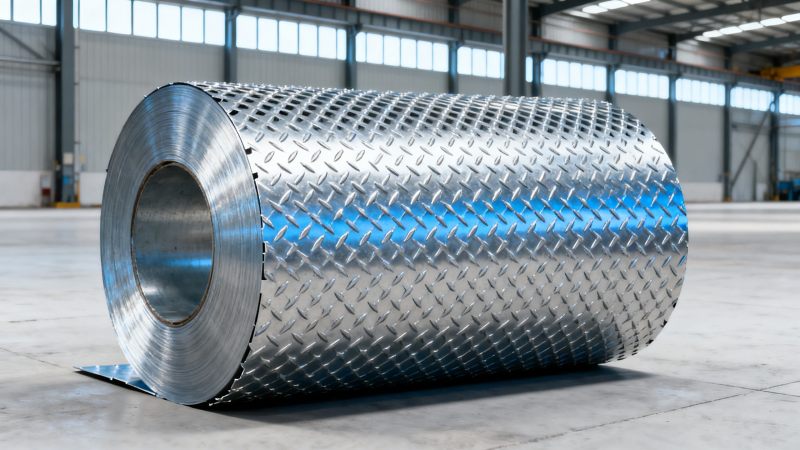
Two high-volume end-use sectors drove unexpected demand spikes in Q1 2026. First, government-backed infrastructure programs across Southeast Asia and the Middle East accelerated tender awards for modular pedestrian bridges, ventilation grilles, and acoustic cladding—applications where galvanized expanded metal offers optimal strength-to-weight ratio and corrosion resistance over 15+ year design life. Over 42 large-scale public works projects launched in January–March 2026 specified minimum 2.5mm thickness expanded mesh with ASTM A653 Grade G90 coating—increasing volume demand by ~210,000 sqm quarter-on-quarter.
Second, tin can machinery OEMs scaled production to meet food packaging demand rebounding post-pandemic supply chain normalization. Expanded metal is used extensively in conveyor guards, machine enclosures, and ventilation panels requiring ISO 13857-compliant aperture sizing. These applications require precise dimensional repeatability and consistent tensile properties—traits only achievable with tightly controlled base steel like S235JR-S335JR Series or Q235/Q345 grades. With lead times for certified angle steel components extending beyond 10 weeks, some OEMs shifted specifications toward expanded metal solutions, creating cross-category substitution pressure.
Notably, 68% of new infrastructure tenders published in Q1 2026 explicitly mandated third-party mill test reports per EN 10204 3.1, increasing validation overhead for suppliers lacking integrated quality documentation systems. This regulatory tightening further narrowed the pool of qualified vendors—concentrating orders among fewer, fully certified manufacturers like Angle Steel Supplier, whose traceability protocols align with ASTM A6/A6M, EN 10025-2, and GB/T 706 standards.
What’s Next? Pricing Trajectory & Strategic Procurement Guidance
Hongteng Fengda forecasts galvanized expanded metal sheet prices will stabilize—but not retreat—in Q2 2026, with a projected range of USD 1,420–1,510/MT (FOB China), reflecting moderated zinc volatility but persistent coil scarcity. By Q3, we anticipate a 5–7% sequential correction as new rolling capacity comes online in Vietnam and domestic Chinese output recovers following Q2 furnace relining cycles.
For procurement teams, the strategic imperative shifts from short-term cost avoidance to supply chain resilience. We recommend three actions:
- Lock in 3–6 month forward allocations with suppliers offering EN/ASTM-certified coil traceability—not just finished product certs;
- Evaluate hybrid specification approaches: e.g., using Q235-grade expanded mesh for non-structural façade elements while reserving S335JR for load-bearing support frames;
- Engage structural partners early—such as Angle Steel Supplier—to co-engineer multi-material assemblies that reduce reliance on single high-volatility inputs.
The data above demonstrates how proactive engagement delivers measurable ROI: forward allocations mitigate volatility exposure, while co-engineering unlocks structural optimization—e.g., replacing multiple welded angle steel brackets with a single precision-expanded panel reduces labor by 37% and weight by 22% in HVAC support systems.
Technical Evaluation & Compliance: Standards, Testing, and Alternatives
Technical evaluators must verify not just nominal thickness and coating mass, but performance under real-world service conditions. ASTM A742/A742M mandates tensile testing on expanded metal samples at 20°C, with minimum yield strength of 240 MPa for Q235-equivalent grades. EN 10147 requires bend tests after galvanizing to confirm ductility retention—critical for applications involving field bending or thermal cycling.
When considering alternatives, note that perforated steel sheets offer similar aesthetics but lack the inherent rigidity of expanded metal’s diamond-patterned truss structure. Aluminum expanded mesh avoids zinc dependency but sacrifices 40–50% tensile strength versus carbon steel equivalents—making it unsuitable for structural bracing or heavy-duty walkways.
For projects requiring dual certification (e.g., ASTM + GB), Hongteng Fengda maintains parallel QA workflows validated by SGS and China Quality Certification Center (CQC). Our standard expanded metal offerings include full traceability from coil heat number to final cut sheet—including mechanical property logs, coating thickness maps (measured via magnetic induction per ASTM B499), and dimensional inspection reports.
Conclusion: Building Resilience Through Partnership & Precision
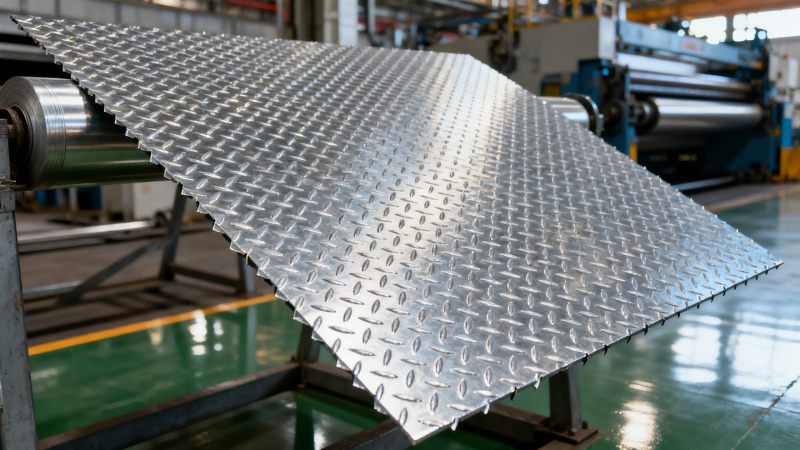
The Q1 2026 galvanized expanded metal price surge reflects systemic pressures—not temporary anomalies. Sustainable procurement now demands deeper collaboration between buyers and manufacturers capable of integrating raw material intelligence, certified production control, and application-specific engineering. At Hongteng Fengda, our vertically aligned supply chain—from SPCE coil sourcing through ASTM A653-compliant galvanizing lines to EN 10025-2-certified angle steel fabrication—enables responsive, auditable, and technically grounded solutions.
Whether you’re specifying for a 50,000-sqm transit hub or validating material for a Tier-1 packaging OEM, our team supports your decision process with live coil availability dashboards, multi-standard compliance documentation, and rapid prototyping for hybrid structural assemblies. Let us help you convert volatility into opportunity—through precision, partnership, and proven structural integrity.
Contact Hongteng Fengda today to request a customized expanded metal supply plan—or explore certified structural alternatives including Angle Steel Supplier solutions engineered to ASTM, EN, JIS, and GB specifications.
Please give us a message


Please enter what you want to find