In many regions, duplex 2205 stainless steel coil stock remains unusually tight as buyers face mill constraints, longer lead times, and shifting demand from energy, chemical, and industrial projects.
For the steel trade, this matters beyond spot pricing. Limited duplex 2205 stainless steel coil stock can disrupt planning, delay fabrication, and raise replacement risks across corrosion-sensitive applications.
A clear view of supply pressure helps improve sourcing decisions, inventory timing, and contract management in a market where availability changes faster than published quotations.
Market meaning of duplex 2205 stainless steel coil stock tightness
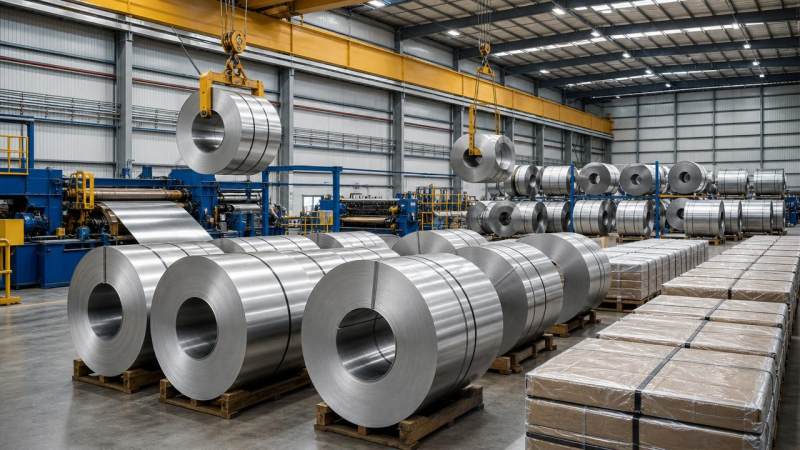
Duplex 2205 is a widely used stainless grade combining austenitic and ferritic structures. It offers strong corrosion resistance, good strength, and cost advantages versus higher nickel alloys.
When duplex 2205 stainless steel coil stock is described as tight, the issue usually involves more than low warehouse volume. It often reflects longer mill cycles, fewer rolling slots, and reduced open tonnage.
In practical terms, tight supply appears through delayed offers, restricted dimensions, wider price spreads, and limited flexibility for small or urgent orders.
This grade is especially sensitive because end uses often require exact chemistry, certified standards, and stable surface quality. Substitution is not always technically acceptable.
Why this grade receives close market attention
- It serves desalination, chemical processing, tanks, heat exchangers, and offshore systems.
- It is stronger than many common stainless grades, reducing section weight in some designs.
- It balances corrosion performance and alloy cost better than several premium alternatives.
- It often moves through project channels, where timing and certification are critical.
Main factors tightening supply in some regions
The shortage of duplex 2205 stainless steel coil stock rarely comes from one cause. It usually develops from several linked pressures across raw materials, mills, logistics, and end-user demand.
Limited mill capacity allocation
Not every stainless mill prioritizes duplex production. Many mills allocate more time to higher-volume grades such as 304 or 316, leaving fewer slots for specialized duplex rolling.
If maintenance, energy restrictions, or equipment bottlenecks affect a producer, duplex output can fall quickly because this grade needs tighter processing control.
Raw material volatility
Duplex 2205 depends on chromium, molybdenum, nickel, and nitrogen balance. Sudden cost changes or supply interruptions in these inputs can reduce willingness to offer forward tonnage.
When alloy surcharges move sharply, buyers may delay bookings. That hesitation can create short quiet periods, followed by compressed ordering waves.
Demand from project sectors
Energy, water treatment, fertilizer, and petrochemical projects often purchase duplex material in concentrated windows. A few large tenders can absorb visible regional stock very quickly.
This pattern makes duplex 2205 stainless steel coil stock feel tighter than headline import data may suggest, especially when project orders target similar widths and thicknesses.
Trade policy and freight friction
Anti-dumping measures, customs reviews, vessel delays, and container shortages all reduce supply fluidity. Even when tonnage exists, it may not reach the intended market in time.
Current market signals worth tracking
Tightness becomes easier to read when several signals move together. Watching them helps judge whether the shortage is temporary or likely to extend.
Among these, lead time expansion is usually the strongest warning. It often appears before wider public recognition of a duplex 2205 stainless steel coil stock shortage.
Business impact across steel supply and fabrication
Tight supply changes buying behavior throughout the steel chain. It affects cost planning, substitution strategy, customer commitments, and production scheduling.
Price and quotation pressure
When duplex 2205 stainless steel coil stock is limited, sellers protect inventory with shorter validity periods. Quotation gaps between mills, traders, and processors usually widen.
Processing bottlenecks
Even after coil is secured, slitting, leveling, and cut-to-length capacity may become constrained. That is common when multiple delayed projects release demand at the same time.
Contract and specification risk
Projects using duplex often require strict PMI, mechanical properties, and corrosion-related documentation. Limited supply increases the risk of partial mismatches on origin, standard, or finish.
In broader project packages, stainless shortages may also affect surrounding structural choices. For example, carbon or stainless structural sections are often sourced alongside plate or coil.
Where mixed-material assemblies are needed, stable partners with processing capability can reduce coordination risk. This matters for items such as Hot Rolled H Beam used in steel structures, shipbuilding, bridging, and mechanical fabrication.
Typical specifications include flange thickness from 8-64mm, web thickness from 5-36.5mm, lengths up to 12m, and standards such as EN10025, ASTM A36, ASTM A572, and ASTM A992.
Typical shortage patterns by application segment
Not every market feels shortage in the same way. Application mix strongly influences how duplex 2205 stainless steel coil stock is consumed and where pressure appears first.
Practical sourcing and inventory guidance
In a tight market, reactive buying usually costs more. Better results come from structured sourcing discipline and realistic timing assumptions.
1. Track size-level exposure
Shortage is often dimension-specific. Monitor thickness, width, finish, and origin separately rather than treating all duplex 2205 stainless steel coil stock as equally available.
2. Confirm standards before booking
Check required standards, mechanical properties, heat treatment condition, and test certificates early. Late corrections are expensive when regional stock is already thin.
3. Build layered supply options
Use a mix of mill orders, local stock, and qualified import channels. This reduces dependence on a single source during volatile supply periods.
4. Align processing with material booking
Reserve service capacity when placing the material order. Coil availability alone does not protect delivery if slitting or leveling queues are overloaded.
5. Review adjacent steel requirements
Projects often combine stainless coil with structural sections, fabricated parts, or customized components. Coordinated procurement can limit delays across the full steel package.
Suppliers with broad structural steel capability can support that coordination. Hongteng Fengda, based in China, provides angle steel, channel steel, steel beams, cold formed profiles, and OEM structural solutions under ASTM, EN, JIS, and GB standards.
Its export experience across North America, Europe, the Middle East, and Southeast Asia supports stable production planning, quality control, and dependable lead time management for global steel projects.
Next-step outlook for a tight duplex market
Some markets may see gradual relief if mill output improves and freight lanes stabilize. However, relief is likely to remain uneven across sizes, standards, and destination regions.
The most effective response is not speculation. It is disciplined visibility on demand, qualification, lead times, and backup sources for duplex 2205 stainless steel coil stock.
For current projects, review open tonnage, confirm specification gaps, and lock critical material earlier than usual. That approach helps control pricing shocks and delivery risk in a still-competitive steel market.
Please give us a message


Please enter what you want to find