HRC steel price surges—up 12% in Q1 2026—have sent ripples across global procurement and construction planning. With Hot Rolled Coil price volatility impacting budgets for carbon steel for construction, high strength steel rebar, and corrosion resistant rebar, buyers are urgently reassessing supply strategies. As a trusted steel profile manufacturer and structural steel exporter from China, Hongteng Fengda helps procurement professionals, project managers, and enterprise decision-makers navigate pricing shifts while ensuring access to ASTM/EN-compliant products—from corrosion resistant carbon steel to custom steel beams. What’s driving this jump—and how can your team secure cost stability and timely delivery? Let’s break it down.
What triggered the 12% HRC price surge in Q1 2026?
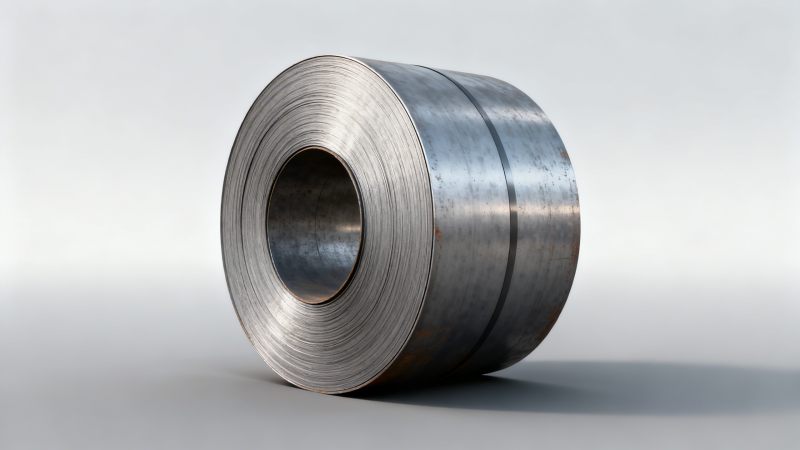
Three interlocking factors converged in early 2026: first, Chinese domestic steel demand spiked by 9–14% YoY due to accelerated infrastructure stimulus—especially in rail transit, urban renewal, and green energy grid projects. Second, raw material costs rose sharply: iron ore prices climbed 18% on tightened supply from Brazil and Australia, while coking coal imports faced 7–10 day port delays at major Chinese terminals. Third, environmental compliance upgrades at over 32% of northern Chinese blast furnaces reduced effective output capacity by an estimated 4.2 million tonnes in Q1 alone.
This wasn’t isolated to China. EU anti-dumping duties on certain Asian-origin HRC were renewed in February 2026, tightening regional availability. Meanwhile, U.S. import volumes dropped 11% MoM in March—partly due to stricter CBP inspections on mill certifications—pushing buyers toward alternative sources with verifiable traceability and multi-standard compliance.
For structural steel users, the ripple effect is direct: every $50/tonne increase in HRC translates to ~$18–$25/tonne rise in finished angle steel, channel sections, or custom beams—especially those requiring secondary processing like cutting, drilling, or galvanizing. That’s why forward-looking teams are now prioritizing suppliers with integrated production control—not just mill access.
How does this impact procurement decisions for structural components?
Procurement professionals face three immediate trade-offs: cost vs. lead time, specification flexibility vs. certification assurance, and volume commitment vs. inventory risk. For example, standard Q195 angle steel orders placed in late January 2026 experienced average lead times of 22–28 days—up from 14–18 days in Q4 2025. But locking in Q2 volumes at Q1 pricing secured up to 6.5% effective cost savings versus spot-buying in April.
More critically, technical evaluators and project managers report rising scrutiny on mill test reports (MTRs), especially for applications in seismic zones or marine environments. Buyers now routinely verify EN 10025-2:2021 or ASTM A6/A6M-23 conformance—not just grade labeling. This makes end-to-end traceability—from billet heat number to final packaging—non-negotiable for power piping, transmission towers, and busbar support installations.
The table above reflects real procurement benchmarks observed across North America and Southeast Asia in Q1 2026. It shows why forward-planning buyers increasingly favor partners with both upstream control (rolling mill integration) and downstream agility (cutting, surface treatment, logistics coordination).
Which applications benefit most from stable angle steel supply?
Stable, certified angle steel is mission-critical where structural integrity intersects with tight schedules—especially in transmission towers, lifting machinery frames, and container rack systems. These applications demand consistent mechanical properties across batches: tensile strength variation must stay within ±35 MPa, and dimensional tolerances cannot exceed ±0.8mm for flange width or ±0.5mm for thickness (per EN 10056-1). Hongteng Fengda’s HT-series profiles—including models HT220 through HT2000—are engineered to meet these thresholds across all surface finishes: black, pickled, blasted, or polished.
For industrial furnace linings and reaction towers, corrosion resistance isn’t optional—it’s built into material selection. While Q195 offers economical strength for general framing, projects specifying ASTM A53 Grade B or Q345 require tighter chemical controls (e.g., S ≤ 0.035%, P ≤ 0.030%) and Charpy V-notch testing at –20°C. Our production line supports seamless transition between grades without compromising delivery timelines—critical for EPC contractors managing parallel workstreams.
- Cable trench supports: Require precise length consistency (±2mm over 6m span) and surface uniformity for bolt alignment—HT737 and HT1250 deliver repeatable flatness.
- Warehouse shelves: Need high yield strength under cyclic loading—HT1400 and HT1600 provide ≥345 MPa YS with minimal camber (≤1.5mm/m).
- Power piping brackets: Must pass salt-spray testing ≥500 hours—achieved via Z350 hot-dip galvanizing on HT550 and HT880.
Why partner with Hongteng Fengda during volatile pricing cycles?
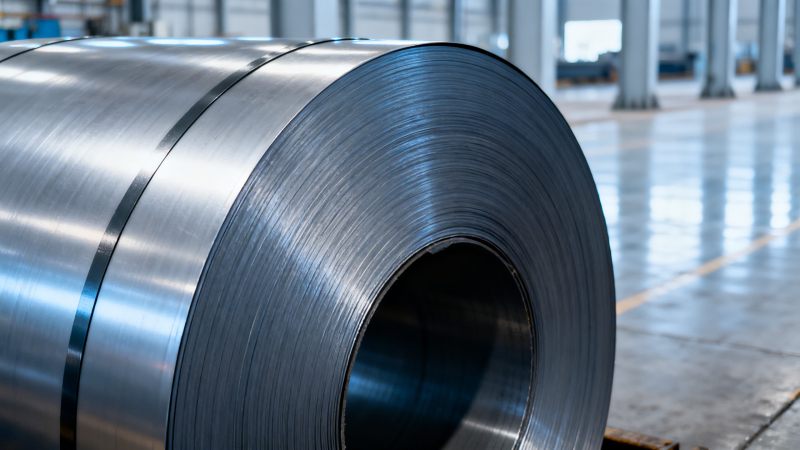
Because volatility demands more than competitive quotes—it requires predictability you can build plans around. Hongteng Fengda operates two fully integrated structural steel facilities in Shandong and Hebei, each with dedicated HRC pre-processing lines, automated sawing centers, and ISO 9001-certified QA labs. We maintain strategic inventory buffers of key grades—including Q195, Q235, and Q345—to absorb short-term market shocks without passing full cost increases to clients.
Our OEM service model supports rapid iteration: from engineering drawings to prototype beam samples in ≤7 working days, and full production launch in 12–16 days—even for non-standard equal/unequal leg configurations. Every shipment includes full traceability: heat number, rolling date, chemical analysis, mechanical test results, and third-party inspection reports (SGS/BV upon request).
Whether you’re evaluating cost alternatives for corrosion resistant carbon steel, validating EN-compliant specs for a Middle East refinery project, or sourcing ASTM A6-compliant beams for a U.S. data center expansion—we align our capacity, compliance, and responsiveness to your timeline—not the commodity index.
Ready to lock in Q2 pricing or validate specifications?
Contact our technical sales team today for:
- Free cross-reference of your current spec against ASTM/EN/GB equivalents
- Lead time confirmation for HT-series angle steel (including HT220, HT737, HT1250, etc.)
- Sample kits with full MTRs and dimensional verification reports
- Custom quote for cut-to-length, galvanized, or welded assemblies
Please give us a message


Please enter what you want to find