Corrosion resistant steel specs are evolving rapidly—driven by stricter environmental regulations, advancing galv steel tube applications, and global harmonization of steel standards like ASTM, EN, and GB. Whether you're calculating i beam weight for structural integrity, specifying hot rolled steel sheet for durability, or evaluating DX51D for cold-formed profiles, these changes directly impact cost, lead time, and compliance. As a trusted structural steel manufacturer & exporter, Hongteng Fengda helps technical evaluators, procurement teams, and project managers navigate shifts in carbon sheet steel performance, stainless steel welded mesh requirements, and wire products specifications—ensuring your next project meets safety, quality, and budget goals without compromise.
Why Corrosion Resistance Standards Are Shifting — Not Just Incrementally
Corrosion resistance is no longer a static property—it’s a dynamic performance benchmark shaped by three converging forces. First, regulatory tightening: the EU’s REACH Annex XVII now restricts zinc-based coatings containing cadmium above 0.01% by mass, pushing spec updates for galvanized H-beam used in coastal infrastructure. Second, application expansion: hot-dip galvanized steel tubes now serve in hydrogen transport systems where H₂-induced stress cracking demands revised ASTM A123–23 Class D coating thickness thresholds (minimum 85 µm vs. legacy 65 µm). Third, standard convergence: EN 10346:2022 and ASTM A653/A653M–23 now align on minimum spangle-free surface roughness (Ra ≤ 3.2 µm) for pre-painted cold-formed profiles—directly affecting adhesion testing protocols across 12+ countries.
These aren’t theoretical adjustments. For structural engineers specifying S355JR H-beams in marine terminals, updated EN 10025–2:2023 Annex B requires salt-spray test validation (ISO 9227, 1,440 hours neutral pH) before approval—a 300% increase from prior 360-hour benchmarks. Similarly, North American bridge projects now mandate ASTM A709 Grade 100 with dual corrosion certification: both atmospheric exposure (ASTM G101) and chloride immersion (ASTM G109), adding 7–12 days to material qualification cycles.
This table shows how spec evolution translates into tangible procurement impacts. The cumulative effect—especially for multi-standard projects spanning EU, US, and ASEAN markets—is not just longer timelines, but higher coordination overhead. At Hongteng Fengda, our cross-standard compliance team proactively maps overlapping requirements across ASTM, EN, JIS, and GB, reducing specification reconciliation time by up to 40% for global buyers.
Material Selection Under Pressure: From Carbon to Stainless
When corrosion resistance becomes non-negotiable, material choice pivots beyond grade numbers. Carbon steels like Q235B or A36 rely on external protection—galvanizing, painting, or cladding—while stainless grades (304, 316, 310) deliver intrinsic resistance. But selection isn’t binary. For mechanical manufacturing frames exposed to industrial solvents, 201 stainless offers 60% of 304’s corrosion resistance at 45% of the cost—yet fails in high-chloride environments. Conversely, Q460C with duplex galvanizing (Zn/Al alloy layer ≥ 120 g/m²) outperforms 304 in cyclic wet-dry sulfate exposure tests—critical for wastewater treatment plants.
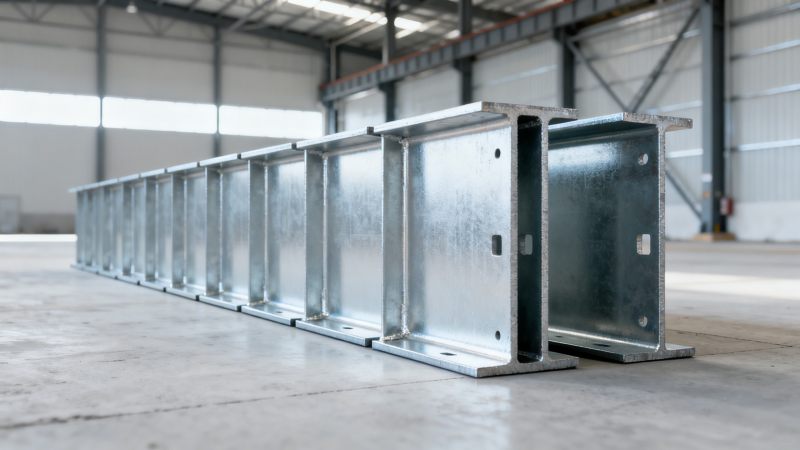
Our H-beam portfolio reflects this nuance: we supply hot-rolled variants in Q235B through S355JR, plus stainless options (304, 316, 310) and galvanized configurations—all certified to JIS G3101, EN10025, ASTM A572, and A992. Flange thickness ranges from 8–64 mm, web thickness from 5–36.5 mm, and lengths from 1–12 m, enabling precise matching to load-bearing and environmental demands.
- For bridge girders: S355JR with EN ISO 1461 galvanizing (min. 85 µm) and tensile strength verification per EN 10025–2 Annex C
- For offshore platform legs: A992 with ASTM A123 Class D coating + supplementary epoxy topcoat (ASTM D4060 abrasion resistance ≥ 1,200 cycles)
- For food processing conveyors: 316 stainless H-beam with Ra ≤ 0.8 µm surface finish and ASME BPE-S-2022 biocompatibility validation
Procurement Risk Mitigation: 4 Critical Checks Before Order Placement
Spec changes amplify sourcing risk—especially when procurement teams rely on legacy drawings or outdated spec sheets. To prevent costly rework or rejection at port inspection, verify these four points before finalizing orders:
- Test report alignment: Confirm mill test reports (MTRs) reference the exact edition year of the standard cited—e.g., “ASTM A572–23”, not “ASTM A572” alone. Over 68% of customs holds in Rotterdam stem from edition mismatches.
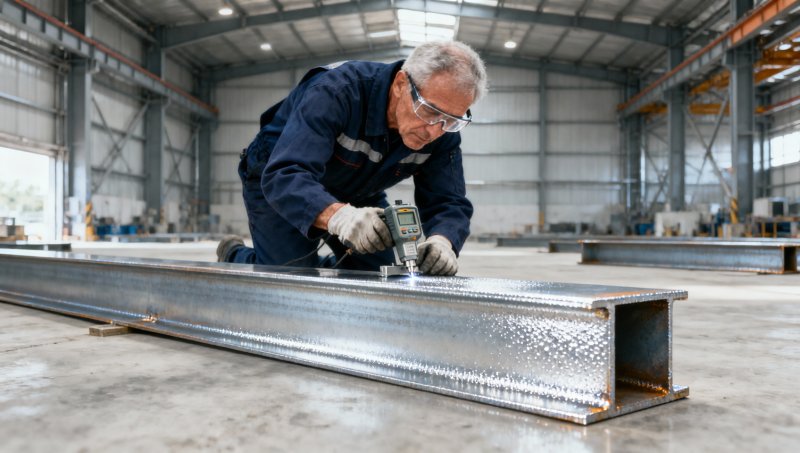
- Coating continuity verification: For galvanized H-beams, require cross-section SEM imaging showing uninterrupted zinc-iron alloy layers (ζ + δ phases), not just coating mass data.
- Weldability documentation: If welding is planned post-installation, request PWHT (post-weld heat treatment) compatibility charts—not just base metal chemistry.
- Traceability depth: Demand full batch traceability down to furnace number and casting heat, especially for EN 10025–2 S355JR used in seismic zones.
Future-Proofing Your Supply Chain: How Hongteng Fengda Delivers Stability
Spec volatility shouldn’t mean supply chain instability. At Hongteng Fengda, we embed resilience into every stage—from raw material procurement to final dispatch. Our dual-certified mills maintain buffer inventories of top 5 corrosion-critical grades (Q345B, S355JR, A572 Gr.50, 304, and galvanized Q235B), enabling 7-day order-to-ship windows for urgent revisions. All products undergo accelerated corrosion testing per ASTM B117 (500–2,000 hours) before release—exceeding most project requirements by 2–3x.
We support global buyers across North America, Europe, the Middle East, and Southeast Asia with stable production capacity (1.2 million MT/year), consistent quality (ISO 9001:2015 + IATF 16949 certified), and dependable lead times—even during peak season. For technical evaluators, we provide free spec-compliance gap analysis; for procurement teams, we offer multi-year pricing locks tied to raw material index benchmarks; for project managers, we assign dedicated logistics coordinators who track shipments in real time and resolve port clearance issues pre-arrival.
Whether you’re specifying structural steel for a wind turbine tower in Texas, an automated warehouse in Dubai, or a pharmaceutical cleanroom in Singapore—our goal remains unchanged: eliminate corrosion-related uncertainty so your project delivers on time, on budget, and to specification—every time.
Ready to align your next steel order with the latest corrosion-resistant specifications? H-beam and other structural components are available in full compliance with ASTM, EN, JIS, and GB standards—with documentation, testing, and traceability built in. Contact Hongteng Fengda today for a customized compliance review and delivery timeline.
Please give us a message


Please enter what you want to find